Healthcare hiring has always been difficult, but now it is operating under a different level of pressure.
Demand continues to grow across nearly every role, from nurses to specialized clinicians to support staff. At the same time, hiring teams are expected to move faster, maintain compliance, and deliver a strong candidate experience. Many organizations are still using workflows that were built for a very different hiring environment.
This gap between demand and execution is where most hiring problems begin.
This guide breaks down what has changed in healthcare talent acquisition, why many systems struggle to keep up, and what approaches are working in 2026.
What Is Healthcare Talent Acquisition?
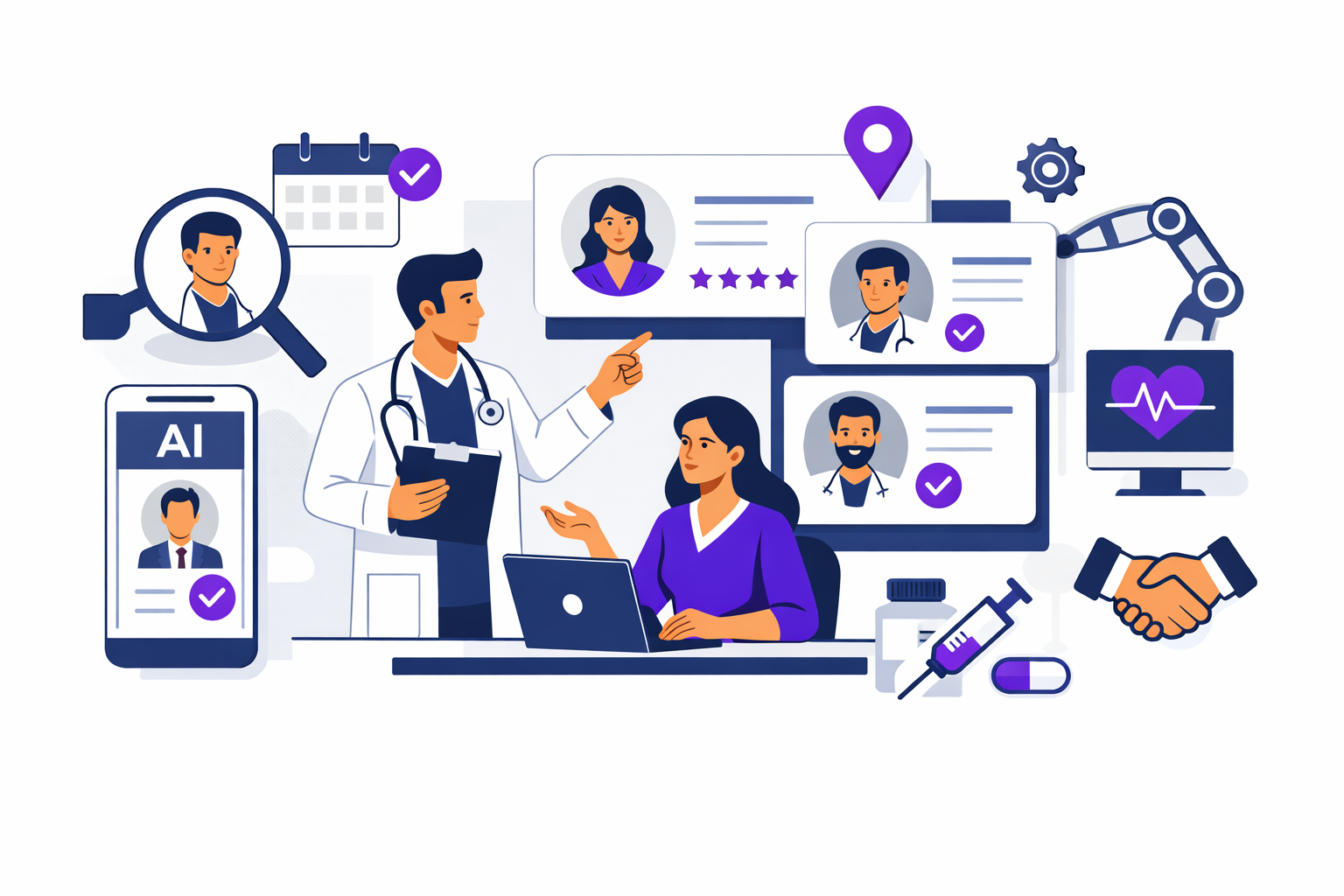
Healthcare talent acquisition is the process of identifying, attracting, and hiring clinical and non-clinical professionals within healthcare organizations.
It includes:
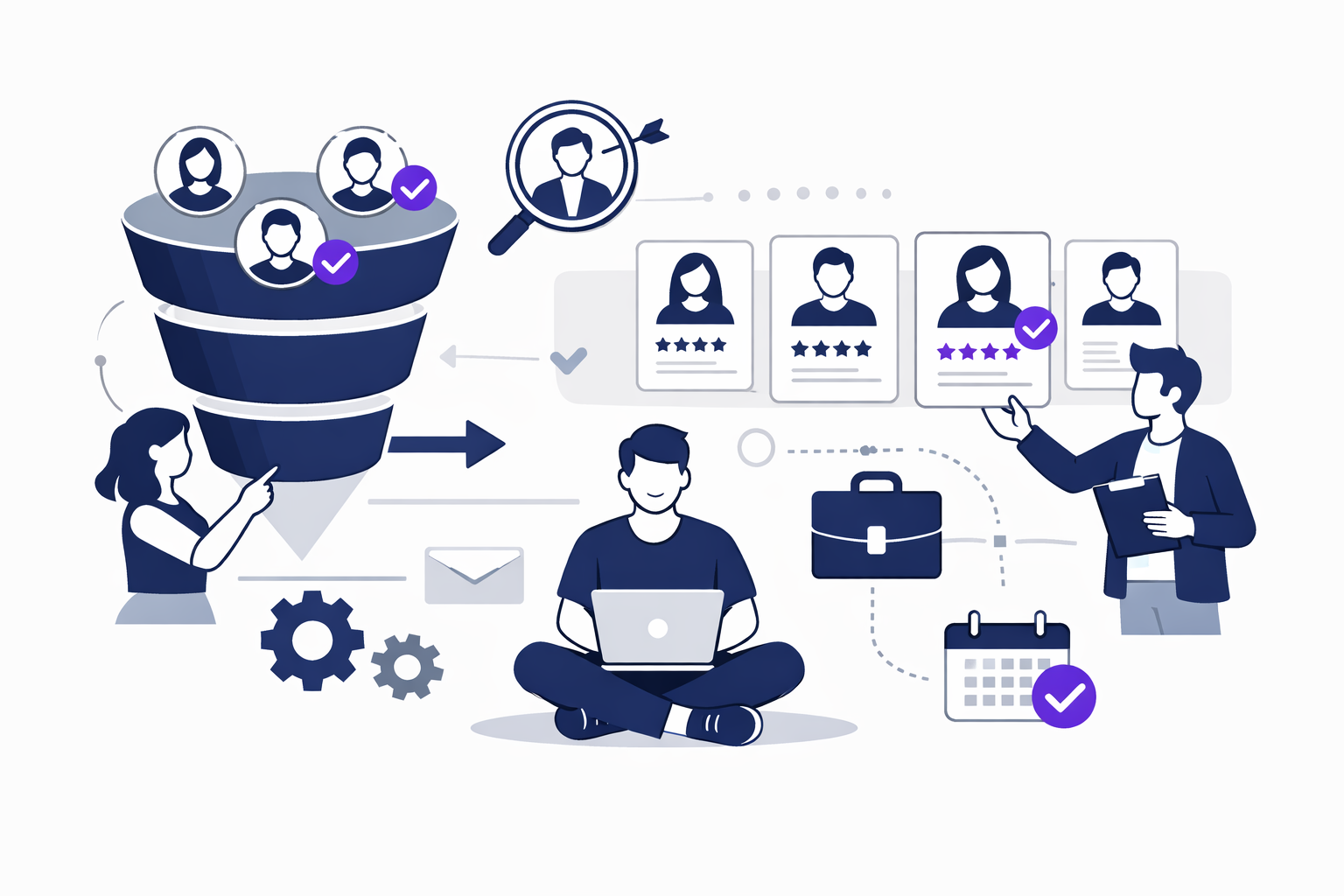
- Sourcing candidates
- Screening and evaluation
- Credential verification
- Hiring and onboarding
In practice, talent acquisition in healthcare encompasses a lot more than just filling roles. In fact, it involves everything from managing long-term workforce needs, to maintaining compliance standards, to ensuring patient care is not disrupted due to staffing gaps.
Why Healthcare Hiring Has Become Structurally Hard
Healthcare recruitment comes with a unique set of challenges, beyond what the standard pain points experienced by recruiters in other fields. These challenges aren't limited to shortages either. In some cases, the system itself creates friction.
Several factors contribute to this:
Demand Is Rising Faster Than Training Pipelines
Healthcare demand continues to increase due to aging populations and expanded access to care. Training pipelines have not kept pace. New clinicians take years to train. Hiring demand changes much faster than that. This creates a persistent gap that staffing alone cannot solve.
Skills Are Becoming More Specialized and Short-Lived
Roles are becoming more specific. Hospitals and healthcare systems are not just hiring general nurses or clinicians. They are looking for:
- Specific certifications
- Specialized experience
- Familiarity with particular systems or equipment
At the same time, requirements evolve. Skills that were relevant a few years ago may not fully match current needs. This creates a moving target for recruiters.
Hiring Cycles Are Misaligned With Clinical Urgency
Healthcare hiring often needs to happen quickly.
Patient care cannot wait for extended recruiting cycles. Yet many hiring processes still involve multiple steps, approvals, and delays.
This mismatch leads to:
- Open shifts
- Increased workload for existing staff
- Higher burnout rates
Traditional Sourcing Does Not Reflect How Talent Actually Moves
Job boards and inbound applications capture only part of the market.
Many healthcare professionals are:
- Working full-time
- Considering opportunities passively
- Evaluating multiple options at once
Posting roles alone does not create access to these candidates.
Trends in Healthcare Talent Acquisition (What Actually Works in 2026)
The organizations that are improving hiring outcomes are not doing more of the same and hoping for different results. Instead, they are changing how they approach the entire process.
Talent Access Is Not About Sourcing Channels
Adding more job boards or sourcing tools does not solve access problems. In reality, what matters is whether you have a pipeline of candidates who are:
- Already known
- Already engaged
- Easier to activate
Healthcare organizations are investing more in talent pipeline management, building ongoing relationships rather than starting from scratch with every role. Communities and long-term engagement are replacing one-time applicant flows.
AI Is Reshaping Screening, But Execution Matters
AI is widely used in healthcare recruitment, especially for high-volume roles. The difference between average and effective use comes down to how it is applied. Using AI only for automation limits its impact.
Instead, using AI to:
- Prioritize candidates
- Identify better matches
- Reduce screening time
improves both speed and decision quality.
This is where AI in healthcare recruitment is making a measurable difference.
Engagement Starts Before Hiring
Many candidates decide whether to accept a role long before an offer is extended. Early communication plays a large role in that decision.
This includes:
- Setting expectations
- Explaining career paths
- Maintaining consistent communication
Organizations that engage candidates early see stronger conversion rates and fewer drop-offs.
Hiring and Upskilling Are Becoming Connected
Waiting for a "perfect" candidate is rarely effective. Instead, many organizations are focusing on:
- Hiring for potential
- Providing targeted training
- Accelerating onboarding
This connects healthcare workforce planning with hiring. It shifts the focus from finding talent to developing it.
Healthcare Talent Acquisition Strategies for 2026
The following strategies reflect what is working in practice for high-performing healthcare providers and healthcare staffing companies.
Own Talent Pipelines Instead of Relying on Job Boards
Job boards are useful, but they should not be the foundation of your strategy.
Building and maintaining your own talent pipelines allows you to:
- Reduce time-to-fill
- Engage candidates earlier
- Improve hiring consistency
Build and Continuously Engage Private Talent Pools
Strong pipelines are not static lists. Instead, they require:
- Regular communication
- Updated candidate information
- Ongoing engagement
This keeps candidates responsive and reduces drop-off.
Position Roles Clearly
Healthcare candidates are evaluating more than compensation. They want to understand:
- The impact of the role
- Working conditions
- Expectations
- Growth opportunities
Clarity attracts the right candidates and filters out mismatches.
Use AI for Screening and Fit Scoring
High-volume healthcare hiring requires efficient screening.
AI can support this by:
- Ranking candidates
- Identifying relevant experience
- Reducing manual review time
Rather than removing human judgment, the goal is to improve how decisions are made and remove burdensome early-stage repetitive manual work from recruiters.
Eliminate Hiring Delays
Speed matters in healthcare hiring.
Reducing delays between:
- Application
- Screening
- Interview
- Offer
has a direct impact on hiring outcomes.
Hire for Potential and Build Skills Internally
In a constrained talent market, waiting for fully qualified candidates limits hiring success.
Hiring for potential and investing in development allows organizations to:
- Expand their talent pool
- Fill roles faster
- Build long-term capability
Reduce Offer Drop-Offs With Consistent Engagement
Candidates who disengage often do so due to lack of communication.
Maintaining contact:
- Before the offer
- During decision-making
- After the offer
improves acceptance rates.
Track the Right Metrics
Applications alone do not measure success (in fact they only provide a limited window into part of the process).
Focus on:
- Conversion rates
- Drop-off points
- Time-to-fill
- Pipeline engagement
This provides a clearer view of what is working. Ensure that you are utilizing a platform with detailed analytics across the process to provide actionable data.
Conclusion
Healthcare talent acquisition is dealing with pressure from multiple directions at once.
Demand is increasing. Skill requirements are changing. Hiring timelines remain tight. Traditional approaches do not fully address these conditions.
Organizations that improve outcomes are focusing less on individual tactics and more on how their hiring system operates.
They:
- Build and maintain talent pipelines
- Engage candidates earlier
- Use AI to improve decision-making
- Connect hiring with workforce development
The difference is how all the elements come together to create a process that can keep up with real-world demand. That is what defines effective healthcare talent acquisition in 2026.