Recruiters spend a surprising amount of time doing things that feel a bit like searching for a specific grain of sand on a very large beach.
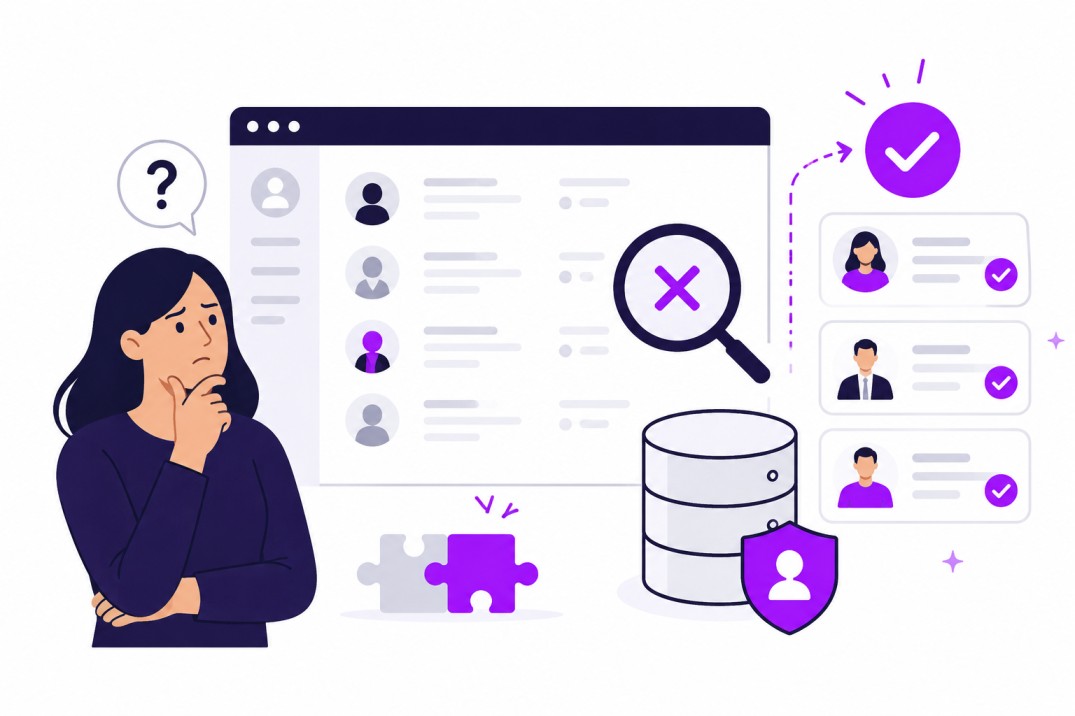
You open a database. You type in a few filters. You adjust them. You scroll. You tweak again. Eventually you find someone promising, then repeat the process until your coffee goes cold.
That approach worked when datasets were smaller and expectations were lower. Now there are too many candidates, too many roles, and too little time.
This is where an AI sourcing agent becomes useful not just as a shiny add-on, but as something that changes how sourcing happens and makes a meaningful difference in business outcomes.
This guide walks through what these agents are and the use cases that make a measurable difference in recruiting workflows.
What Are AI Sourcing Agents?
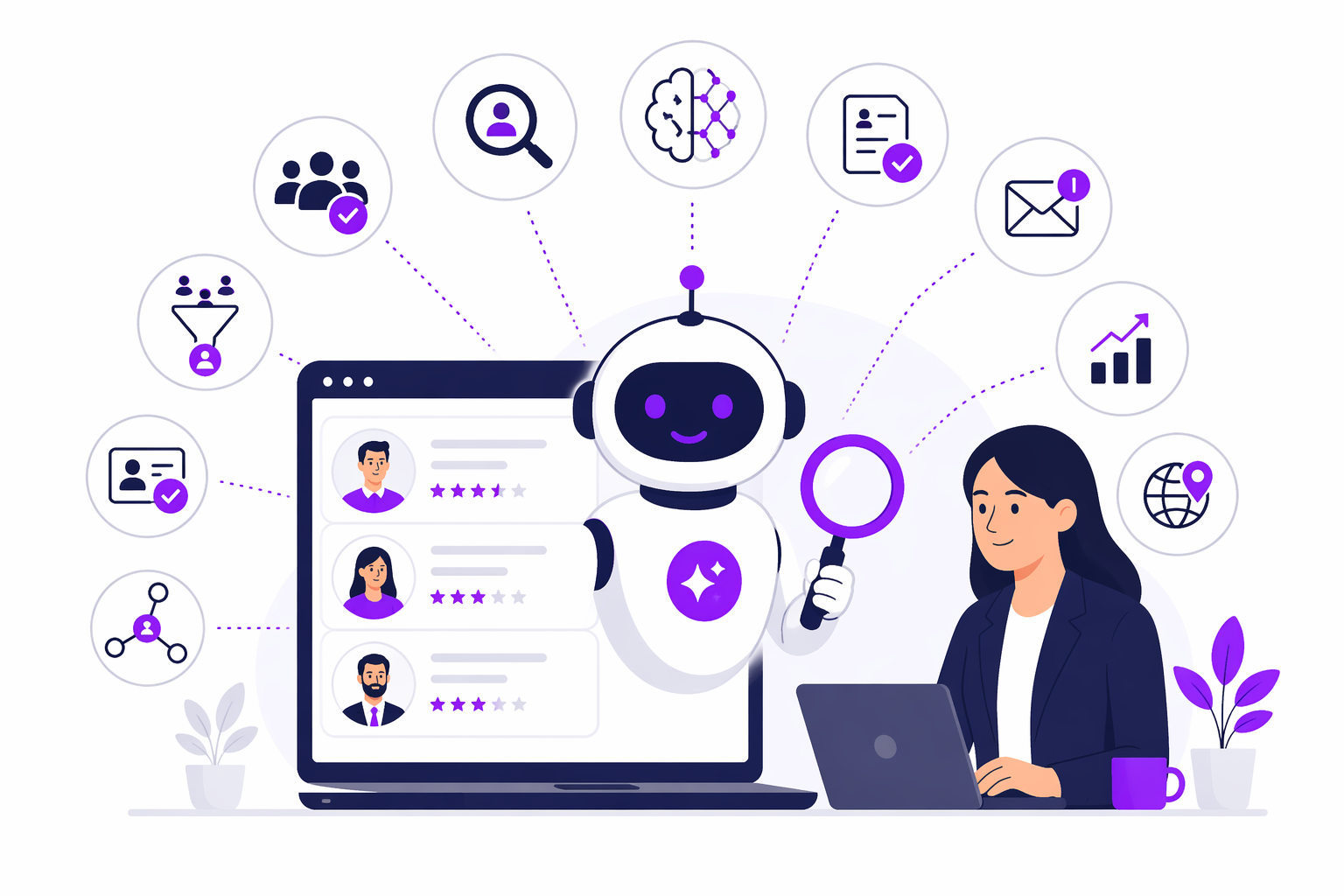
An AI sourcing agent is software that identifies, evaluates, and surfaces candidates based on intent rather than rigid filters.
Instead of asking a recruiter to construct perfect search strings, it interprets a description of the ideal candidate and translates that into a broader search. It can account for equivalent job titles, adjacent skills, and experience patterns that do not show up in simple keyword matches.
Most modern AI recruiting tools go even further than that. They track engagement, prioritize candidates based on likelihood to respond, and assist with outreach. AI-powered TA tools are already producing measurable improvements, with HR Executive reporting that they can achieve 30% higher quality of hires and 10% lower costs from poor hires.
10 Real Use Cases Recruiters Should Actually Care About
1. Rediscovering Candidates in Your ATS
Every recruiting team has a database full of candidates that were once promising.
They applied, interviewed, or were sourced for a role that did not work out. Then they disappeared into the system.
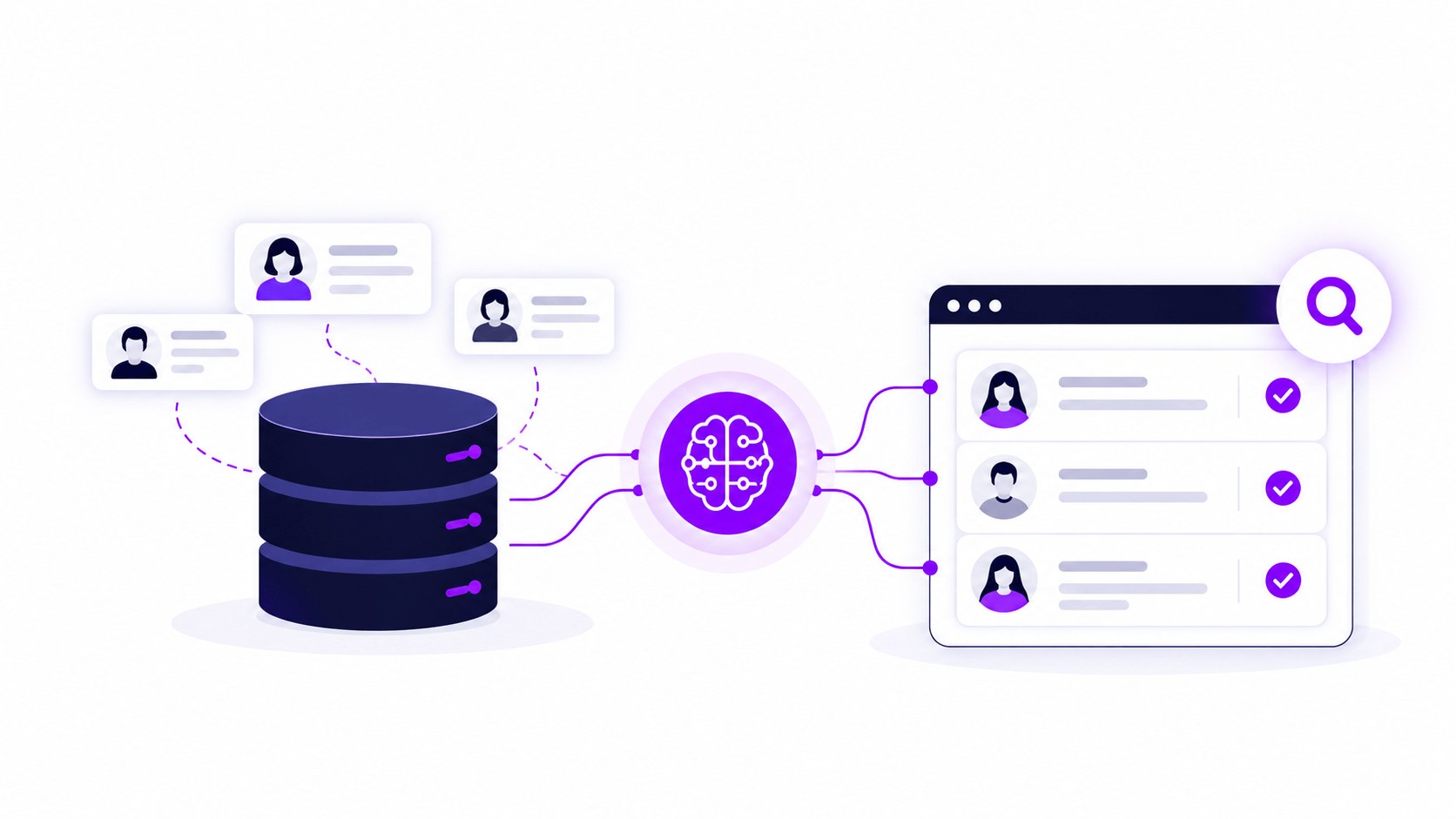
An AI sourcing agent can scan that database and identify candidates who match new roles, even if their titles or resumes are not an exact match. It takes a skills-based approach and looks at patterns across experience rather than relying on a direct keyword overlap. For a deeper look at how teams are doing this in practice, see our guide on combining AI with talent sourcing.
This ability turns an overlooked database into a usable talent source.
2. Building Qualified Candidate Shortlists
Creating a shortlist usually involves reviewing dozens or hundreds of profiles.
AI sourcing agents reduce that effort by ranking candidates based on relevance. Instead of sorting through every profile manually, recruiters start with a set of candidates who already meet a meaningful threshold.
The shortlist becomes a starting point rather than the result of hours of filtering.
3. Personalized Candidate Outreach at Scale
Outreach tends to fall into two extremes.
At one end, you have highly personalized messages that take time to write. At the other, you have generic templates that get ignored.
AI sourcing agents sit somewhere in between. They generate outreach that reflects the candidate's background while maintaining consistency across large volumes.
The result is that every candidate receives messaging that feels relevant, humanized, and personal, without requiring a recruiter to write each message from scratch. This becomes especially valuable when attracting passive candidates who need a more thoughtful first touch.
4. End-to-End Recruitment Automation
Sourcing is rarely a standalone task, as it connects to screening, outreach, and follow-ups. (the sourcing bone's connected to the engagement bone, if you will).
An AI recruitment agent can handle multiple parts of that workflow in sequence, without any risk of dropped data between stages. It identifies candidates, initiates outreach, tracks responses, and moves candidates forward based on predefined criteria.
This creates continuity across stages that would otherwise rely on manual handoffs.
5. Automating Candidate Follow-Ups and Engagement
Candidates rarely respond on the first attempt, but following up manually is time-consuming, which means it often does not happen consistently.
Thankfully, AI sourcing agents can schedule and send follow-ups automatically. They track engagement signals and adjust timing based on candidate behavior.
This keeps conversations active without requiring constant attention.
6. Screening Candidates Before Recruiter Interviews
Resume screening is one of the most repetitive parts of recruiting.
AI sourcing agents can evaluate candidates against role requirements and flag those who meet key criteria. Some systems also incorporate structured screening questions as part of early engagement.
Recruiters still make the decisions, but they start with a filtered set of candidates rather than a raw list.
7. Skills-Based Candidate Matching
Job titles can be misleading. Two candidates with different titles may have similar capabilities.
AI sourcing agents focus on skills and experience patterns rather than labels. They identify transferable skills and surface candidates who might otherwise be missed.
This approach aligns with the broader move toward skills-based hiring.
8. Supporting Compliance, Bias Reduction, and Auditability
Recruiting processes are subject to increasing scrutiny.
AI sourcing agents can maintain structured records of how candidates are evaluated and why certain profiles are surfaced. This creates a level of transparency that is difficult to achieve with purely manual processes.
Bias reduction depends on how systems are designed and used, but consistent evaluation criteria provide a more stable baseline.
9. Increasing Recruiter Productivity
Time spent on manual sourcing tasks limits how many roles a recruiter can handle.
By automating repetitive steps, AI sourcing agents free up time for activities that require judgment, such as candidate conversations and hiring manager alignment.
Productivity gains show up in faster shortlists and more consistent outreach.
10. Supporting High-Volume Hiring
High-volume hiring introduces a scale problem for manual sourcing and screening workflows.
Large numbers of applicants, tight timelines, and frequent role openings make manual sourcing impractical.
AI sourcing agents handle volume more effectively. They process large datasets, prioritize candidates, and maintain engagement without requiring proportional increases in recruiter effort.
How to Automate End-to-End Sourcing Workflows with AI
Using isolated tools for sourcing, outreach, and screening creates friction.
Recruiters switch between systems, repeat steps, and rebuild context at each stage.
Platforms like Curately take a different approach by connecting these functions into a single workflow, powered by a single platform that integrates with the recruiter's existing ATS.
A recruiter can describe the ideal candidate using natural language, review matched profiles, and engage candidates without leaving the platform. The system continues to refine results based on feedback and interaction.
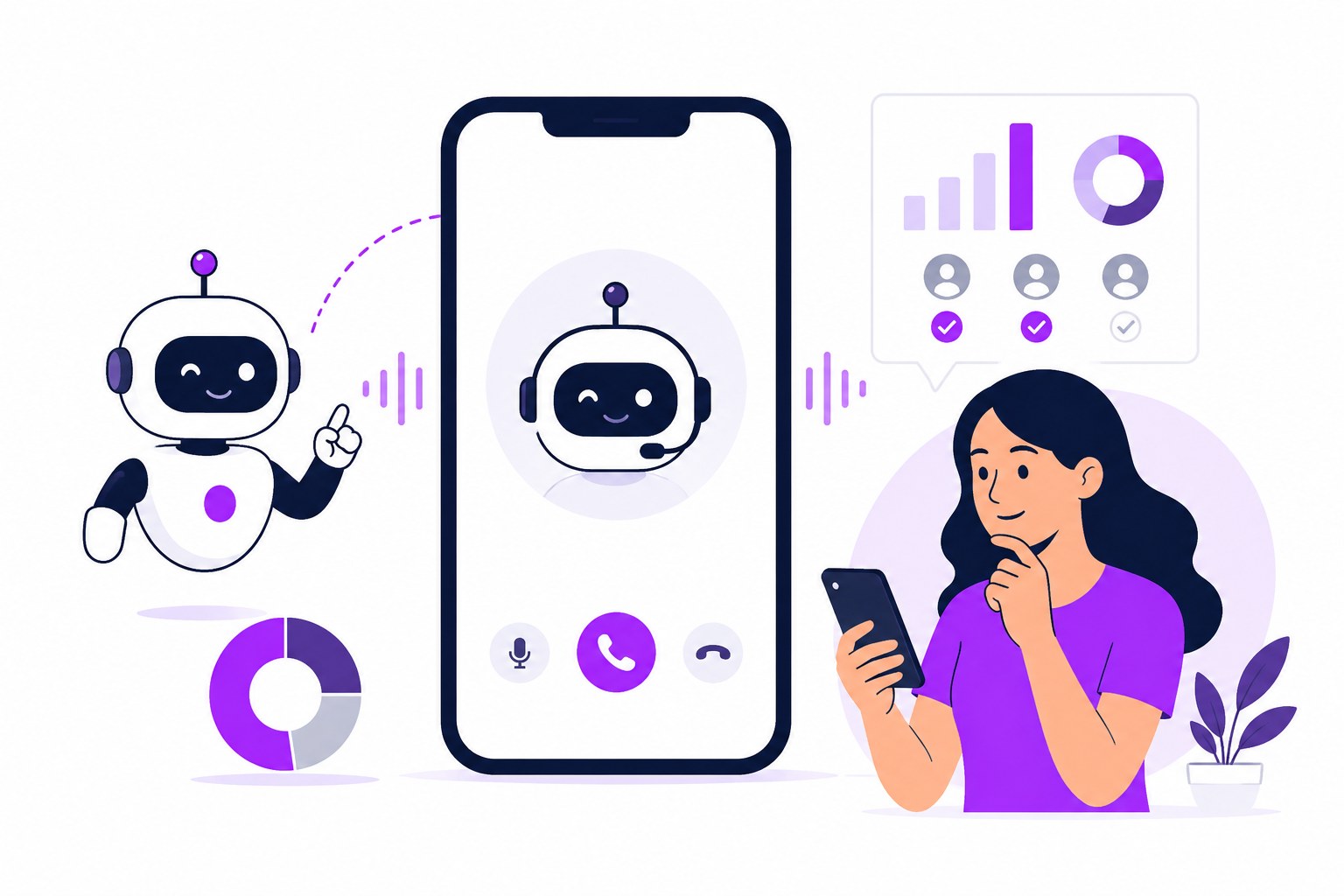
Curately's AI sourcing dovetails cleanly into its engagement through tools like Maya, which conducts human-like phone screening conversations and gathers structured information from candidates. This creates a continuous loop where sourcing, screening, and engagement inform each other.
The result is a workflow that maintains momentum from the first search to the final conversation.
Conclusion
AI sourcing agents are not a replacement for human recruiters, but they change the starting point that human recruiters work from.
Instead of beginning with a blank search and working toward a shortlist, recruiters begin with a set of candidates who already meet a meaningful level of relevance. From there, the work becomes more focused.
The value shows up in time saved, consistency across workflows, and the ability to handle larger volumes without losing control of the process.
Recruiting still depends on judgment, context, and communication. Those elements remain in human hands. What changes is how much effort it takes to get to the point where those skills matter most.
Frequently Asked Questions
What is an AI sourcing agent?
An AI sourcing agent is a system that identifies and prioritizes candidates using machine learning, allowing recruiters to find relevant talent without relying on manual search filters.
How do AI sourcing agents differ from traditional sourcing tools?
Traditional tools depend on exact matches between keywords and resumes. AI sourcing agents interpret intent, account for related skills, and surface candidates based on broader patterns.
Can AI sourcing agents replace recruiters?
AI sourcing agents handle repetitive tasks such as searching and initial screening. Recruiters remain responsible for decision-making, candidate interaction, and hiring outcomes.
What are the benefits of using AI sourcing agents in recruiting?
They reduce time spent on manual sourcing, improve candidate matching, support consistent outreach, and help recruiters manage larger workloads more effectively.
What is the best AI sourcing agent?
The best option depends on workflow needs, and platforms like Curately stand out by combining sourcing, engagement, and screening into a unified system designed specifically for recruiting.