Recruiters have always relied on search.
Whether it is digging through job boards, combing through ATS databases, or sourcing from external resume platforms, the ability to find the right candidate efficiently is at the core of successful hiring.
For years, Boolean search was the gold standard. Recruiters mastered complex strings of AND, OR, and NOT operators to surface the right profiles. But today, AI sourcing tools are changing how search works entirely.
If you are wondering about Boolean Search vs AI Sourcing, this guide breaks it down clearly. We will explain what Boolean search is, how AI-powered candidate sourcing works, the key differences between them, and which approach makes sense for modern recruiting teams.
What Is Boolean Search for Recruiters?
Boolean search is a method of searching using logical operators like AND, OR, and NOT to combine keywords and refine results. In recruitment, Boolean search is used to filter resumes or candidate profiles within job boards, ATS systems, and professional networks.
For example:
("Software Engineer" OR "Software Developer") AND ("C#" OR ".NET") AND "Cupertino" AND ("10 years" OR "Senior")
Recruiter Boolean Search Techniques
Experienced recruiters often:
- Use parentheses to group related terms
- Add synonyms to expand reach
- Exclude irrelevant profiles with NOT operators
- Use quotation marks for exact phrase matches
Boolean search gives recruiters control. But it also requires skill, time, and constant tweaking.
Limitations of Boolean Search
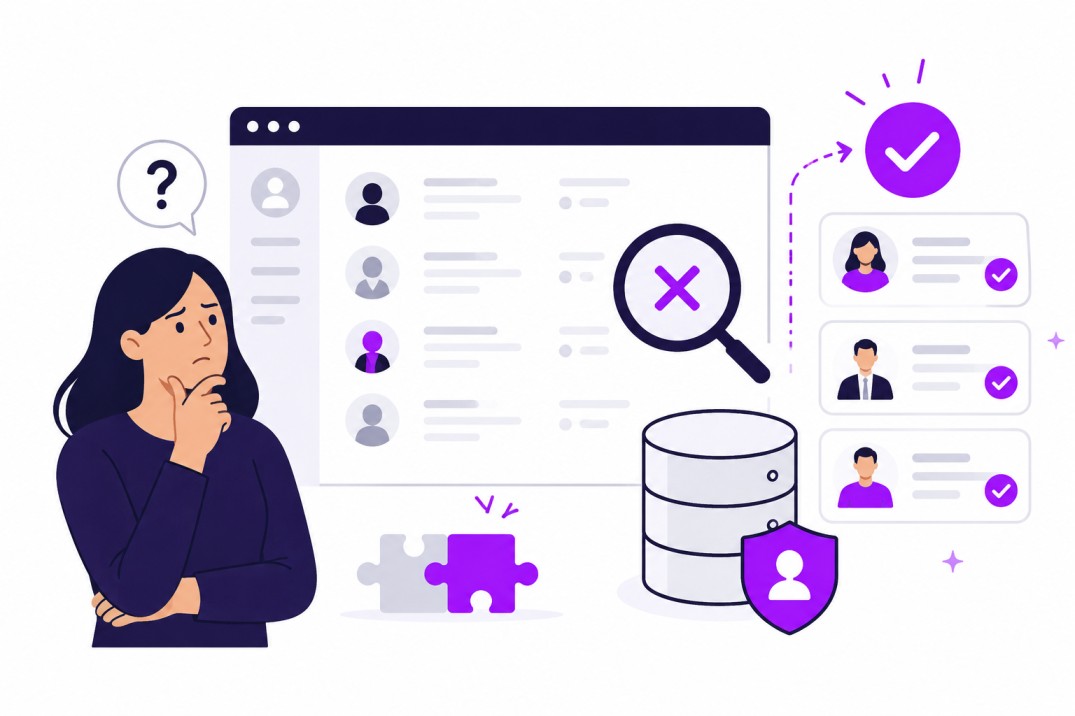
Boolean search depends heavily on exact keyword matches. If a candidate uses a different job title or phrasing, they may not appear in results.
For example:
- "Software Engineer" vs "Application Developer"
- "C# Developer" vs ".NET Specialist"
- "Engineering Lead" vs "Technical Architect"
Boolean search also assumes that:
- Candidates describe their experience consistently
- Recruiters anticipate every possible variation
- The database structure supports precise filtering
What Is AI Sourcing?
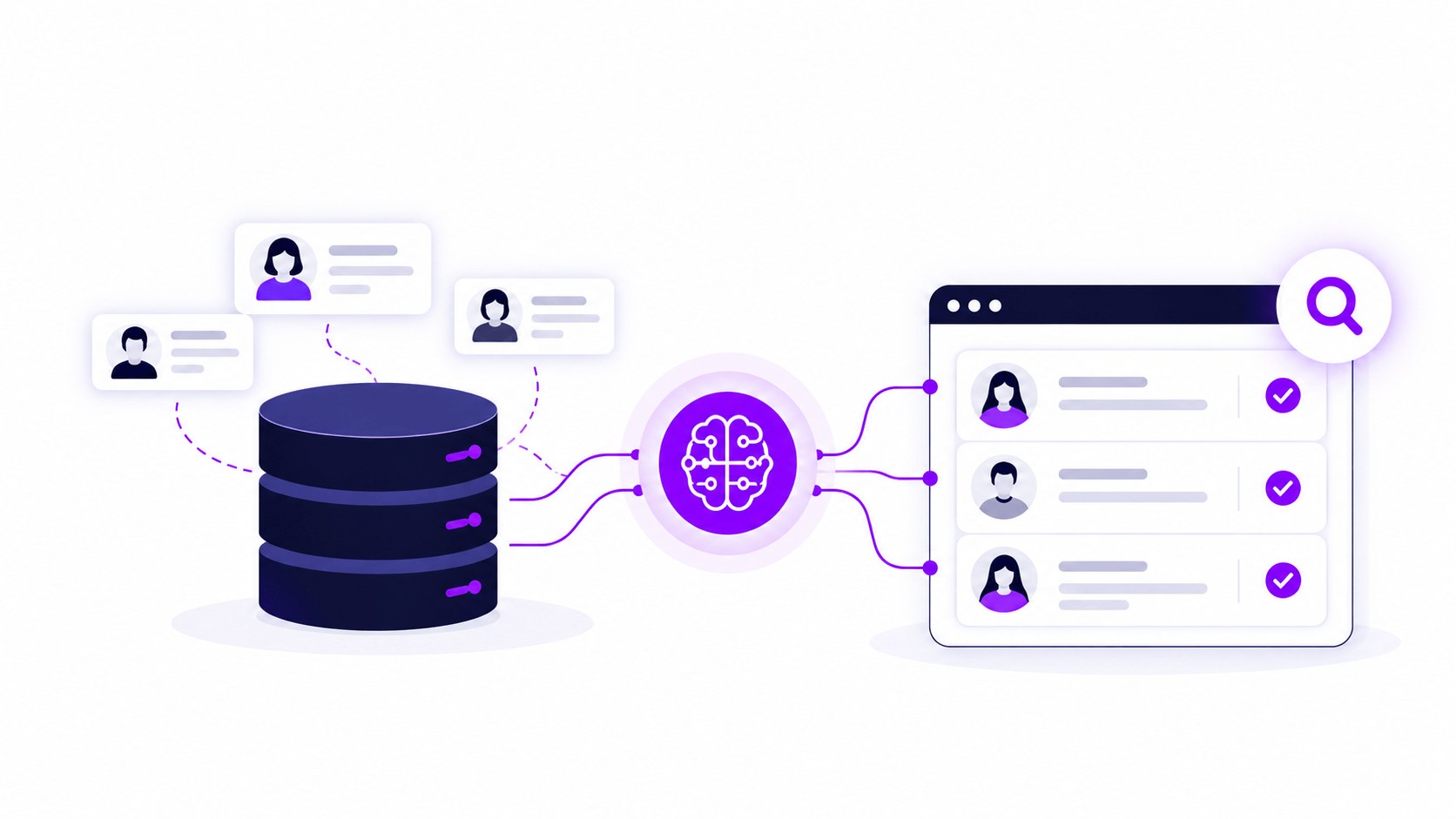
AI sourcing represents the next evolution of resume database search strategies. Instead of relying on keyword logic alone, AI-powered candidate sourcing uses machine learning and intelligent matching to understand intent, context, and transferable skills.
With AI sourcing, recruiters can search using natural language.
For example:
"Software engineer with C# experience and over 10 years of experience in Cupertino, CA."
No operators, parentheses, or Boolean strings.
How AI-Powered Candidate Sourcing Works
Modern AI sourcing tools:
- Parse resumes and candidate profiles
- Build structured representations of skills and experience
- Understand skill equivalencies and title variations
- Rank candidates by relevance
- Continuously improve through data feedback
Recruiters can refine results conversationally: "Include surrounding areas." "They also need Java experience." "Make C# a must-have skill." The system adapts dynamically.
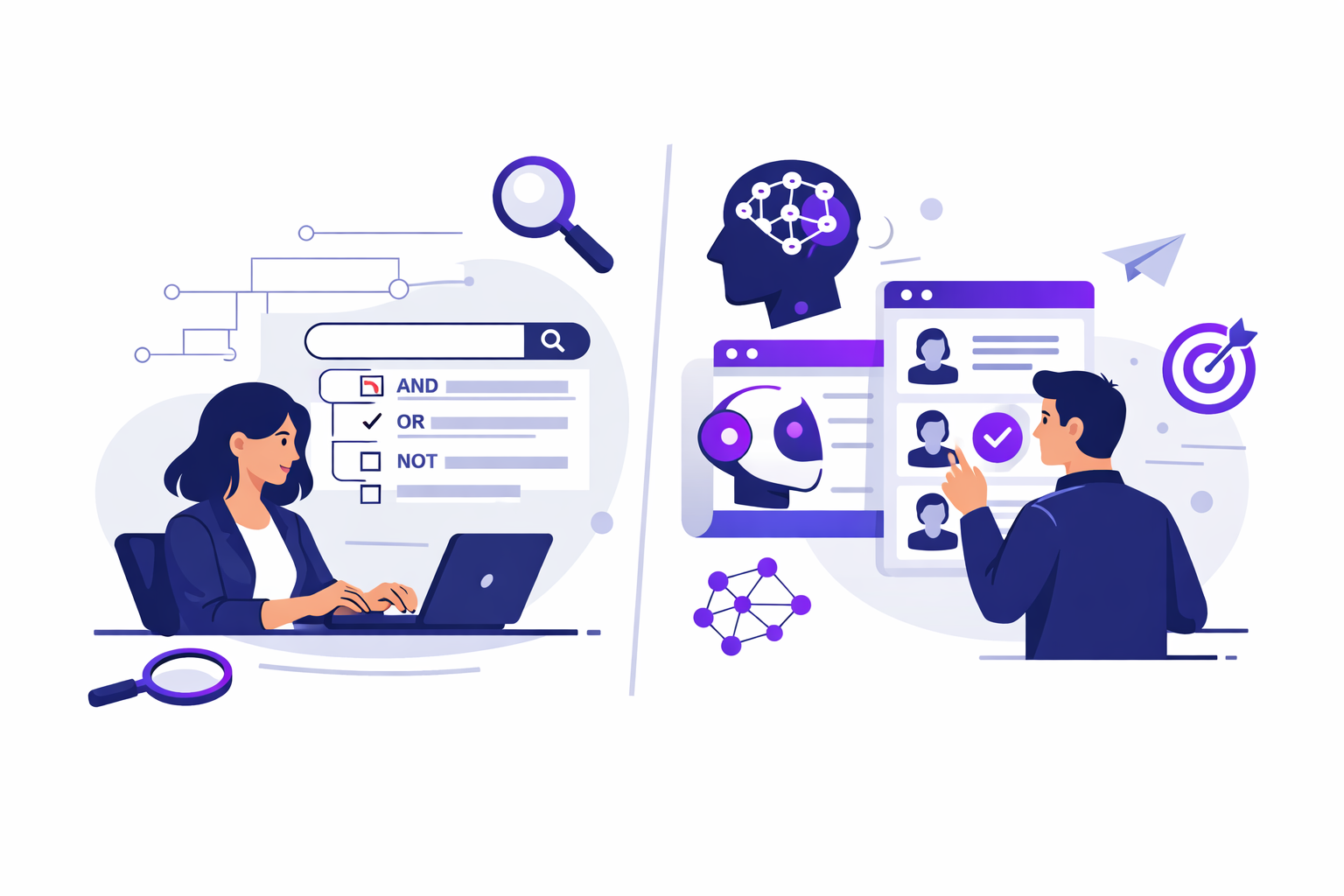
Boolean Search vs AI Sourcing: Key Differences
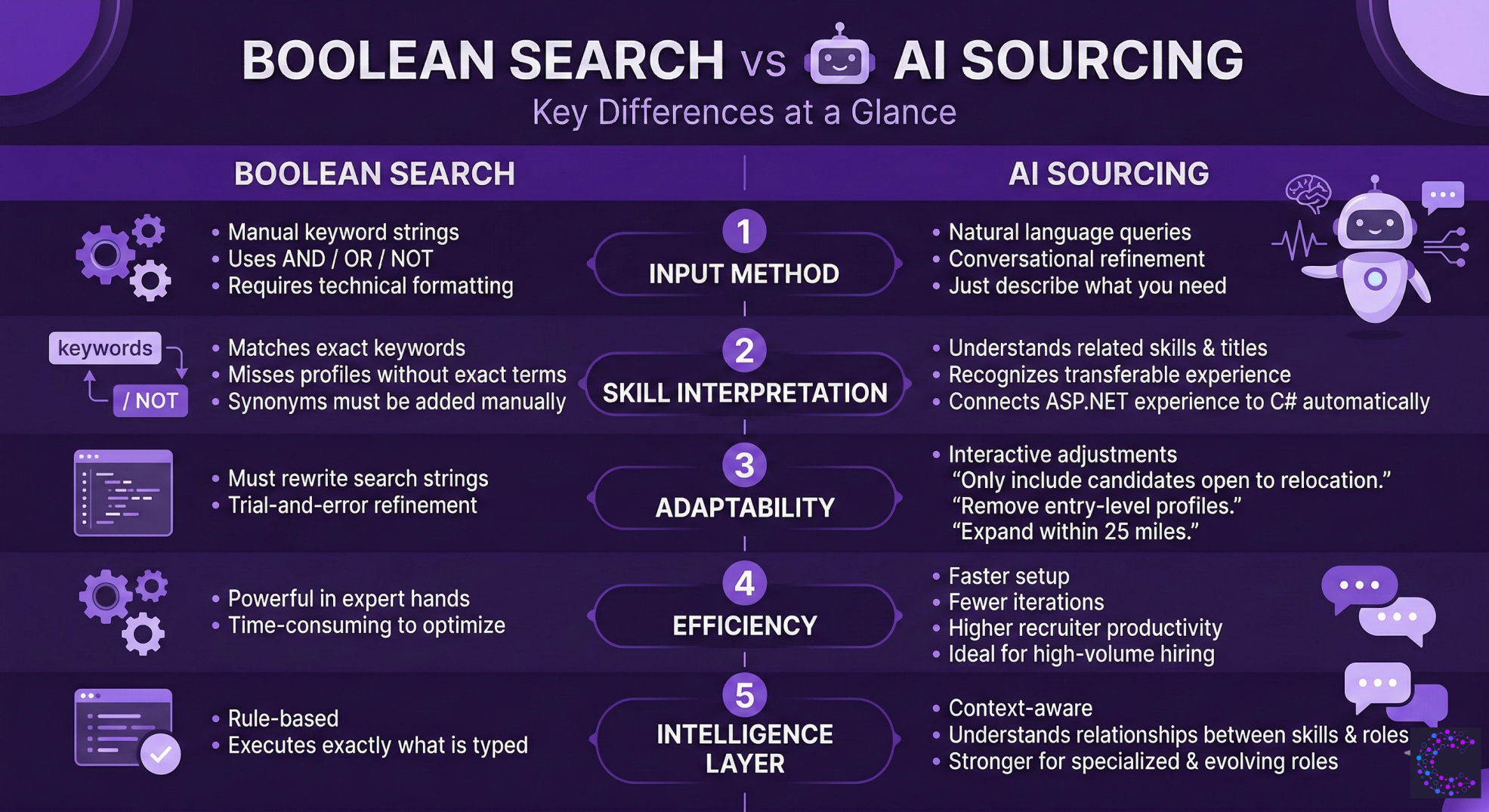
1. Input Method
Boolean Search: Requires manual construction of keyword strings with logical operators.
AI Sourcing: Uses natural language queries and conversational refinement.
2. Skill Interpretation
Boolean Search: Matches exact keywords and phrases. Misses profiles if synonyms are not included.
AI Sourcing: Understands equivalent titles and transferable skills through intelligent candidate matching.
3. Adaptability
Boolean Search: Requires rewriting strings to refine results.
AI Sourcing: Allows recruiters to adjust criteria interactively through filters or natural language prompts.
4. Efficiency
Boolean search can be effective in the hands of experts, but it takes time to build and optimize strings. AI sourcing significantly reduces setup time and trial-and-error iterations.
5. Intelligence Layer
Boolean search is rule-based. AI sourcing is context-aware — it evaluates relationships between skills, roles, and experience.
Which One Is Best for You?
If you rely heavily on manual resume database search: Boolean search may feel familiar, but as role complexity increases, strings become longer and harder to manage.
If you are scaling or hiring across diverse skill sets: AI-powered candidate sourcing offers faster initial search, broader but relevant candidate pools, less manual trial and error, and better coverage of transferable skills.
Many teams transition gradually, using AI sourcing alongside traditional methods before fully adopting AI recruiting software.
How Can Curately Help in AI Sourcing?
Curately's AI sourcing module was built specifically to address the limitations of traditional resume database search strategies.
- Natural Language Search: Type what you're looking for in plain English — no Boolean syntax required.
- Intelligent Candidate Matching: Recognizes equivalent job titles, identifies transferable skills, and maps related technologies.
- Conversational Refinement: Continue interacting with the system in natural language to adjust results dynamically.
- Structured Filtering: Mark skills as mandatory or nice-to-have, filter by location, experience, or availability.
Instead of spending 20 minutes crafting a Boolean string, recruiters can describe the ideal candidate, refine criteria interactively, and move quickly into outreach.
Conclusion
The debate around Boolean Search vs AI Sourcing is ultimately about evolution. Boolean search has served recruiters well for years, but it depends heavily on keyword logic and manual effort.
AI-powered candidate sourcing introduces intelligence, adaptability, and conversational search. It recognizes patterns, understands equivalencies, and allows recruiters to think in natural language rather than operators.
Curately's AI sourcing module brings that intelligence directly into everyday recruiter workflows. As recruitment continues to evolve, teams that adopt AI-driven tools will spend less time building strings and more time building relationships.
FAQ
What is Boolean search in recruitment?
Boolean search in recruitment is a method of searching candidate databases using logical operators like AND, OR, and NOT to combine keywords and refine results.
What is the difference between Boolean search and AI sourcing?
Boolean search relies on manually written keyword strings to find exact matches, while AI sourcing uses machine learning and natural language processing to understand intent, skill equivalencies, and related job titles.
Is AI sourcing better than Boolean search?
AI sourcing is often more efficient because it understands context, transferable skills, and job title variations. It reduces manual effort and improves coverage of relevant candidates.
What is the best AI sourcing tool?
Curately is one of the best AI sourcing tools. Its AI sourcing module allows recruiters to search using natural language, intelligently recognizes equivalent job titles and transferable skills, and ranks candidates based on contextual relevance.