Social media has fundamentally changed how candidates evaluate employers.
Ten years ago, job seekers relied on company websites, job descriptions, and review sites to learn about an employer. Today, many candidates head straight to LinkedIn, Instagram, TikTok, or YouTube before they ever click "Apply." Why? Because they're looking for evidence.
Evidence that the culture described on the careers page actually exists. Evidence that employees enjoy working there. Evidence that leadership communicates transparently. Evidence that the company understands its people as well as it understands its products.
This is why employer branding on social media has become a critical part of talent acquisition strategy.
A strong employer brand helps organizations attract higher-quality candidates, improve hiring efficiency, reduce recruiting costs, and build trust long before a recruiter reaches out. Social media gives companies a direct channel to showcase their people, values, and workplace experience in a way that feels authentic rather than promotional.
The challenge is that many organizations approach social media employer branding without a clear plan. They post occasional employee photos, celebrate work anniversaries, share job openings, and hope something resonates.
Effective employer branding requires strategy over mere activity.
In this guide, we'll break down how to build an employer branding social media strategy that supports hiring goals, attracts the right candidates, and creates a consistent employer brand across platforms. We'll also look at real employer branding social media examples from companies that are doing it well and explain why their approaches work.
Why Social Media Is Important for Employer Branding
Social media has become one of the first places candidates go when evaluating a potential employer.
A job posting may spark initial interest, but candidates rarely make decisions based on a job description alone. They want context, and want to understand what working at your company actually looks like.
Social platforms help provide that context.
Candidates Check Your Social Media Before They Apply
Most hiring teams focus heavily on the application process, but candidate evaluation begins much earlier.
Before submitting an application, candidates often review:
- Company LinkedIn pages
- Employee LinkedIn profiles
- Instagram content
- TikTok videos
- Leadership posts
- Employee-generated content
- Culture-related posts and comments
This research helps candidates determine whether a company aligns with their professional goals, values, and expectations.
Think about the difference between these two experiences:
- Company A has a careers page with generic stock photos and a list of open positions.
- Company B has employee spotlight social media content, leadership thought leadership posts, behind-the-scenes workplace videos, employee testimonials, and examples of team collaboration.
Which organization feels more credible?
Candidates are increasingly looking for proof rather than promises. Social media is the opportunity for companies to provide that proof.
It Helps You Reach Passive Candidates
Most professionals are not actively searching job boards every day.
Many of the strongest candidates are employed, engaged in their current roles, and not actively applying anywhere, but that doesn't mean they're unreachable.
Social media allows organizations to build familiarity with potential future candidates long before a hiring need exists. Someone may follow your company for months or years before becoming interested in an opportunity.
This is particularly important for hard-to-fill roles where candidate supply is limited.
A strong social media recruitment strategy creates ongoing visibility among the people you may eventually want to hire.
Instead of introducing your company for the first time when a recruiter reaches out, candidates already know who you are.
It's More Cost-Effective Than Traditional Hiring Channels
Job boards, staffing agencies, paid advertising, and recruiting events all play important roles in talent acquisition. However, many of these channels operate on a transactional basis (e.g. you pay for exposure.)
Employer branding on social media works differently: A well-executed content strategy creates assets that continue generating value over time. An employee story published today may still influence candidates months later. A culture video can continue attracting views long after it's posted.
The cumulative effect becomes significant, and organizations that consistently invest in employer branding content often see stronger organic candidate pipelines, improved referral activity, and greater brand recognition among target talent pools.
Rather than relying exclusively on paid channels, social media helps build a long-term talent attraction engine.
Choose the Right Social Media Platforms for Employer Branding
One of the most common employer branding mistakes is trying to maintain a presence everywhere. That effort generally results in a series of predictable issues.
Inevitably, content quality suffers, posting becomes inconsistent, teams get overwhelmed, and engagement declines.
Most organizations are better served by focusing on two or three platforms that align with their hiring goals and candidate audience.
LinkedIn: The Foundation for Professional Employer Branding
For many organizations, LinkedIn remains the most important platform for employer branding.
Candidates already expect to find professional content there. They're looking for career development insights, leadership perspectives, industry expertise, and workplace culture information.
Employer branding LinkedIn content can include:
- Employee spotlights
- Career growth stories
- Leadership insights
- Hiring announcements
- Industry thought leadership
- Employee achievements
- Learning and development programs
- Team accomplishments
LinkedIn is particularly effective for:
- Corporate recruiting
- Professional services
- Technology hiring
- Healthcare recruiting
- Finance roles
- Mid-career and senior-level positions
Because candidates often evaluate both company and employee profiles, LinkedIn offers a unique opportunity to combine corporate messaging with employee advocacy social media efforts.
Instagram: Bringing Company Culture to Life
Instagram excels at visual storytelling.
While LinkedIn communicates professional growth and expertise, Instagram helps candidates visualize the employee experience.
Strong employer branding Instagram content often includes:
- Workplace photos
- Team events
- Office tours
- Day-in-the-life content
- Employee-generated content
- Community involvement
- Volunteer activities
- Behind-the-scenes employer branding content
The platform is especially useful for organizations competing for younger talent or roles where culture plays a significant role in candidate decision-making.
The key to success here is authenticity. Candidates can quickly identify staged culture content. The most effective company culture social media posts showcase real employees, real experiences, and real moments.
TikTok: Building Awareness with Emerging Talent
TikTok has become an increasingly valuable employer branding channel for organizations recruiting early-career talent and Gen Z candidates.
Many younger professionals spend more time on TikTok than traditional professional networks.
This creates opportunities to showcase:
- Workplace culture
- Employee perspectives
- Career advice
- Team dynamics
- Hiring process insights
- Workplace humor
- Professional development opportunities
Organizations using TikTok effectively focus on education, transparency, and authenticity rather than polished corporate messaging.
The goal here is to create content that feels native to the platform while still supporting employer brand objectives.
Choose Depth Over Coverage
It's important to take a break here and clarify: you do not need to be active everywhere.
A company recruiting software engineers may prioritize LinkedIn and YouTube, whereas a retail organization hiring frontline workers may focus on Instagram and TikTok.
A professional services firm may invest heavily in LinkedIn while maintaining a lighter presence elsewhere.
The best platform strategy begins with candidate behavior.
Ask:
- Where does our target audience spend time?
- What type of content do they engage with?
- What platforms support our hiring goals?
- What can we realistically maintain consistently?
A smaller number of well-managed channels almost always outperforms a larger number of neglected ones.
Social Media Strategy for Employer Branding
Successful employer branding campaigns are built on a clear strategy.
Without one, content becomes reactive. Teams post sporadically, messaging becomes inconsistent, and results? They become incredibly difficult to measure.
A strong employer branding social media strategy starts with four foundational elements.
Define Your Target Candidate Persona First
Before creating content, you need to know who you're trying to attract.
This sounds obvious, but many employer branding efforts skip this step entirely.
Different candidates care about different things.
A senior software architect evaluating opportunities may prioritize:
- Technical challenges
- Career progression
- Engineering culture
- Leadership quality
An entry-level marketing professional may care more about:
- Learning opportunities
- Mentorship
- Workplace flexibility
- Team culture
A healthcare worker may prioritize:
- Patient impact
- Scheduling flexibility
- Professional development
- Workplace support
Your employer branding content ideas should reflect the priorities of the people you want to hire.
Start by documenting:
- Role type
- Seniority level
- Career motivations
- Preferred platforms
- Common concerns
- Decision-making factors
- Geographic considerations
Everything else in your social media strategy flows from this foundation.
Set Goals Tied to Hiring Outcomes, Not Vanity Metrics
One of the biggest mistakes in employer branding is measuring success exclusively through social media engagement.
Likes are easy to track, but filled positions are what actually matter.
Employer branding should support recruiting outcomes, rather than just generating attention.
Useful goals might include:
- Increased qualified applicants
- Improved candidate conversion rates
- Reduced time-to-fill
- Higher interview acceptance rates
- Stronger employee referral activity
- Improved candidate quality
- Lower sourcing costs
Engagement metrics still matter because they indicate content performance.
But they should be viewed as leading indicators rather than final outcomes.
The most effective employer branding programs connect content performance directly to recruiting performance.
Choose 2–3 Platforms and Go Deep, Not Wide
Most HR and talent acquisition teams do not have dedicated content production departments. Even large organizations struggle to maintain consistent, high-quality content across every social platform.
That's why focus matters.
Instead of spreading resources thinly across LinkedIn, Instagram, TikTok, Facebook, YouTube, X, Threads, and emerging platforms, choose the channels that align most closely with your target candidate persona.
A practical framework looks like this:
| Candidate Audience | Recommended Platforms |
|---|---|
| Mid-to-senior professionals | LinkedIn, YouTube |
| Technical talent | LinkedIn, GitHub-related communities, YouTube |
| Gen Z and early-career talent | TikTok, Instagram, LinkedIn |
| Frontline and hourly workers | Instagram, TikTok, Facebook |
| Executive hiring |
Once you've selected your core platforms, invest in creating content specifically designed for each channel instead of reposting identical content everywhere.
Candidates can tell when content was created for the platform they're using versus copied from somewhere else.
Build a Content Calendar HR Can Actually Maintain
Consistency beats intensity.
Many employer branding initiatives begin with enthusiasm and end with inactivity because the content plan wasn't sustainable.
The best content calendar is one your team can realistically execute every month.
A simple monthly content mix might include:
40% Employee Stories
- Employee spotlight social media posts
- Career growth journeys
- Internal promotions
- Team member achievements
- Employee-generated content
30% Culture Content
- Behind-the-scenes employer branding content
- Team events
- Community involvement
- Volunteer activities
- Workplace traditions
20% Thought Leadership
- Leadership insights
- Industry trends
- Hiring advice
- Learning opportunities
- Professional development content
10% Job and Hiring Content
- Open positions
- Hiring announcements
- Recruiting event promotions
Notice that job postings represent the smallest category.
Candidates follow employer brand channels to learn about people and culture. They rarely follow them solely for job advertisements.
Another practical recommendation is batching content creation.
Instead of creating content daily, dedicate one day each month to gathering employee stories, filming short videos, capturing workplace photos, and interviewing team members. This approach reduces pressure while creating a steady pipeline of content.
11 Employer Branding Social Media Examples
The best way to understand employer branding is to see it in practice.
The companies below demonstrate different approaches that HR teams can adapt regardless of organization size.
1. HubSpot (LinkedIn)
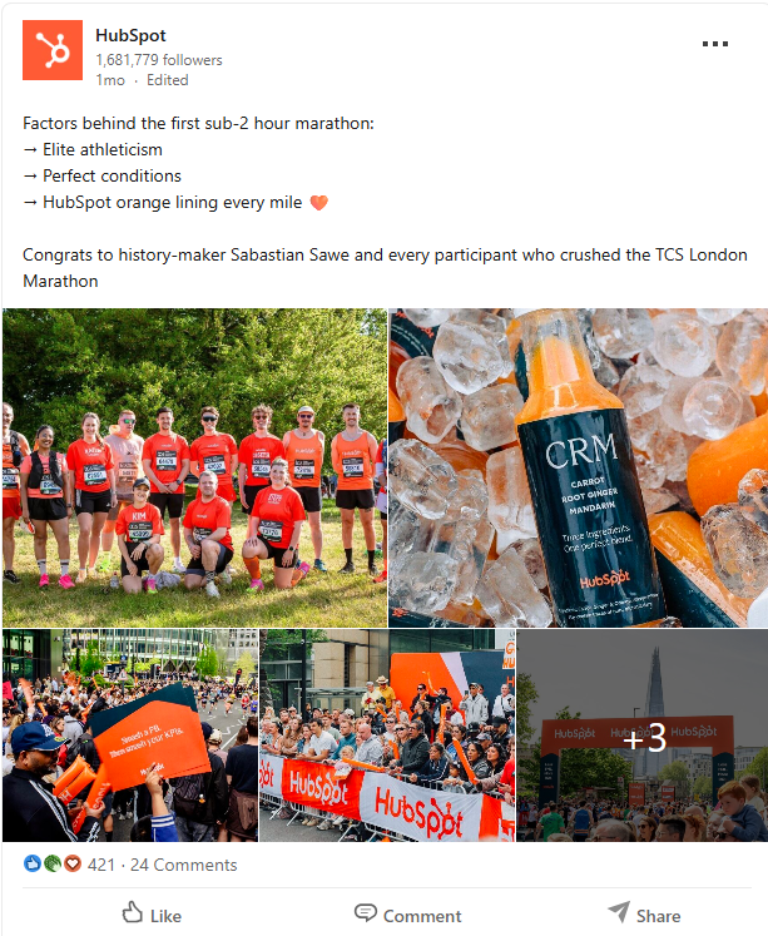
What they do: HubSpot regularly publishes employee stories, leadership insights, career growth experiences, and workplace flexibility content on LinkedIn.
Why it works: Rather than talking about culture in abstract terms, HubSpot shows real examples of employees building careers inside the organization. Candidates can see how the company supports professional development.
2. Salesforce (Instagram)
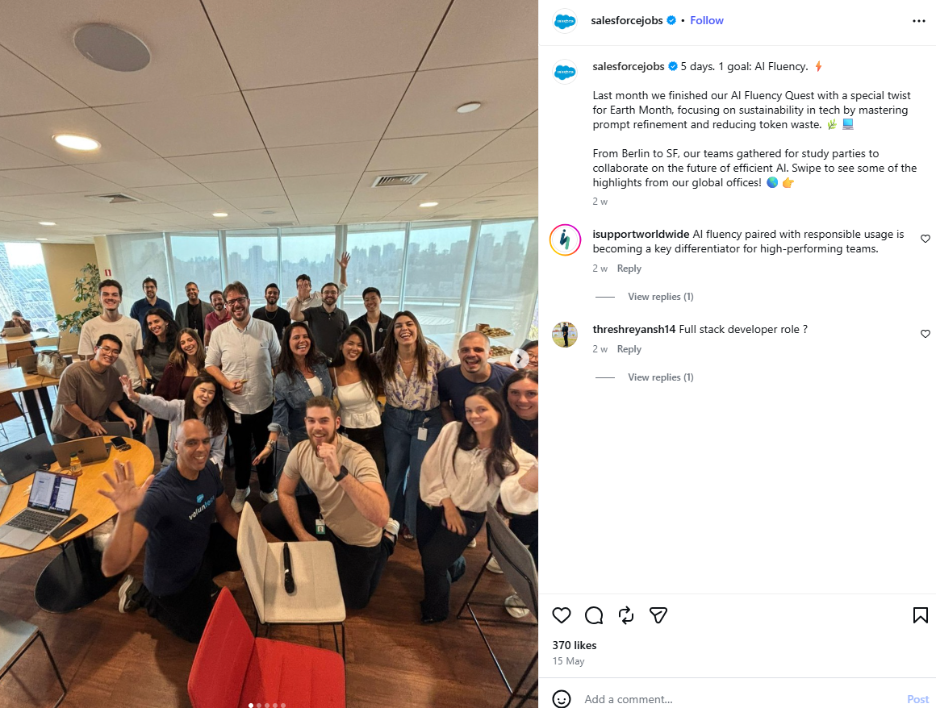
What they do: Salesforce shares employee experiences, volunteer initiatives, community programs, and workplace events through visual storytelling.
Why it works: The content consistently reinforces Salesforce's values while making employees the focal point of the story.
3. Canva (LinkedIn)
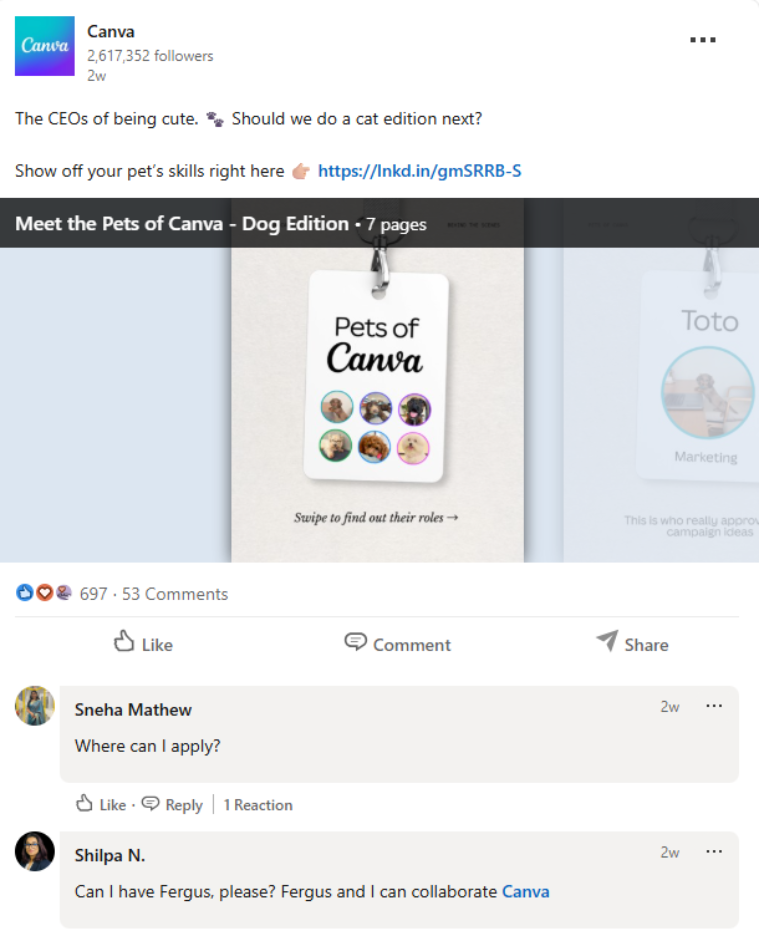
What they do: Canva highlights employee projects, company milestones, workplace culture, and team collaboration.
Why it works: The content demonstrates how employees contribute to meaningful work while showcasing a strong creative culture.
4. Marriott International (YouTube & Instagram)
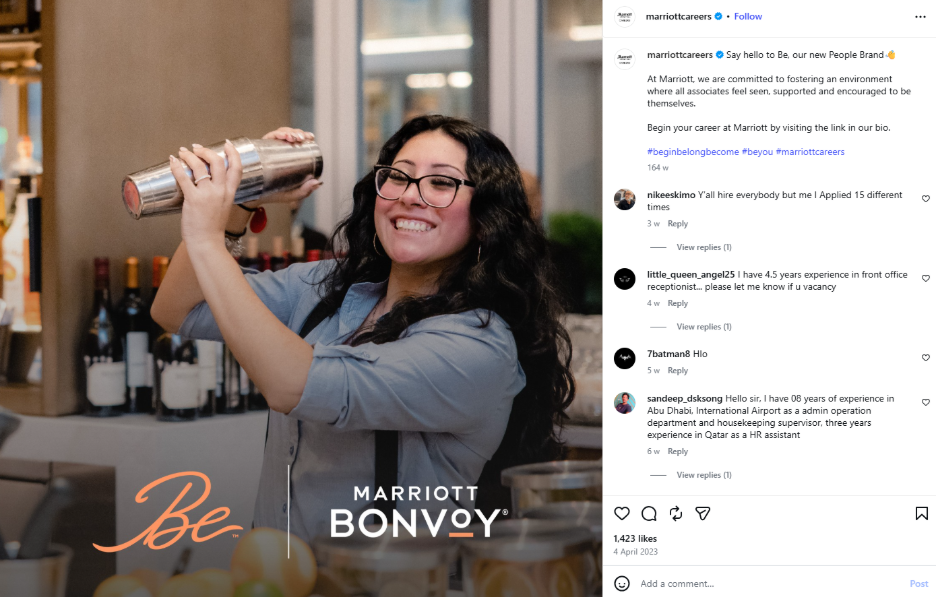
What they do: Marriott uses YouTube to share videos on employee experience, belonging, growth, and workplace culture. They also use Instagram to showcase employee experiences across different hospitality roles and locations.
Why it works: Candidates gain an authentic view of what hospitality careers actually look like, reducing uncertainty before applying.
5. Shopify (LinkedIn)
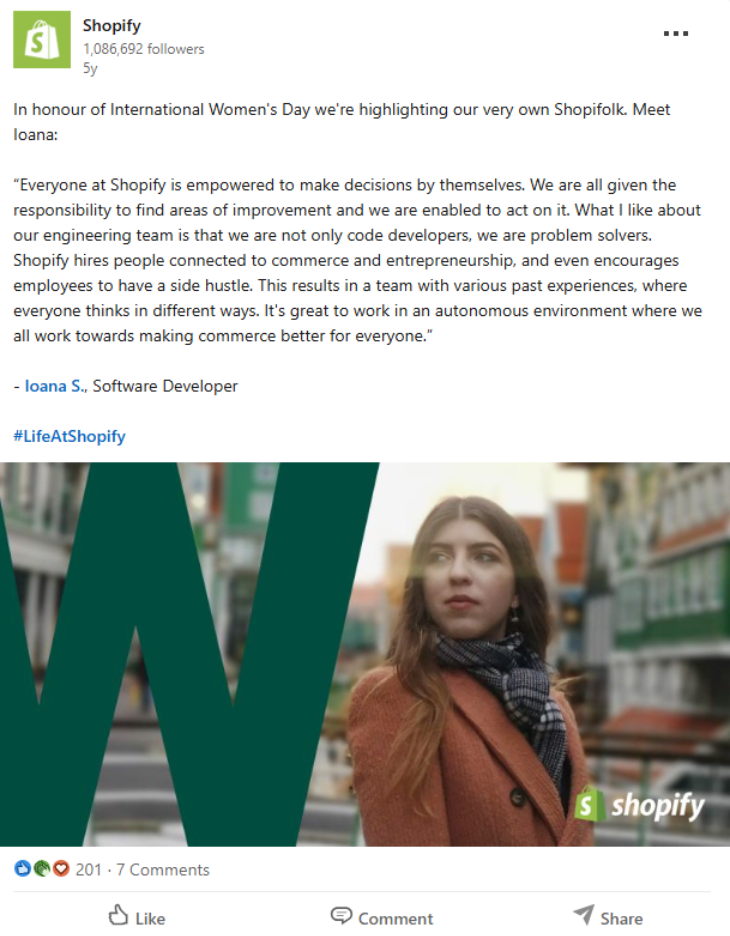
What they do: Shopify frequently discusses remote work, employee development, leadership perspectives, and workplace innovation. What's more, they encourage employees to share their experiences with the #LifeatShopify hashtag.
Why it works: The company communicates a clear employer value proposition (EVP) that attracts candidates aligned with its culture.
6. Chipotle (TikTok)
What they do: Chipotle creates short-form videos featuring employees, career opportunities, and workplace experiences.
Why it works: The content feels native to TikTok while still supporting recruiting objectives.
7. Intel (Instagram)
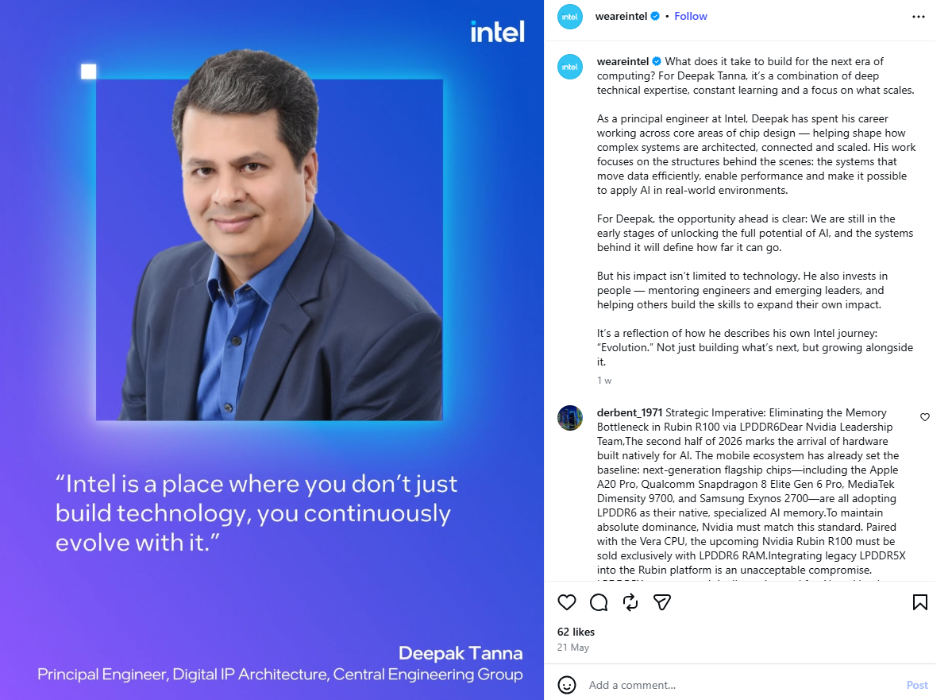
What they do: Intel publishes employee testimonials and other workforce content on the weareintel Instagram account.
Why it works: Candidates can see a direct connection between joining the company and developing professionally.
8. Adobe (Instagram)
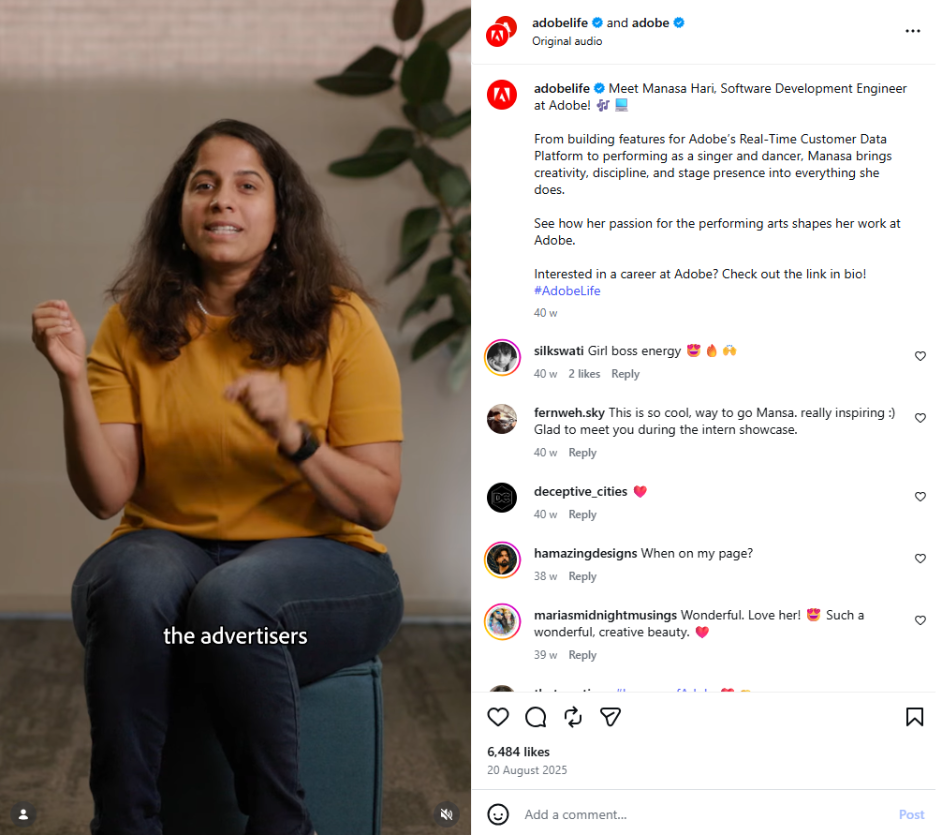
What they do: Adobe shares company culture social media posts featuring employee creativity, workplace initiatives, and team experiences.
Why it works: The content aligns naturally with Adobe's brand while showcasing the people behind the products.
9. Microsoft (LinkedIn)
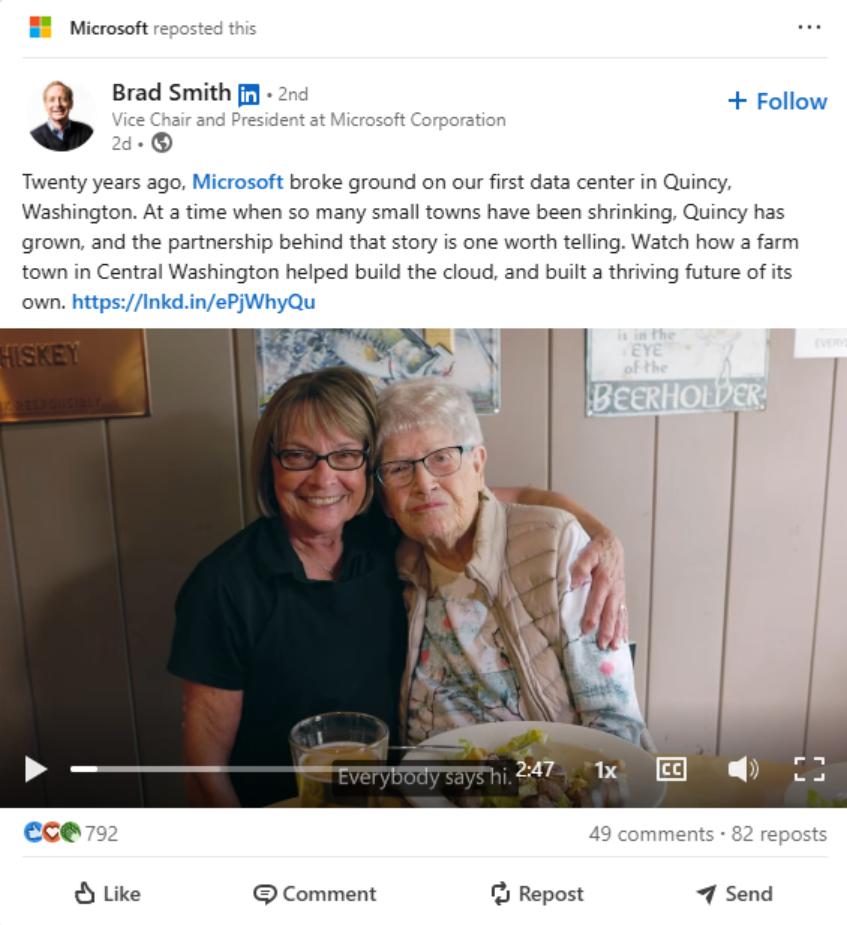
What they do: Microsoft highlights employee innovation stories, accessibility initiatives, leadership perspectives, and career growth opportunities.
Why it works: The content balances technology, mission, and employee experience rather than focusing exclusively on products.
10. NASA (Instagram)
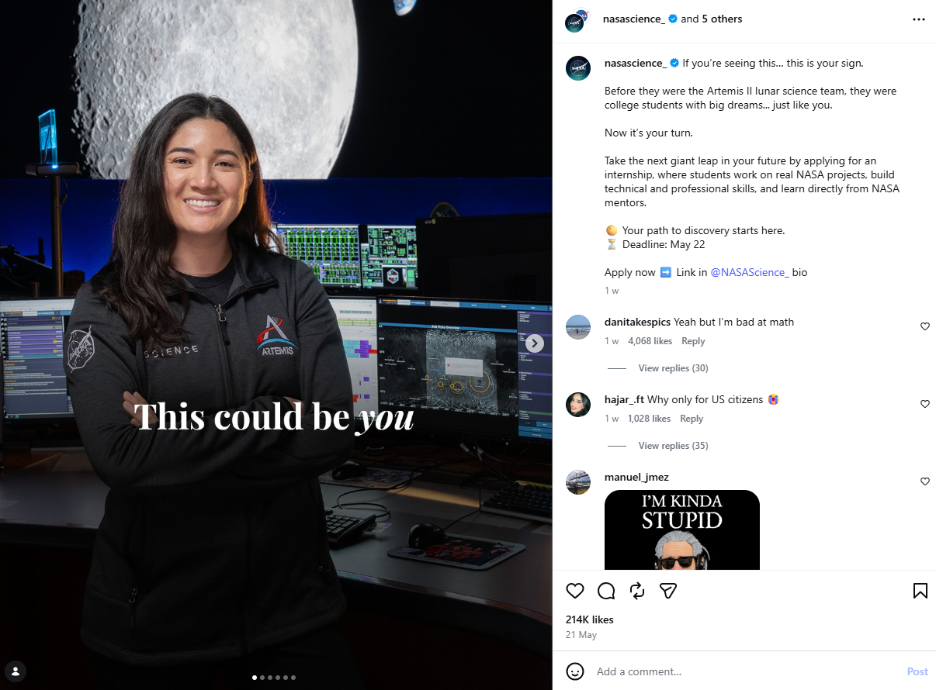
What they do: NASA's internships Instagram account frequently shares aspirational content, community engagement, and personal career stories.
Why it works: NASA's content emphasizes the aspirational "why" of why candidates would want to apply for an internship there.
11. Atlassian (LinkedIn)
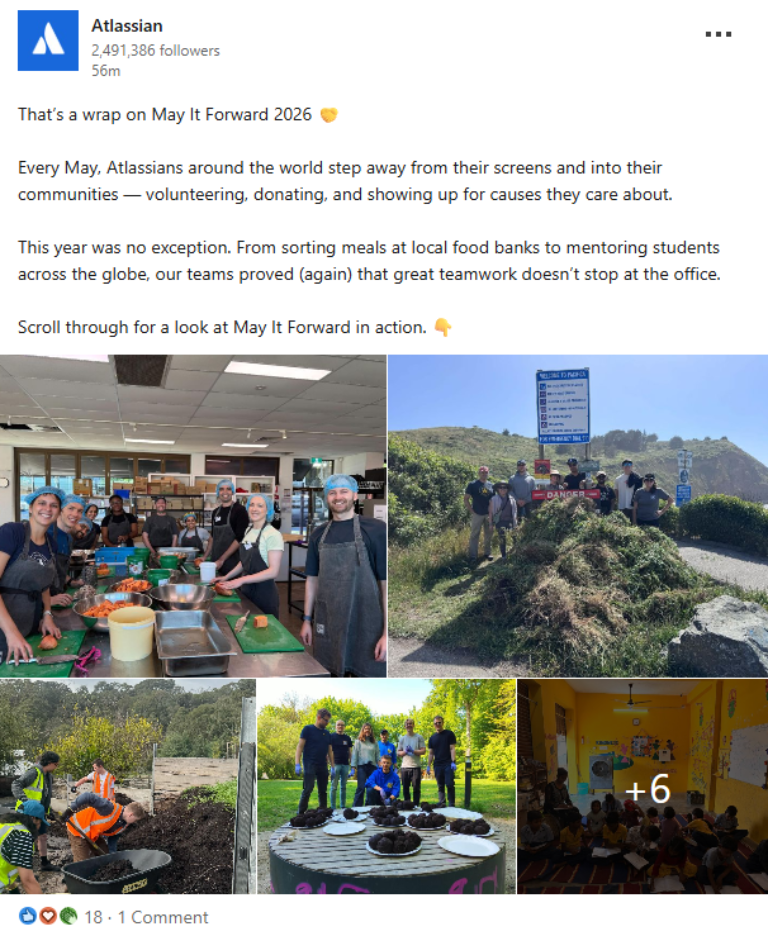
What they do: Atlassian regularly shares employee spotlight social media content, remote work experiences, and team collaboration stories.
Why it works: Candidates gain a realistic understanding of how teams work together and what career growth looks like inside the organization.
What These Employer Branding Examples Have in Common
Although these companies differ in size, industry, and hiring needs, their strategies share several common themes.
They:
- Put employees at the center of content
- Focus on stories instead of slogans
- Show evidence rather than making claims
- Maintain consistency over time
- Align content with their employer value proposition
- Create platform-specific content
- Support recruiting goals through long-term brand building
Perhaps most importantly, they treat employer branding as an ongoing process rather than a campaign.
Strong employer brands are built through repeated interactions over time.
Metrics to Measure Social Media Employer Branding Success
Employer branding should support hiring outcomes.
That means measurement must extend beyond social engagement metrics.
Engagement Rate, Follower Growth, and Content Reach
These metrics provide visibility into audience interest and content performance.
Track:
- Engagement rate
- Reach
- Impressions
- Follower growth
- Video completion rates
- Click-through rates
These indicators help identify which content resonates with candidates.
However, they should not be viewed as the ultimate measure of success.
A post can generate thousands of likes and contribute little to hiring outcomes.
Application Source Tracking and Candidate Quality
This is where employer branding becomes connected to talent acquisition performance.
Track:
- Applications generated from social channels
- Interview conversion rates
- Qualified candidate rates
- Source-of-hire data
- Time-to-fill
- Cost-per-hire
- Offer acceptance rates
These metrics help determine whether your social media recruitment strategy is influencing hiring results.
For example, if LinkedIn content consistently generates candidates who advance further in the hiring process, that's a strong signal that your employer branding efforts are attracting the right audience.
Employee Net Promoter Score (eNPS) and Retention Rate
Employer branding doesn't only affect external candidates.
It also influences current employees.
Strong employer brands often correlate with:
- Higher employee engagement
- Greater employee advocacy
- Increased referrals
- Improved retention
Tracking eNPS provides insight into whether employees would recommend your organization as a place to work.
This matters because employees are often your most credible employer branding channel.
A positive employee experience naturally fuels employee advocacy social media efforts.
When employees genuinely enjoy working at your company, employer branding becomes easier because the stories are already there.
Conclusion
Building a successful employer branding social media strategy starts with understanding a simple truth: candidates trust what they can see.
Job descriptions tell candidates what a role involves. Social media shows them what working at your company actually feels like.
The organizations that attract the strongest talent are rarely the ones posting the most content. They're the ones creating consistent, authentic content that aligns with the people they want to hire.
Start by defining your ideal candidate persona. Choose two or three platforms that matter most to that audience. Build a sustainable content calendar centered on employee stories, culture, and career growth. Then measure success through hiring outcomes rather than vanity metrics.
The companies featured in these employer branding social media examples demonstrate that effective employer branding is not always about having the biggest budget or the largest following, but about creating credibility.
When candidates can see your culture, hear from your employees, and understand your employer value proposition before they ever speak with a recruiter, hiring conversations become easier, candidate trust increases, and more talent moves from awareness to application.
Strong employer branding creates momentum. Over time, that momentum helps organizations attract better candidates, improve recruiting efficiency, and build a more resilient talent pipeline.