Recruiting teams have never had a shortage of resumes.
The real challenge has always been figuring out which candidates deserve attention right now, which candidates might fit future roles, and how to avoid repeating the same sourcing process every time a new opening appears.
That challenge becomes much harder once candidate databases grow into the tens or hundreds of thousands of resumes. At that scale, simply storing candidate information is not enough. Recruiters need systems that help them understand and use that information effectively. Resume parsing software helps recruiters organize candidate data by extracting information from resumes and converting it into structured fields inside an ATS or recruiting database. That process saves time and makes candidate records searchable, but it's not the solution to all of recruiters' problems.
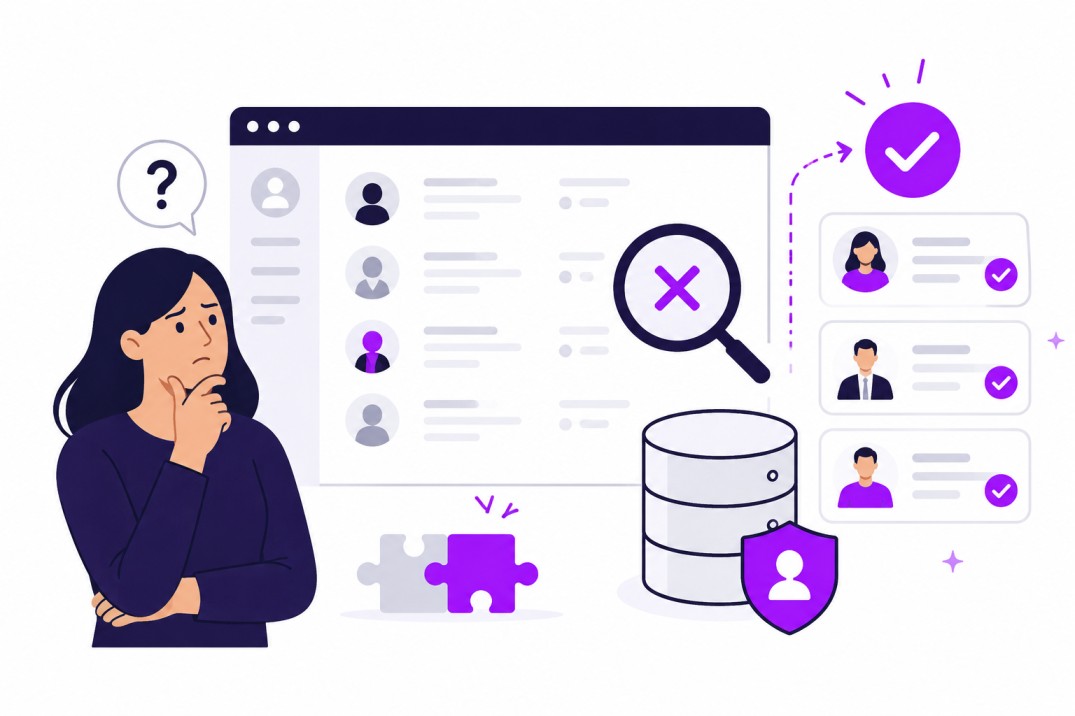
For instance, many recruiting databases contain years of resumes that are technically searchable but practically invisible. Candidates remain buried because keyword searches miss them, titles vary between companies, or recruiters simply do not know they exist.
That's why so many organizations are turning to AI for assistance in sourcing and recruitment. In fact, according to BCG, if a company is experimenting with AI or GenAI, 70% of them are doing so within HR.
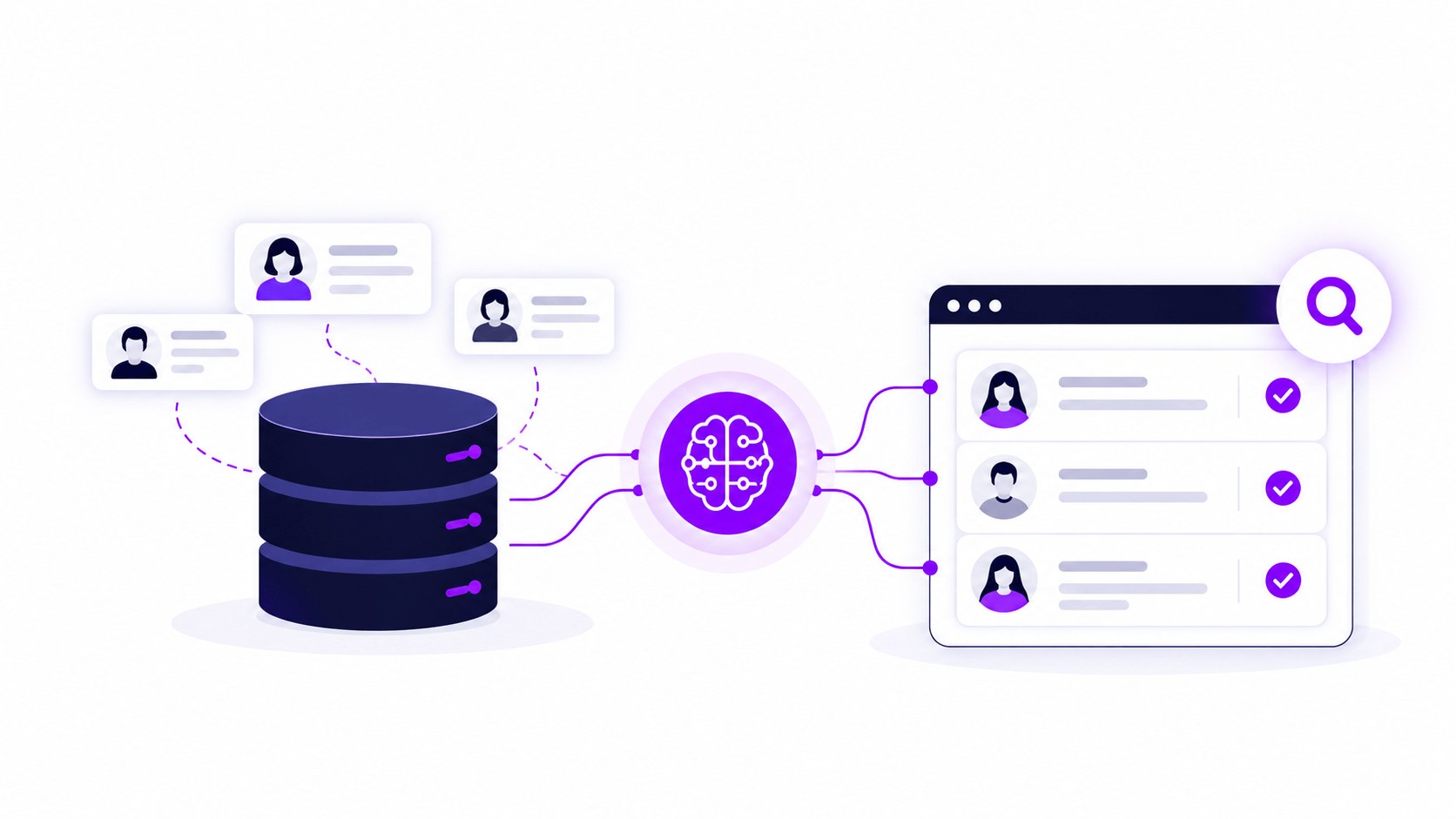
Whereas resume parsing structures candidate data, AI sourcing turns that data into recruiting action. Together, these systems create a much more usable recruiting workflow, especially for teams handling high application volume or maintaining large ATS databases.
What Is Resume Parsing?
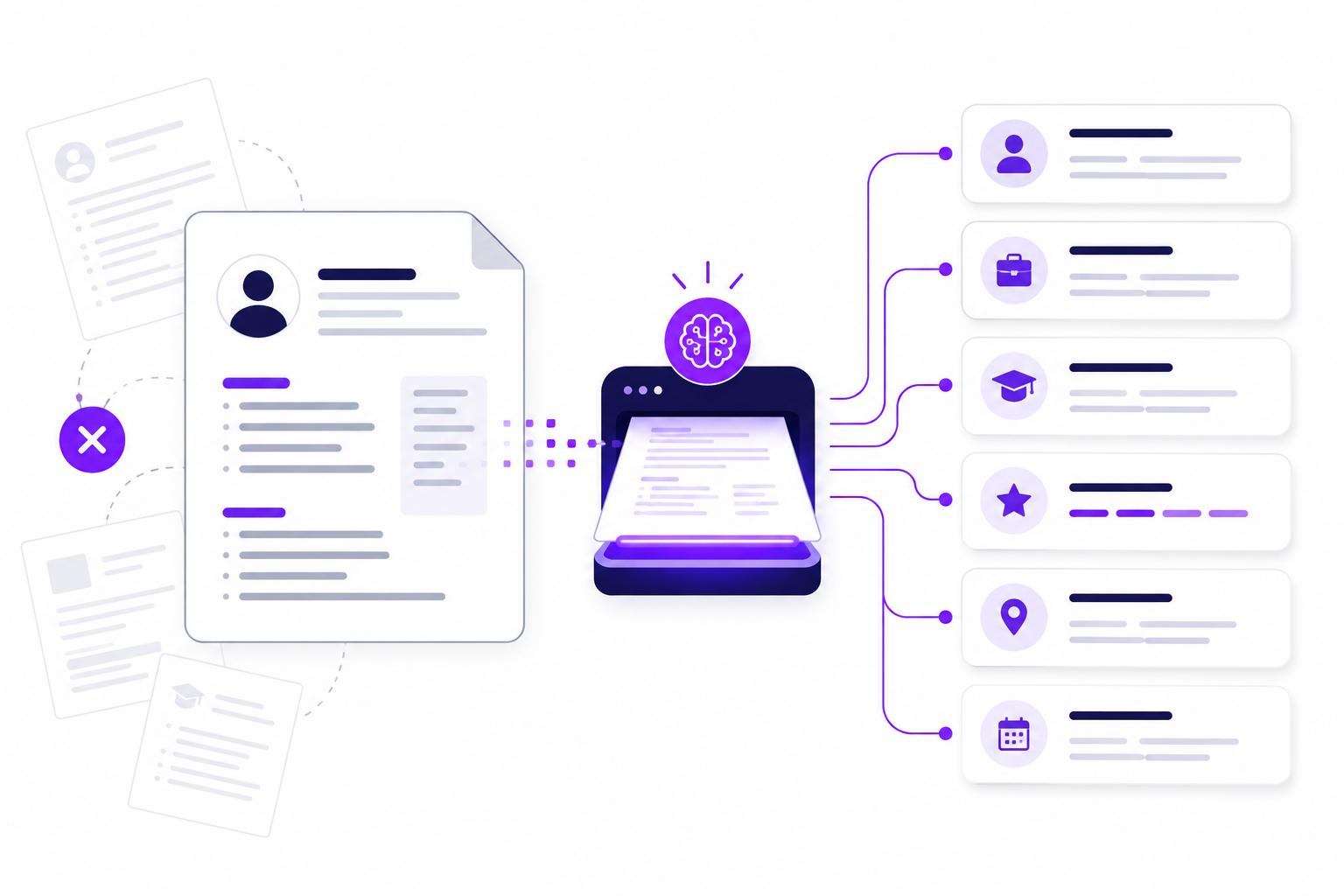
Resume parsing is the process of extracting information from resumes and converting it into structured data fields inside recruiting systems.
A typical resume parsing tool identifies details such as:
- candidate name and contact information
- location
- work history
- job titles
- skills
- certifications
- education
- years of experience
Instead of storing resumes as isolated documents, parsing software turns them into searchable records.
This matters because recruiters rarely review resumes one by one anymore. Most recruiting workflows depend on searchability. Recruiters need to filter candidates quickly based on role requirements, skills, location, or experience level.
Without parsing, recruiters would spend enormous amounts of time manually entering or reviewing information. That is why resume parsing software became a standard feature in modern ATS platforms and recruiting systems.
It is particularly useful for organizations handling large volumes of applications, including staffing firms, enterprise recruiting teams, and high-volume hiring environments.
The Limitations of Traditional Resume Parsing
Resume parsing solves an organizational problem, though it does not fully solve the sourcing problem.
Most traditional parsing systems depend heavily on keywords and structured matching logic. That creates limitations when resumes contain inconsistent terminology or when candidates describe experience in less predictable ways.
For example, two candidates may have nearly identical experience while using completely different wording on their resumes. One candidate might describe "customer retention strategy," while another refers to "account growth and client lifecycle management." A keyword-driven search may treat those as unrelated concepts.
The same issue appears with job titles.
A company may use "Software Engineer," another may use "Platform Developer," and a third may use "Backend Systems Engineer" for very similar work. Traditional parsing systems capture those titles accurately, though search workflows often struggle to connect them meaningfully.
With almost 2/3rds of employers using skills-based hiring methods, transferable skills create another challenge.
A recruiter searching for healthcare recruiting experience may overlook candidates who worked in staffing environments with highly similar workflows simply because the wording differs.
This is one reason ATS databases gradually become difficult to use over time. The data exists, but finding the right candidates still requires significant manual effort.
Another separate (but still important) issue is that parsed resumes often remain static after initial submission.
Candidates apply for one role, enter the ATS, and disappear into the database. Months later, they may be highly relevant for another opening, though nobody rediscovers them because the sourcing process begins elsewhere.
Parsing helps organize candidate data, but it does not automatically prioritize candidates, identify likely fits, or recommend who recruiters should contact first.
How Resume Parsing and AI Sourcing Work Together
AI sourcing becomes significantly more useful when paired with structured candidate data from resume parsing.
The two systems solve different parts of the recruiting workflow.
Step 1: Resume Parsing Creates the Candidate Profile
The parser extracts information from resumes and organizes it into searchable fields.
Recruiters gain a cleaner view of:
- work history
- skills
- certifications
- education
- experience level
This structured data creates the foundation that AI sourcing systems depend on.
Without organized candidate data, AI sourcing has far less context to evaluate candidate relevance.
Step 2: AI Sourcing Matches Candidates to Open Roles
Once candidate data is structured, AI sourcing tools can begin evaluating relationships between candidate profiles and job requirements.
Instead of relying entirely on exact keyword matches, AI sourcing uses natural language search inputs to evaluate broader patterns across:
- skills
- related experience
- adjacent job titles
- industry background
- location
- seniority level
This allows recruiters to surface candidates who may not appear in traditional searches.
The practical effect is speed: recruiters spend less time manually filtering resumes and more time reviewing meaningful shortlists.
Step 3: AI Rediscovery Finds Candidates Already in the Database
One of the more valuable aspects of AI sourcing is talent rediscovery.
Many organizations already possess large candidate databases containing qualified people who were previously sourced, screened, or interviewed.
AI sourcing tools can analyze existing ATS records and identify candidates who align with new openings, even if they were originally considered for different roles.
This reduces the need to restart sourcing efforts from scratch every time hiring demand changes.
For staffing firms and high-volume recruiting teams, rediscovery often becomes one of the fastest ways to improve recruiter productivity.
Step 4: Recruiters Prioritize Outreach
AI sourcing tools can also rank candidates based on predicted relevance or fit.
That helps recruiters decide:
- who to contact first
- which candidates deserve immediate review
- where to focus outreach effort
This matters because recruiting speed frequently influences hiring outcomes.
Candidates who receive faster outreach tend to remain more engaged throughout the process.
Prioritization also improves recruiter workload management by reducing time spent reviewing lower-relevance profiles.
Benefits of Combining Resume Parsing with AI Sourcing
When resume parsing and AI sourcing work together, recruiting databases become significantly more useful.
Faster Shortlisting
Recruiters spend less time opening individual resumes and manually comparing profiles.
AI sourcing narrows the candidate pool earlier in the process, allowing recruiters to focus on evaluation and engagement.
Better Database Usage
Many ATS platforms contain years of underused candidate data.
AI sourcing helps recruiters rediscover existing candidates before turning immediately to external sourcing channels.
This improves return on previous sourcing investments.
Improved Candidate Matching
AI sourcing tools can identify relevant candidates even when resume wording differs from the job description.
That creates broader and often more accurate candidate pools.
Lower Sourcing Effort
Recruiters avoid repeating the same sourcing process every time a role opens.
Existing candidate databases become active recruiting assets rather than passive storage systems.
Conclusion
Resume parsing remains an important part of modern recruiting infrastructure because it organizes candidate information into structured, searchable data.
The limitation is that searchable data alone does not create effective sourcing workflows.
Recruiters still need systems that help identify relevant candidates, rediscover overlooked talent, and prioritize outreach efficiently.
AI sourcing fills that role by transforming structured candidate data into actionable recruiting workflows.
For recruiting teams managing large databases or high hiring volume, the combination of resume parsing and AI sourcing creates a much more practical system for finding and engaging talent.
Frequently Asked Questions
What is resume parsing?
Resume parsing is the process of extracting information from resumes and converting it into structured fields inside an ATS or recruiting database.
What does a resume parsing tool do?
A resume parsing tool identifies candidate details such as skills, work history, education, certifications, and contact information so recruiters can search and filter resumes more efficiently.
What are the limitations of traditional resume parsing?
Traditional resume parsing relies heavily on keywords and structured matching, which can miss transferable skills, related experience, or candidates using different terminology.
How does AI sourcing improve resume parsing?
AI sourcing uses parsed candidate data to identify, match, rediscover, and prioritize candidates based on broader patterns of relevance rather than exact keyword matches.
What is the benefit of combining resume parsing with AI sourcing?
Combining resume parsing with AI sourcing helps recruiters build shortlists faster, rediscover existing ATS candidates, improve matching accuracy, and reduce manual sourcing effort.