If you spend enough time around hiring teams, you begin to notice a peculiar pattern. Everyone talks about attracting better candidates, yet the process itself often seems designed to test how much inconvenience a person will tolerate before quietly walking away.
Candidates do not always leave with a dramatic flourish. More often, they drift off somewhere between an unanswered email and a second interview that feels suspiciously like the first. By the time anyone notices, the candidate has accepted another offer, taken a break from job searching, or decided that perhaps the whole exercise was not worth the effort.
The cost of that experience shows up in missed hires, longer timelines, and a growing reputation that travels faster than any job posting. Research suggests that a strong hiring experience plays a direct role in whether candidates accept offers, with about two-thirds of recent hires saying it influenced their decision.
Which makes it worth asking, in a calm and practical way, how something so important ends up going wrong so often.
What Is a Poor Candidate Experience?
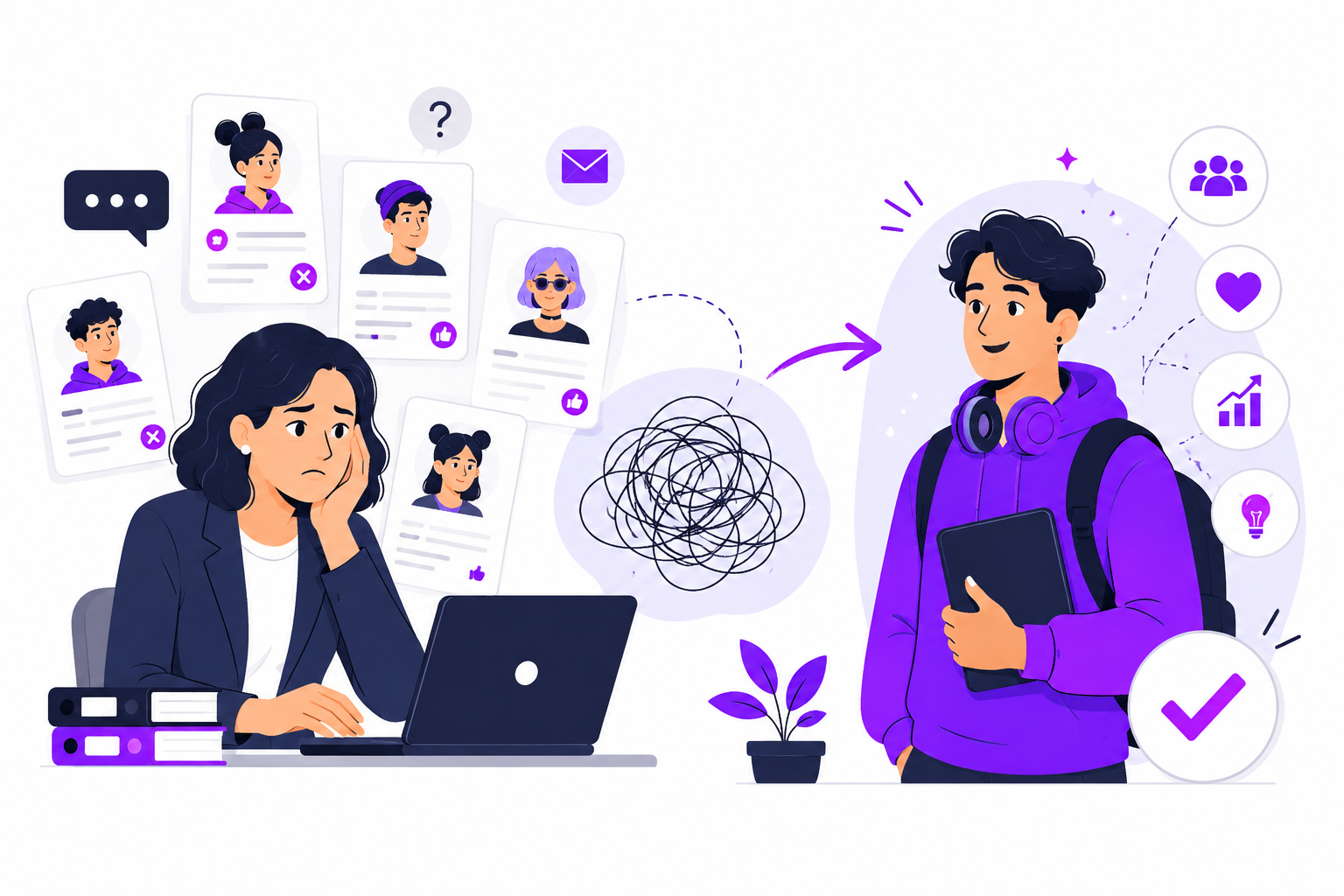
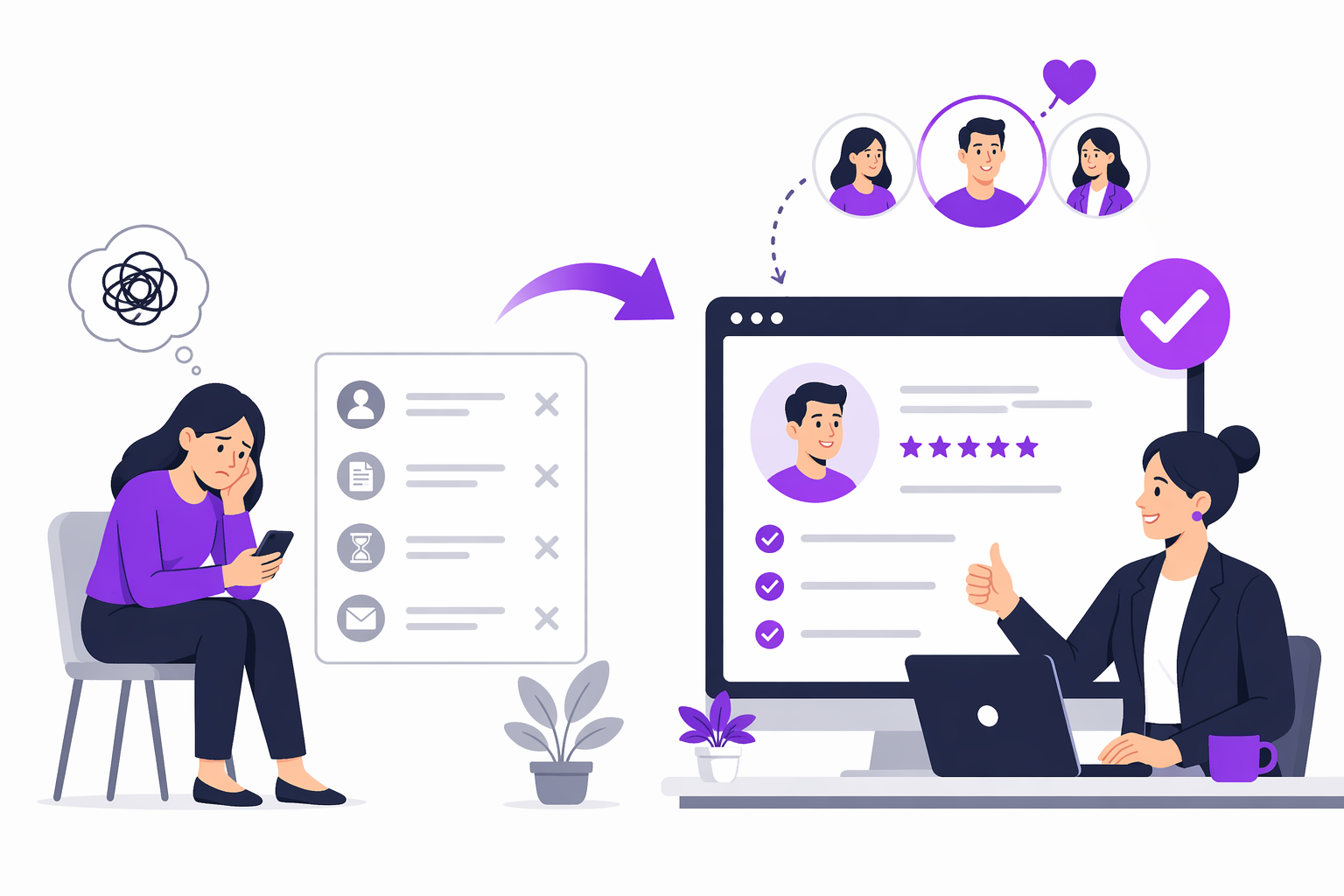
A poor candidate experience is not usually the result of one dramatic failure. Instead, it tends to emerge from a series of smaller moments that, taken together, leave a candidate unsure whether anyone is paying attention.
It might begin with an application that feels unnecessarily long. Then, the problem continues with silence after submission, followed by a request to schedule an initial screening that arrives just as enthusiasm begins to fade. Somewhere along the way, expectations become unclear, communication becomes inconsistent, and the process begins to feel less like a conversation and more like a guessing game.
The impact is measurable. Over 70% of candidates will abandon applications when the process becomes too complex or time-consuming, and a similar number report frustration with lack of communication throughout the hiring journey.
These are real-world, common outcomes of systems that were never designed to handle the volume and pace of modern hiring.
Why Even Good Hiring Teams Deliver Bad Candidate Experiences
It would be comforting to assume that poor experiences come from careless teams. In reality, they often come from capable teams working within constraints that make consistency difficult.
Hiring volume plays a role. When hundreds of applications arrive for a single role, maintaining timely communication becomes harder than most systems allow for. Manual workflows add another layer of delay, particularly when scheduling and follow-ups depend on individual availability rather than a structured process.
There is also the matter of coordination. Recruiters and hiring managers may have slightly different expectations about what they are looking for, which leads to repeated conversations, delayed decisions, and a process that feels uncertain from the outside.
None of this is intentional. It is simply what happens when the process grows more complex than the tools and habits supporting it.
Common Candidate Experience Mistakes You Might Be Making
The difficulties described above tend to appear in familiar ways.
Delayed communication is perhaps the most noticeable. Candidates submit an application and wait, often without knowing whether anyone has seen it. Many report that not hearing back is more frustrating than being rejected outright. In fact, according to LinkedIn, only 7% of candidates receive a phone call about a rejection.
Job descriptions can also contribute to confusion. When roles are described in vague or overly broad terms, candidates enter the process without a clear understanding of expectations, which makes it harder for both sides to assess fit.
Application processes sometimes stretch longer than necessary. Forms ask for information that already appears on a resume, or require multiple steps that do little to improve evaluation. It is not surprising that a significant percentage of candidates abandon applications partway through.
Interviews can introduce their own complications. When interviewers are not aligned or prepared, candidates may find themselves answering the same questions repeatedly, with little sense of progress.
And then there is the matter of closure. Many candidates complete interviews and never receive a final update, leaving them to interpret silence as the answer.
How to Fix Your Candidate Experience
Improving candidate experience does not require grand gestures. Rather, it involves addressing the points where uncertainty and delay tend to accumulate.
1. Make Communication Fast, Clear, and Consistent
Candidates rarely expect instant decisions, though they do expect to know what is happening.
Regular updates, even brief ones, provide reassurance that the process is moving forward. Clear timelines help candidates plan, and defined next steps reduce the need for guesswork.
Communication does not need to be elaborate, but it does need to be reliable. Consider using an AI voice agent like Curately's Maya to handle initial screenings so candidates aren't left waiting if they apply outside of business hours.
2. Simplify the Application and Hiring Process
An application process should collect what is necessary and little more.
Each additional step introduces an opportunity for a candidate to disengage. Streamlining forms, reducing redundancy, and ensuring that transitions between stages happen without unnecessary delay all contribute to a smoother experience.
When candidates can complete an application quickly and move into the next stage without confusion, participation improves naturally. That's why Curately offers one-tap mobile apply to make the application process as candidate-friendly as possible.
3. Set Clear Expectations From Day One
Candidates tend to make decisions based on what they understand early in the process.
Providing clarity around responsibilities, timelines, and compensation reduces uncertainty and helps candidates determine whether the role aligns with their goals.
Ambiguity, on the other hand, tends to produce hesitation, which rarely benefits either side.
4. Run Structured, Respectful Interviews
Interviews offer a clear opportunity to demonstrate how the organization operates.
Preparation matters. Interviewers who understand the role and their role in the evaluation process create conversations that feel purposeful rather than repetitive.
Candidates notice when their time is respected. They also notice when it is not.
5. Close Every Candidate Loop
A hiring process should have a clear end for every participant.
Sending a rejection update may not feel significant from the organization's perspective, though it often shapes how candidates perceive the company long after the process ends. Providing even brief feedback can leave a candidate with a sense that their effort was acknowledged.
This is particularly important when considering that many candidates will encounter the organization again, either as applicants, referrals, or customers.
6. Use Automation to Reduce Delays
Many of the issues described above are not caused by lack of intent but by lack of capacity.
Automation helps maintain consistency where manual processes struggle. Scheduling, status updates, and follow-ups can be handled in a way that ensures candidates are not left waiting unnecessarily.
Tools that support continuous engagement, including AI-driven systems, can also help maintain momentum from the moment a candidate applies through later stages of the process.
How to Measure and Improve Your Candidate Experience
Improvement requires a way to observe what is happening.
Tracking candidate drop-off rates can reveal where candidates tend to leave the process. Time-to-response offers insight into how quickly teams are engaging. Conversion rates between stages indicate whether candidates are progressing as expected.
Direct feedback provides additional context. A simple candidate experience survey can highlight issues that metrics alone might not capture.
Taken together, these measures offer a clearer picture of how the process is functioning and where adjustments may be needed.
Conclusion
Candidate experience tends to reflect the structure of the hiring process more than the intentions of the people involved.
When the process is slow, unclear, or inconsistent, candidates respond accordingly. They withdraw, accept other offers, or choose not to engage further. In many cases, they also share that experience with others, extending its impact beyond a single hiring decision.
A more thoughtful process does not require dramatic changes. It requires attention to how candidates move through each stage and where friction occurs.
Organizations that address these details find that hiring becomes less unpredictable. Candidates remain engaged, decisions happen more smoothly, and outcomes improve in ways that are both noticeable and measurable.
Frequently Asked Questions
What is a poor candidate experience?
A poor candidate experience occurs when applicants encounter delays, unclear communication, or disorganized processes during hiring, leading to confusion or disengagement.
Why does candidate experience matter?
Candidate experience influences whether candidates accept offers, reapply in the future, or recommend the company to others. Research shows it directly affects hiring outcomes and long-term retention.
How can you improve candidate experience quickly?
Focus on faster communication, clearer expectations, simplified applications, and consistent follow-ups. These changes address the most common points where candidates disengage.
What metrics should you track for candidate experience?
Key metrics include candidate drop-off rate, time-to-response, interview-to-offer conversion, and feedback from candidate surveys. These provide insight into how candidates experience the hiring process.