A recruiter sends 200 outreach messages, gets 12 replies, books 5 interviews, and watches 2 candidates ghost before the final round. The one who accepts the offer quits in month four.
If that sounds familiar, you are not running a broken desk. You are running a hiring process built for a workforce that no longer exists. Gen Z hiring difficulties are real, but most of them are not generational character flaws. They are friction points between old systems and a generation that evaluates employers the same way they evaluate everything else: fast, online, and with plenty of alternatives in view.
This article breaks down where Gen Z hiring actually goes wrong, stage by stage, and what to do about each one.
Key Takeaways
- Gen Z is now 27% of the global workforce. Their average tenure of 1.1 years is down 39% from millennials, so your hiring process will run far more often whether you like it or not.
- Replacement, not growth, drives entry-level hiring. Replacing an entry-level hire costs 30 to 50% of base salary, which makes every preventable dropout expensive.
- Speed is a filter. Gen Z candidates read slow responses as disorganization and move on. Aim for replies within 24 to 48 hours at every stage.
- Resumes alone miss your best candidates. Non-linear backgrounds like freelance work, bootcamps, and side projects get filtered out by keyword-heavy ATS rules.
- Retention starts in the job description. Salary transparency, a visible career path, and structured onboarding decide whether a hire stays past 90 days.
Gen Z Is Now 27% of the Global Workforce. Your Process Hasn't Caught Up
The numbers tell a clear story. Gen Z makes up roughly 27% of the global workforce, and that share grows every year as boomers exit and millennials move into management. At the same time, average Gen Z tenure sits at about 1.1 years, a 39% drop from millennial norms. At any given moment, 40 to 45% of Gen Z employees are actively planning their next move.
It is tempting to read that as disloyalty. It is more useful to read it as a signal. A generation that switches jobs this often will interact with your hiring process constantly, which means every weak point in that process gets exposed at scale.
The structural picture makes it harder. Entry-level roles have dropped 35% since 2023, partly due to automation and partly due to budget caution. Fewer true entry points plus a generation that job-hops by default equals a market where the candidates you want have options and very little patience.
The Real Cost of Ignoring These Difficulties
Replacing an entry-level hire costs 30 to 50% of their base salary once you account for sourcing, screening, onboarding, and lost productivity. For a $55,000 role, that is up to $27,500 spent to end up exactly where you started.
Here is the uncomfortable part: replacement hiring is now the number one driver of entry-level job postings. Companies are not posting these roles because they are growing. They are posting them because someone left.
And while 74% of business leaders say Gen Z is harder to work with than any other generation, most of those same organizations have not changed how they hire. That gap between complaint and action is where recruiting teams bleed time, budget, and credibility with hiring managers.
Gen Z Hiring Difficulties Recruiters Face at Every Stage of the Process
The problems show up across the entire funnel: attraction, interview, and early retention. Here is each one, with a concrete fix.
1. Job Descriptions Are Pushing Gen Z Candidates Away
Vague responsibilities, missing salary ranges, and the classic "3 to 5 years of experience required" on a role labeled entry-level. Gen Z candidates close that tab in seconds, and many of them screenshot it first.
Gen Z reads job postings as a culture document, not just a role summary. A JD with no salary band signals a company that will lowball them. A JD with no mention of flexibility signals a company that has not thought about it.
Fix: Include the salary band, state the remote or hybrid policy explicitly, and describe one concrete growth path. "Most people in this role move to senior analyst within 18 months" beats "opportunities for growth" every time. Then delete any experience requirement that is not genuinely necessary.
2. Slow Response Times Are Killing Your Candidate Pipeline
A millennial candidate might wait a week for an update. A Gen Z candidate interprets three days of silence as disinterest or disorganization, and they usually have two other processes running in parallel.
The benchmark to hold yourself to: respond within 24 to 48 hours at every stage. Not just after the application, but after every interview, every assessment, every touchpoint.
Fix: Automate the parts that do not need a human. Scheduling confirmations, screening acknowledgments, and "we received your assessment" messages should fire instantly. Save recruiter time for the conversations that actually require judgment.
3. Generic Outreach Gets Ignored
Mass-produced messages get dismal response rates from Gen Z. They grew up filtering spam and can spot a mail merge from the first line.
What they respond to is evidence that a human looked at their profile. A reference to a specific project, a GitHub repo, a portfolio piece, or even a skill that maps directly to the role.
Fix: One personalized line per message. That is the whole standard. "I saw your inventory dashboard project and it maps closely to what this team builds" takes 30 seconds to write and measurably lifts response rates.
4. You're Only Posting on Job Boards (They're Not Just Looking There)
Gen Z discovers jobs on LinkedIn, Instagram, TikTok, and through direct DMs. Job boards are one channel among many, and often not the first one.
The research habit matters even more: 82% of Gen Z candidates have researched a company on social media before applying. If your employer presence is a logo and a careers page last updated in 2022, you are losing candidates before they ever enter your funnel.
Fix: Put real content where Gen Z already spends time. Day-in-the-life posts from actual employees, short videos from hiring managers, and honest answers to "what is it like to work here" outperform polished corporate branding.
5. Gen Z Candidates Ghost Mid-Process
Ghosting spikes under three conditions: the process drags on too long, updates stop coming, or the role stops feeling worth the effort. All three are within your control.
The most striking data point comes from a British survey where 34% of Gen Z respondents accepted offers and then did not show up on day one. That is not random flakiness at that scale. That is process friction and competing offers winning in the gap between yes and start date.
Fix: Set the timeline upfront and put it in writing. Send a short update between every stage, even if the update is "no decision yet, expect news Friday." Cut interview rounds to the minimum that actually informs the decision. And between offer acceptance and day one, stay in touch weekly.
6. Resume Screening Alone Filters Out Your Best Gen Z Candidates
Gen Z backgrounds are non-linear by default. Freelance gigs, bootcamps, side projects, content channels, and stacked part-time roles do not translate cleanly into the traditional resume format your ATS was tuned for.
A keyword-heavy ATS configured five years ago will reliably reject a self-taught developer with three shipped projects while passing through a candidate who simply used the right phrases.
Fix: Audit your ATS filters against recent hires. Would your best current Gen Z employees have made it through? Then add at least one skills-based evaluation, like a short practical task or portfolio review, as a complement to resume screening rather than a replacement for it.
7. Traditional Interview Formats Don't Show Gen Z's Real Potential
Formal panel interviews reward polish, and pandemic-era development gaps mean many Gen Z candidates have had fewer chances to build that polish. 82% of managers say Gen Z needs more time to develop soft skills, yet most interview processes are designed to measure exactly those soft skills and little else.
The traits that actually predict success in early-career hires, coachability and learning speed, rarely get assessed at all.
Fix: Add one short, practical task that mirrors real work. Pair it with a structured behavioral question like "tell me about something you taught yourself recently and how you approached it." You will learn more from that than from another round of "tell me about yourself."
8. Bad Onboarding Is Why Gen Z Quits in the First 90 Days
In one UK survey, 44% of Gen Z new hires went to the office to pick up their badge and immediately left to work remotely. Whatever you think of that choice, it points to a real problem: remote-first onboarding strips out the organic learning that used to happen by osmosis, like watching how colleagues handle a tough call or knowing who to ask when stuck.
When that absorption never happens, new hires feel lost, underperform, and conclude the job is not for them. Then your replacement hiring cycle starts again.
Fix: Pair every new Gen Z hire with a senior mentor before day one. Build structured in-person touchpoints into the first 30 days with a stated purpose, not just attendance for its own sake. "Thursday onsite: shadowing two client calls with your mentor" works. "Mandatory office day" does not.
9. No Clear Career Path = No Reason to Stay
Almost 40% of Gen Z employees say a visible promotion path would encourage them to stay, ranking it above salary. Read that again: a clear answer to "where will I be in three years" retains better than more money.
If your interviewers cannot answer that question with specifics, expect turnover regardless of how good the offer looks.
Fix: Bring the career ladder into the offer conversation, not just the onboarding deck. Show the actual progression: titles, typical timelines, and what advancement requires. Then revisit it in the first week on the job, not the first annual review.
10. Gen Z Knows Their Market Value. Your Comp Package Needs to Reflect It
Gen Z negotiates with data. Real-time benchmarking on LinkedIn and Glassdoor means they walk into salary conversations knowing what the role pays across your market, and sometimes what it pays at your company specifically.
Cost-of-living pressure makes this sharper. Financial security ranks alongside purpose for this generation, and an offer that ignores market data reads as either out of touch or deliberately low.
Fix: Publish transparent compensation bands. Run regular cost-of-living reviews and say so. And explain the full package clearly, because equity, benefits, and development budgets only count if the candidate actually understands them.
A Practical Gen Z Hiring Checklist for Recruiters
The save-this section. Run your current process against it and see where the gaps are.
Before You Post the Job
- Include the salary range
- Describe your flexibility and remote policy explicitly
- Show a concrete growth path, not just "opportunities to grow"
- Remove experience requirements that are not genuinely necessary
During the Hiring Process
- Respond within 24 to 48 hours at every stage
- Set a clear timeline and communicate it upfront
- Use at least one skills-based evaluation: a task, portfolio review, or structured behavioral question
- Personalize outreach by referencing something specific about the candidate
After the Offer Is Accepted
- Assign a mentor before day one
- Run structured onboarding with in-person touchpoints
- Schedule 30/60/90-day check-ins with clear goals
- Have the career path conversation in the first week, not the first annual review
Common Mistakes That Keep These Problems in Place
Treating Gen Z difficulties as an attitude problem. Teams that blame the generation never fix the process, and the process is the part you control.
Fixing one stage and ignoring the rest. Faster outreach does not help if candidates then sit in silence for two weeks after the first interview. The funnel fails at its slowest point.
Automating the wrong things. Automation should remove silence and busywork, not human judgment. A bot that schedules interviews instantly is great. A process where no human ever engages with the candidate is how you get day-one no-shows.
Measuring time-to-fill but not 90-day retention. A fast hire who quits in month three is a failed hire. If your metrics stop at the offer letter, your process will optimize for the wrong outcome.
How Curately.AI Helps You Solve Gen Z Hiring Difficulties
Everything above comes down to three operational demands: speed, personalization, and consistency across the funnel. That is hard to deliver manually at volume, which is exactly the problem Curately is built around.
Stop Losing Gen Z Candidates Between Tools
Most recruiting teams run separate tools for sourcing, messaging, screening, and scheduling. Context gets lost at every handoff, and lost context turns into the silence that makes Gen Z candidates ghost.
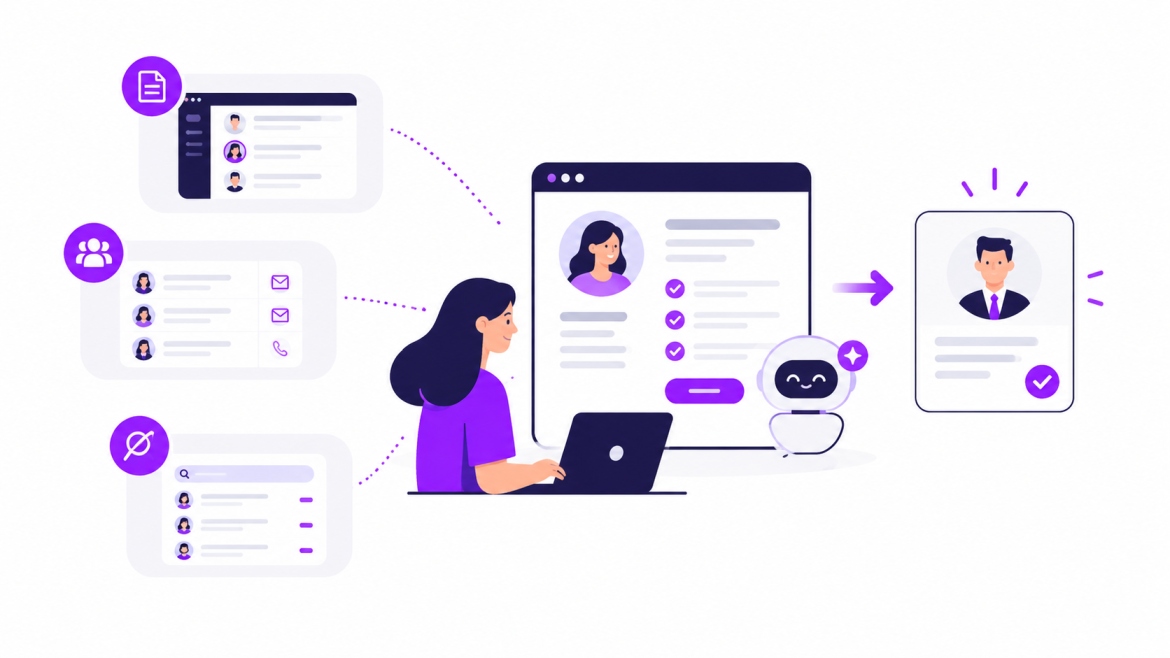
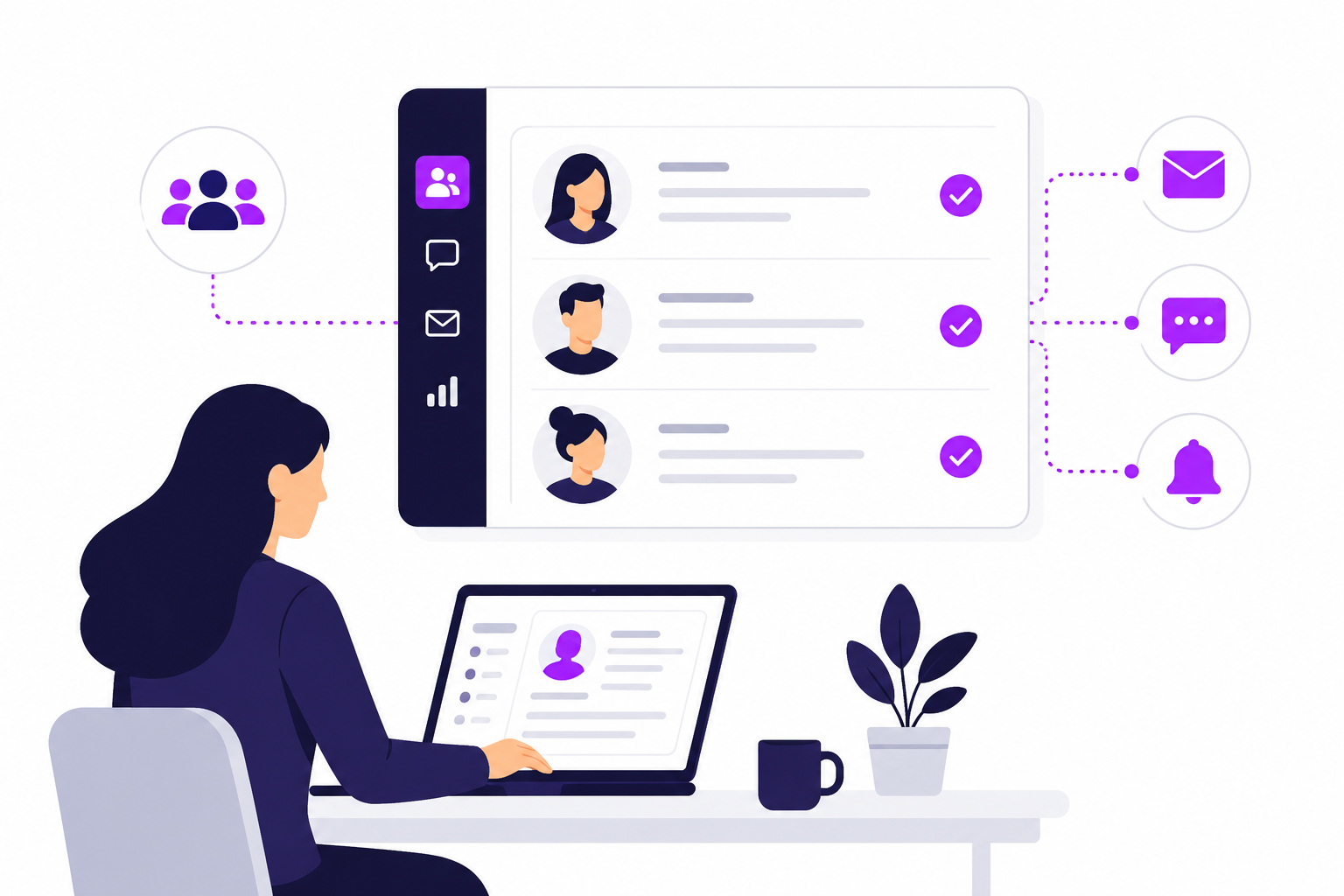
Curately connects Find, Engage, and Convert in one workflow, so every candidate interaction lives in one record. No rebuilding context when a candidate moves between stages, and no candidate sitting in a gap between systems.
Find and Prioritize Best-Fit Gen Z Candidates Faster
AI Sourcing identifies candidates across outbound sourcing, inbound applicants, and your existing talent pool. AI Match ranks and shortlists best-fit candidates so recruiters spend their limited hours on people actually worth pursuing.
Rediscovery activates talent you already have. Given how often Gen Z candidates re-enter the market, the strong candidate you passed on eight months ago may be exactly who you need now, and you should not have to start from zero to find them.
Keep Gen Z Candidates Engaged With Automated Two-Way Conversations
The Voice AI Recruiter handles outreach, screening, FAQs, and follow-ups, so no candidate sits in silence waiting for a response. Two-way chat flows keep conversations moving without a recruiter manually chasing every reply.
The Career Portal and Chatbot capture inbound interest the moment it arrives and guide candidates to the right next step instantly. That 24-to-48-hour response benchmark becomes the floor, not a stretch goal.
Convert Candidate Momentum Into Scheduled Interviews, Without the Back and Forth
Rules-based qualification and routing auto-move candidates to the right next step based on criteria you set. Scheduling syncs with calendars and sends reminders automatically, ending the "does Tuesday at 2pm work?" email chains where momentum goes to die.
Stage Tracking gives recruiters full visibility from first touch to filled, so no candidate falls through the cracks of a busy week.
Conclusion
Gen Z hiring difficulties are not going away, because Gen Z is not going away. By 2030 they will be roughly a third of the workforce, and the generation behind them shares most of the same expectations.
The good news is that almost every problem in this article is a process problem, and process problems have fixes. Start small: pick the two checklist items your team fails most often, fix those this quarter, and measure the change in response rates and 90-day retention.
If keeping up with the speed and personalization Gen Z expects feels impossible at your hiring volume, that is the gap Curately was built to close. See how it works with a quick walkthrough, or just steal the checklist and start there. Either way, your next Gen Z hire will notice the difference.