Picture this. You pull together a list of 30 solid candidates for a new role. You actually get about 7 of them on the phone, mostly because you finally sent out that overdue email blast. Out of those 7, you submit 3, and 1 lands an interview.
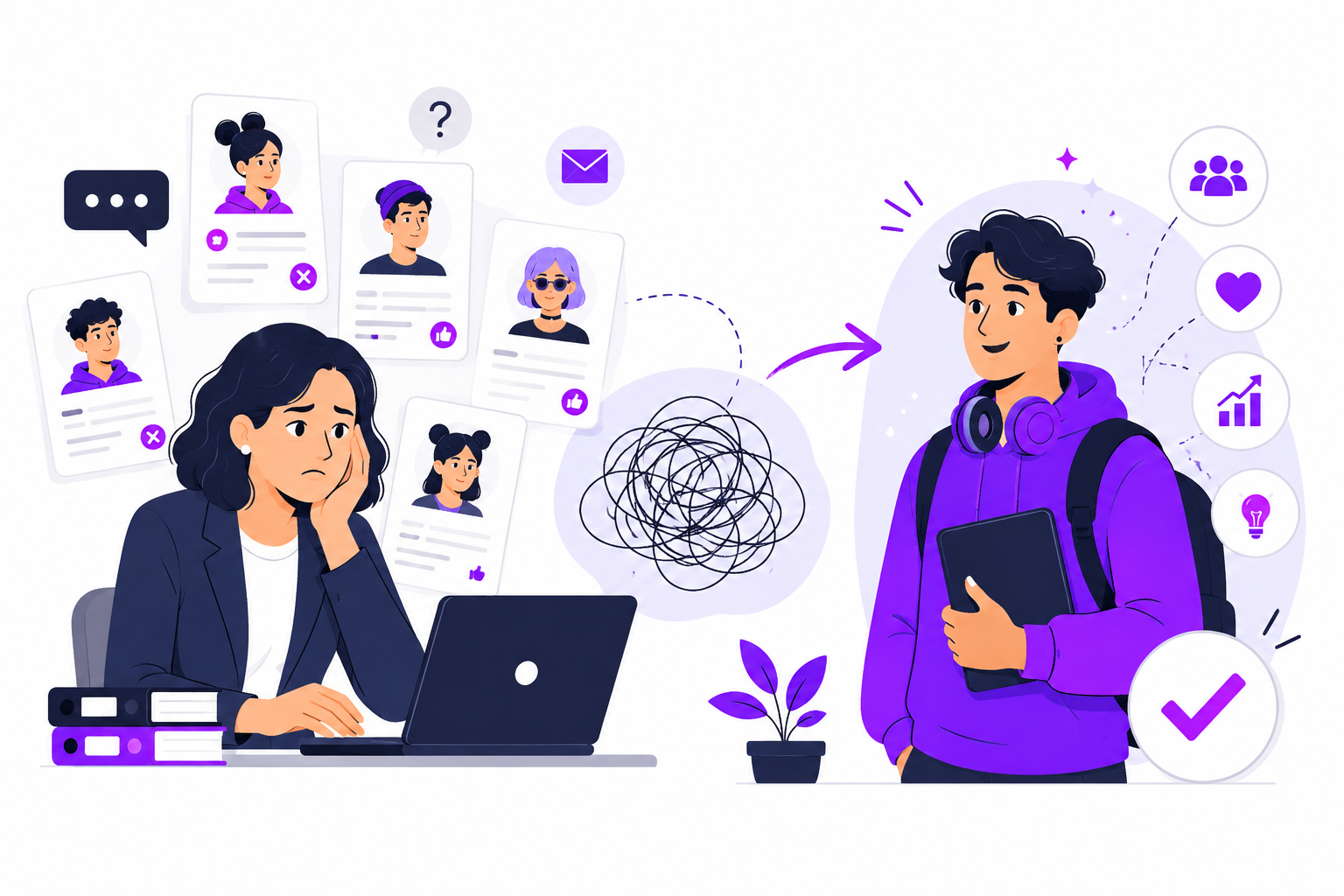
The other 23 sit quietly in your database. Not because they were bad candidates. Just because a new req landed on your desk, and you had to move on to the next fire.
If that sounds familiar, you're not doing anything wrong. You're doing what every recruiter does when there are more open roles than hours in the day. The real problem isn't effort. It's that most recruiting teams never built a system to keep talking to candidates after the first message goes out.
That gap, between wanting to stay in touch and actually having the time to do it, is exactly what a candidate engagement platform is built to close.
What Is a Candidate Engagement Platform?
A candidate engagement platform is not your ATS.
Your ATS is where you track applications, manage job requisitions, and keep records straight for compliance. It's your system of record.
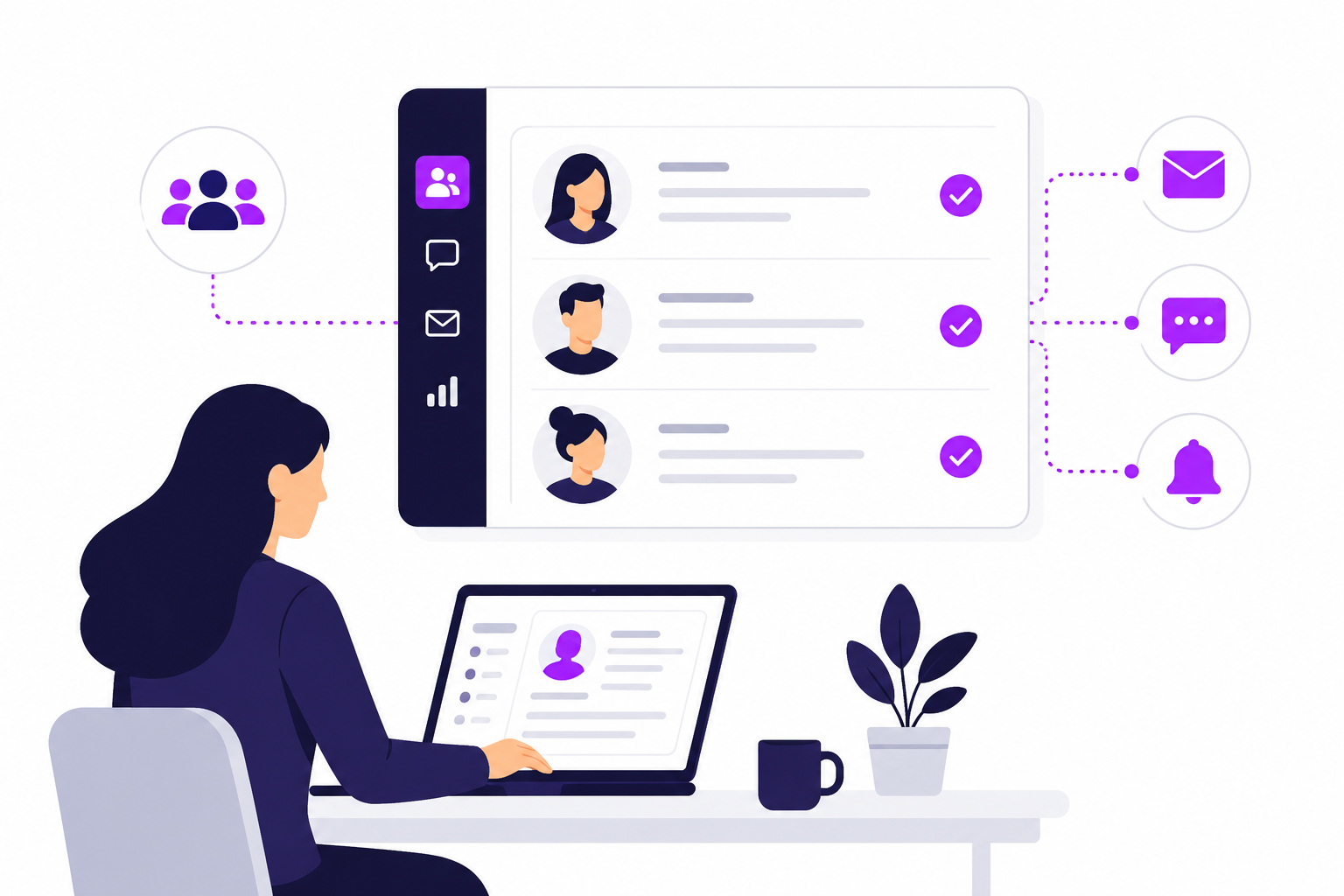
A candidate engagement platform is your system of engagement. It's the layer that actually talks to candidates: sending messages, running follow ups, screening people over voice or text, and nudging them toward the next step, without a recruiter doing all of that by hand every single time.
Think of your ATS as a filing cabinet. It holds everything, but it doesn't pick up the phone. A candidate engagement platform is what dials the number, sends the text, or answers a candidate's question at 9pm after your recruiting team has already gone home for the day.
Candidate Experience vs. Candidate Engagement
People use these two terms like they mean the same thing. They don't, and mixing them up usually leads you to fix the wrong problem when something goes wrong.
Candidate engagement is what you do. It's the text that goes out the second someone applies, the follow up email three days later, the reminder before an interview.
Candidate experience is how the candidate feels about all of that. You control engagement completely. You only influence experience.
| Aspect | Candidate Engagement | Candidate Experience |
|---|---|---|
| What it is | The actions and messages you send | How the candidate feels about receiving them |
| Who's in control | You are | The candidate's perception, shaped by you |
| The goal | Keep candidates informed and moving forward | Leave every candidate with a fair, human impression |
Here's where it gets tricky. You can have great engagement and still deliver a bad experience.
Say a candidate applies for a warehouse role. Your system fires off a text within two minutes: "Thanks for applying! Next step: a quick 5 minute assessment." That's fast, automated, and right on schedule. By any measure, that's good engagement.
But if that same candidate never hears from an actual person again, never gets told they didn't move forward, and every message reads like it came from a machine with no name attached, the experience still feels cold. The engagement worked exactly as designed. The experience still failed.
This is the part a lot of recruiting teams miss when they buy engagement software expecting it to fix candidate experience on its own. A platform gives you the tools to stay consistent. What you actually say, and how human it sounds, is still on you.
Why Recruiters Need a Candidate Engagement Platform
Here's a story worth knowing if you've ever wondered whether candidate experience really shows up on a balance sheet.
Virgin Media once found that a poor candidate experience was costing the company close to $5 million a year. The reason wasn't really about hiring at all. A chunk of the candidates it treated badly during the process turned out to also be paying customers, and enough of them cancelled their service afterward that the loss became measurable.
That's not a one-off story either. More than a quarter of candidates have turned down a job offer specifically because of poor communication, and over a third have walked away after a bad interview experience.
For staffing firms specifically, the cost usually shows up somewhere even more direct: response time. The longer a candidate waits after applying, the more likely they are to lose interest, take another offer, or just stop answering the phone. Speed to first contact is one of the strongest, most measurable levers in the entire hiring funnel, and it's also one of the easiest to fix once you have the right system doing the waiting for you instead of a recruiter's to-do list. If ghosting is already a pattern in your pipeline, our guide on tools to reduce candidate ghosting breaks down where the drop offs usually happen.
How a Candidate Engagement Platform Transforms Each Industry
The word "engagement" means something different depending on who you're hiring for. Here's what that actually looks like across four industries.
Staffing
Staffing runs on redeployment. A contractor's assignment ends in two weeks, and if nobody reaches out before day one of unemployment, that person starts looking elsewhere, sometimes with a competing agency down the street.
A good candidate engagement platform automates that exact moment. Seven days before an assignment ends, the system sends a text asking about availability for the next role, and only flags the recruiter once the candidate actually responds. Nobody has to remember to check a spreadsheet of end dates ever again. This is the same pattern we cover in the future of the staffing industry.
Manufacturing
Manufacturing and warehouse hiring live and die by volume and speed. You might need forty people for a shift starting Monday, and most of those applicants are checking a phone between tasks, not sitting in front of an inbox.
Email gets ignored. A text gets answered in minutes. The platforms that work well here lead with SMS first, send shift details and start times in a message someone can read on a break, and cut down the no-show rate that quietly wrecks fill rates on the floor. For a deeper playbook, see our guide to high volume hiring best practices.
Healthcare
Healthcare hiring carries a layer most other industries don't deal with: credentials and compliance. A nurse candidate isn't just a resume. They're a license number, a certification expiry date, and often a background check that has to clear before day one.
The right platform doesn't just message candidates faster, it tracks when a credential is about to expire and nudges both the candidate and the recruiter before it becomes a real problem. Pair that with fast shift-fill communication, and you cut down the two things that slow healthcare staffing more than anything else: paperwork delays and slow callbacks. We go deeper on this in healthcare talent acquisition and how AI sourcing shortens time to hire in healthcare staffing.
Technology
Tech hiring has almost the opposite problem. Nearly three out of four candidates in today's market aren't actively job hunting. They're comfortable where they are, and they get several recruiter messages a week that all sound the same.
Engagement here is a long game. It looks like sharing something genuinely relevant months before a role opens, a note that references something specific about the candidate's actual work, and a nurture sequence that doesn't go silent the moment the first message gets no reply. For more on this side of the funnel, see how to attract passive candidates.
Key Features to Look for When Buying a Candidate Engagement Platform
Feature lists are easy for a vendor to write and mostly useless once you're the one signing the contract. A platform can check every box on a features page and still not solve your actual problem.
Ask these questions instead.
Does it replace my ATS, or work alongside it? If a platform wants you to migrate years of candidate history and retrain your whole team on a new system of record, the cost of switching might outweigh whatever you gain. The better answer is a platform that syncs natively with the ATS you already have.
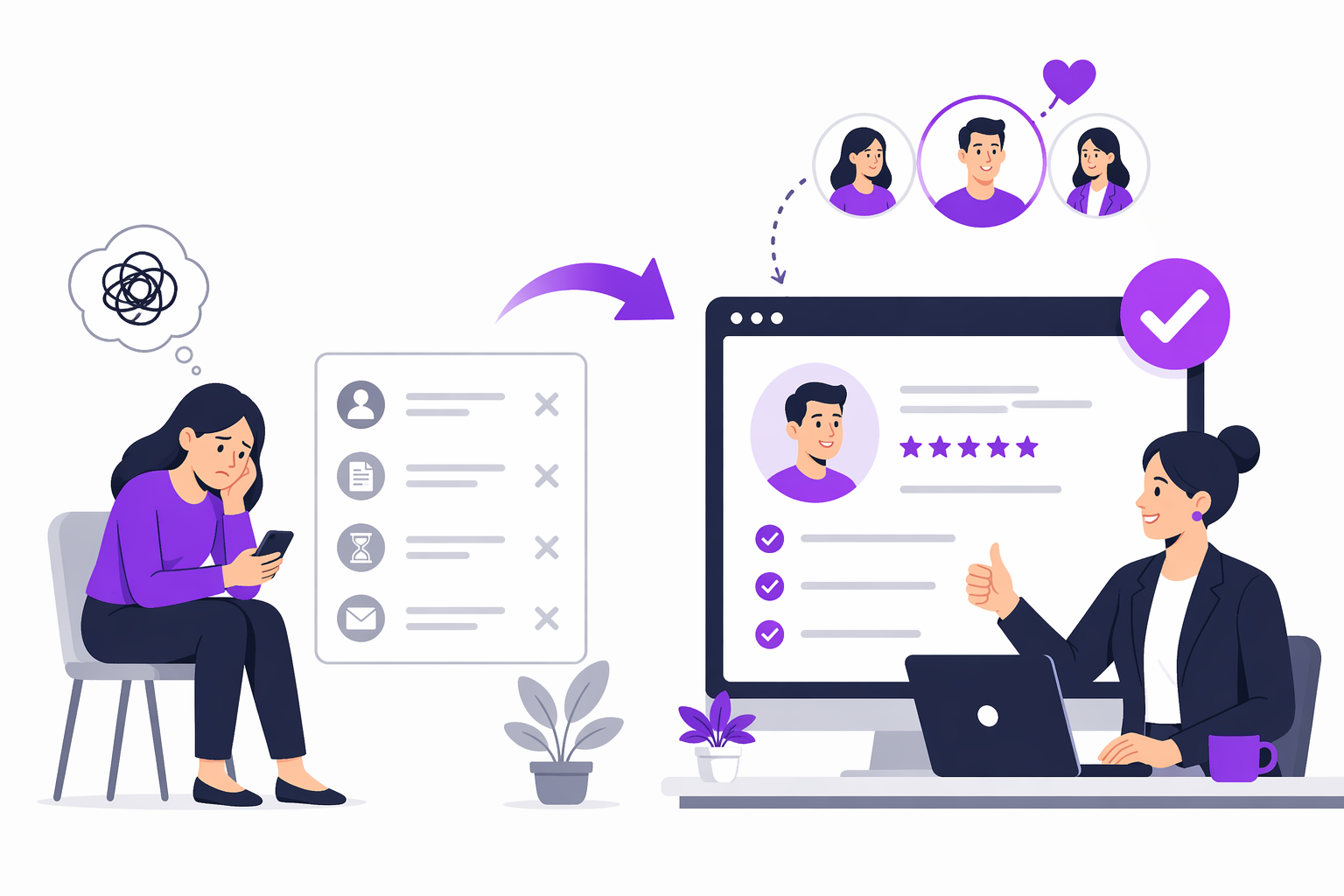
Is my candidate one profile, or four? A lot of firms end up with a messaging tool, a separate sourcing tool, a separate scheduling tool, and a separate AI screening tool, each with its own login and its own version of the same candidate. When a recruiter has to check four places to know what's actually going on with one person, that isn't automation. It's just a more expensive version of the same chaos. Our recruiting automation software guide walks through what a connected stack should actually look like.
How fast can it actually respond to a new applicant? Not how fast it can send an email. How fast it can call, text, or screen someone the moment they apply, including at 11pm on a Sunday, without a recruiter touching it. This is exactly where voice AI for enterprise talent acquisition changes the math.
What happens to a candidate who doesn't reply the first time? One automated message isn't a strategy. Ask whether the platform can run a real sequence: a text now, a follow up in three days, an email a week later, without someone triggering each step by hand.
What does it actually cost once every piece is added up? A lot of vendors quote a low starting price, then charge separately for messaging, AI matching, voice screening, and scheduling. Get the full number before you compare it to anything else. For a broader feature checklist, see best AI recruiting platform features.
The Best Platform for Automated Candidate Engagement in 2026
If you're a staffing firm working through those five questions, here's where Curately fits into the answer.
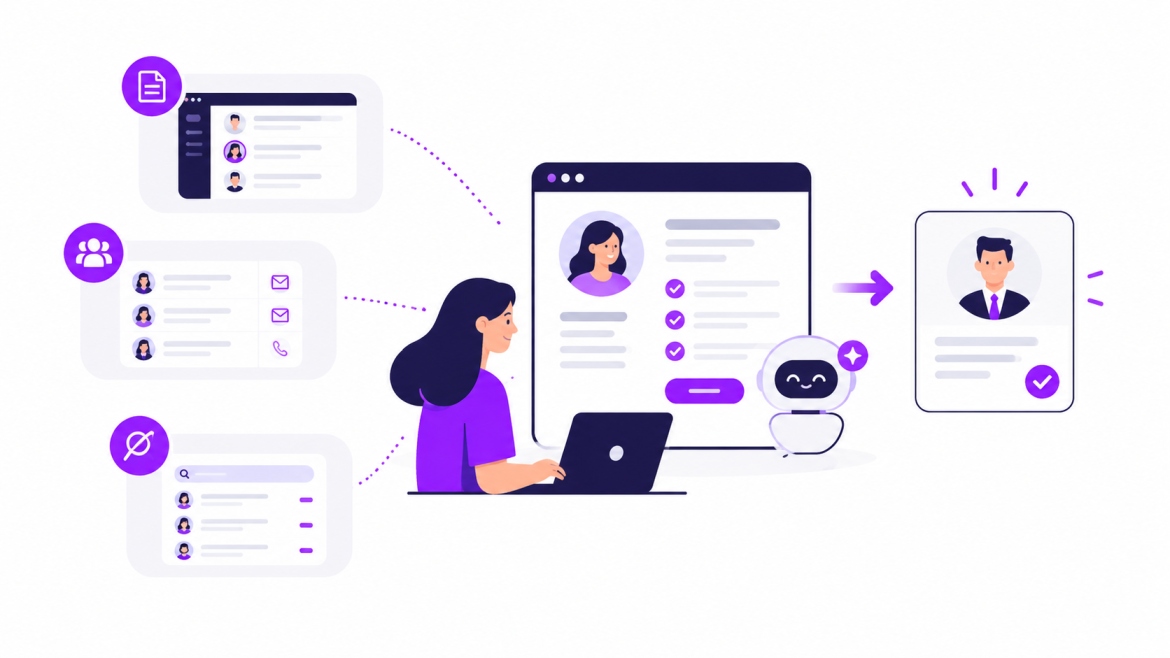
Curately was built specifically for staffing firms tired of running five different tools to do one job: stay in touch with candidates. Instead of separate logins for sourcing, matching, screening, messaging, and scheduling, everything runs on one shared candidate profile from the moment someone is sourced to the moment they're placed.
The workflow looks like this. A candidate gets sourced or applies, pulling from a sourcing pool of more than 200 million profiles through Curately's AI Sourcing platform. AI matching scores them against open roles, and Voice AI screens and qualifies them automatically, including outside business hours.
From there, messaging and nurture sequences keep the candidate warm, and scheduling books the interview without an email back and forth. The recruiter only steps in once the candidate is actually ready to talk, and none of it requires switching between four separate dashboards. It's one dashboard the whole way through.
The ATS question gets answered simply too. Curately connects natively to the ATS platforms staffing firms already run, so the ATS stays the system of record and nobody has to relearn how they work.
On response time, one staffing customer described it plainly: "Before, candidates might sit for 15 to 72 hours before we got to them. With Curately, now they're getting a call within about a minute, and that alone helped us reach about 10% more applicants." That's Evan Zmarthie, Operations Manager at The Nurse Connection Staffing.
Other staffing leaders describe the same shift in different words: less time spent stitching together screening, sourcing, and outreach tools by hand, and more time actually talking to candidates who are ready to move forward. If you want to see what that looks like against your own numbers, Curately's ROI calculator walks through it based on what you're already spending across separate tools.
FAQ
What is a candidate engagement platform? A candidate engagement platform is software that automates communication with candidates, messages, follow ups, screening calls, and scheduling, so no one gets forgotten in your pipeline. It works alongside your ATS instead of replacing it.
Is a candidate engagement platform the same as an ATS? No. Your ATS is the system of record for applications and placements. A candidate engagement platform is the layer that actually talks to candidates day to day, and the best ones sync natively with your ATS instead of duplicating it.
Do I need one if I already have a CRM? A CRM stores candidate information and relationship history. It doesn't automatically message people, screen them, or run a follow up sequence on its own. A candidate engagement platform adds that active, automated layer on top of the data your CRM already holds.
How fast should I be responding to new applicants? As close to immediately as your team can manage. Firms that cut their response time from a day or more down to a few minutes consistently report reaching more of their applicant pool, mainly because fewer candidates have time to lose interest or take another offer first. See AI recruiting tools that reduce time to fill for more on this.
What's the most common mistake staffing firms make with this kind of technology? Buying tools one at a time. A messaging tool here, a sourcing tool there, an AI screening add-on somewhere else, until a recruiter is juggling four logins to manage what should be one candidate relationship.
Conclusion
If there's one number worth remembering from all of this, it's the response time gap. Fifteen to seventy two hours versus about a minute isn't a small difference. It's the difference between a candidate who takes your client's offer and one who quietly takes somebody else's.
Every workflow, every industry example, and every buyer question in this guide points back to the same idea. Candidates go quiet when they're made to wait, and they stay engaged when someone, or something, keeps showing up on time.
If your team is still stitching together separate tools to make that happen, it might be worth seeing what one connected platform looks like instead. You can schedule a demo or download the Buyer's Guide if you'd rather look through the numbers on your own first.