Ask a room full of recruiters whether candidates like being screened by AI, and you will get a strong reaction fast. Most people assume the answer is no. Nobody wants to talk to a robot when they are trying to get a job.
The data tells a more interesting story. In some of the largest studies available, candidates responded to AI screening at rates that surprised even the researchers running the experiment. A meaningful share of candidates said they actually preferred it over talking to a human recruiter.
That doesn't mean AI beats human recruiters across the board. What the data actually points to is something more specific: candidates respond well when AI is used with structure and honesty, and less well when it isn't. Whether a candidate is told AI is involved, and whether the process behind it is well built, seems to matter more than whether AI is used at all.
Most articles on this topic lean on the same two or three sources: one large field experiment, one candidate survey, and a handful of numbers from AI recruiting vendors. We pulled all of it together here, and we'll tell you exactly where each stat comes from and where it does and doesn't apply, so you can use this to make a real decision rather than just repeat a talking point.
What Is an AI Recruiter?
"AI recruiter" gets used loosely, and that loose usage causes real confusion. So let's define it clearly.
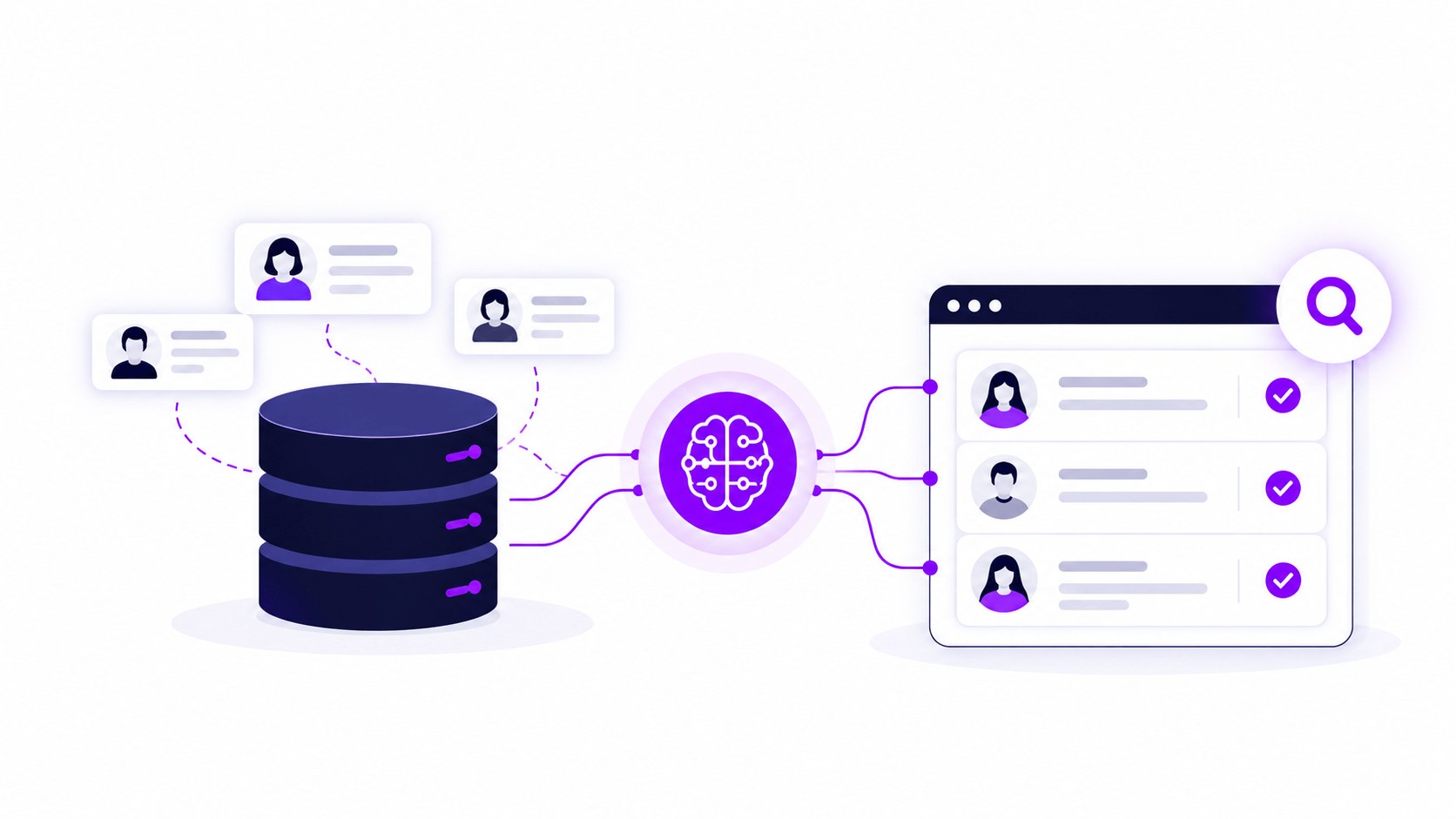
At its core, an AI recruiter is software that handles part of the hiring process, usually sourcing candidates, screening them, or running an interview, so a person doesn't have to do that specific task by hand every time. In every credible source we reviewed, whether that's academic research, vendor documentation, or survey data, one thing stays consistent: a human still makes the final call on who gets hired. That's a good detail to confirm with any vendor upfront, since it should be true of any tool worth using.
It also helps to separate the tiers, because candidates actually run into three fairly different things, and most articles blur them into one:
- Chatbots that answer questions or book interview times. Low stakes, mostly logistics.
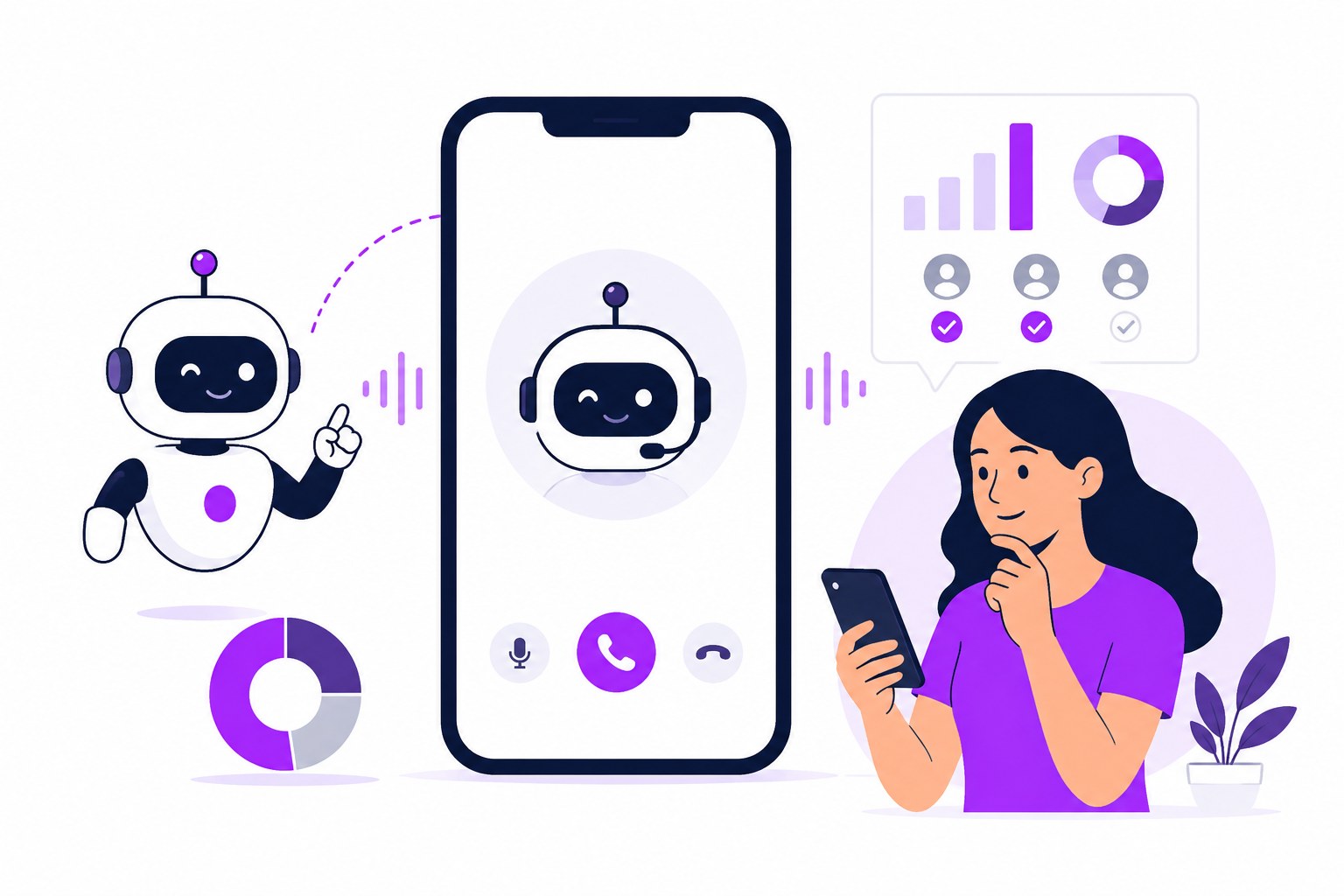
- Automated voice or text screening calls that ask a set of qualifying questions, similar to what a recruiter would ask on a first call. This is the layer most people mean when they talk about voice AI in enterprise talent acquisition.
- Structured AI interviews with a scoring rubric, usually used earlier in the funnel for higher-volume roles.
This isn't a small, experimental corner of hiring anymore. A 2026 candidate survey from Greenhouse, the applicant tracking system, found that 63 percent of US candidates say they've already gone through an AI interview at some point, up 13 percentage points from just six months earlier. Whatever you think about the technology, a lot of candidates have already met it.
One practical habit worth building: before you sign with any vendor, ask them plainly which of the three tiers above their product actually covers. Product pages tend to describe "we have a chatbot" and "we run structured interviews" as if they're the same thing, and the difference matters a lot for what candidates will actually experience.
Common Myths About AI Recruiters (and What's Actually True)
Let's go through the four things we hear most often from recruiters and hiring managers, and check each one against what the research actually says.
Myth: "Candidates hate it." This is the objection we hear most, and it's not entirely wrong, though it's not quite accurate either. The best evidence available comes from a large field experiment run jointly by Erasmus University Rotterdam and the University of Chicago's Booth School of Business, covering around 70,000 job applicants. When candidates were given a free choice between an AI voice interview and a human one, 78 percent chose the AI. In post-interview surveys, 71 percent of the AI group gave positive feedback about their experience, compared to 52 percent of the human-led group.
One caveat is worth keeping front of mind: this study was run on entry-level customer service roles at a call center in the Philippines. That's a specific, high-volume, relatively low-stakes hiring context, and it doesn't automatically mean a candidate applying for a senior engineering role or a client-facing sales job would feel the same way. Treat it as strong evidence for one type of hiring, and a useful signal for others, rather than a universal rule.
Myth: "AI interviews are shallow." In that same study, AI-led interviews actually covered more hiring-relevant topics on average than the human-led ones did, about 6.8 out of a possible 14 topics, compared to 5.5 for human interviewers. They were also rated as more comprehensive and easier to follow, with a clearer beginning, middle, and end.
The real explanation isn't that AI understands people better than your recruiters do. It's that structure works, and AI is remarkably consistent about following it. A human interviewer having a rough day, running behind schedule, or simply forgetting a planned follow-up question will naturally produce a weaker interview than a script that never gets tired or loses focus.
Myth: "AI removes bias." Half true, and the true half comes with real limits. In the same field experiment, candidates reported gender bias far less often with AI interviewers than with human ones, 3.3 percent compared to roughly 6 percent. That's a meaningful difference.
But bias doesn't disappear just because a human isn't asking the questions. It tends to show up somewhere else instead, usually in the training data or in how the algorithm was built. Amazon's own hiring tool is a well-known example: the company had to shut it down internally after discovering it had learned to downgrade resumes that included the word "women's," simply because it had trained on years of resumes that were mostly from men. Oversight is still catching up too. New York City passed a law requiring public bias audits for automated hiring tools, and the city's own comptroller later reviewed how well complaints were being handled and found that 75 percent of test calls reporting violations were being misrouted, with inspectors identifying 17 likely violations where the city's regulator had only caught one. It's a useful reminder that having a rule in place and having it work well day to day are two different things, which is a good reason to build your own checks rather than assume a law somewhere else has it covered. If bias is a live concern for your team, our deeper look at recruitment bias in hiring covers where it usually hides.
Myth: "If they finished the interview, everything is fine." This might be the myth with the biggest real-world impact, simply because it's easy to miss. A candidate finishing an AI interview tells you almost nothing about how they felt about it afterward. Greenhouse's 2026 candidate survey found that 51 percent of candidates who completed an AI interview received no response at all afterward. Completion just means the process didn't break down partway through. It doesn't mean the candidate walked away with a good impression.
AI Recruiter vs. Human Recruiter: Who Actually Performs Better?
Let's start with the numbers, then unpack what they actually mean.
In the same field experiment covering roughly 70,000 candidates, applicants who went through the AI interview ended up with a 12 percent higher chance of getting a job offer, an 18 percent higher chance of actually starting the job, and were 17 percent more likely to still be employed 30 days later, compared to candidates who went through a human interview for the exact same roles.
Worth reading that twice, because it's easy to misread. This isn't a story about AI judging people better than a good recruiter would. It's a comparison between a consistently structured AI process and a human process that, in this study, wasn't held to the same consistency. If your team already interviews from a fixed rubric every time, asks the same core questions in the same order, and doesn't let interviews drift based on mood or time pressure, this gap will likely be much smaller for you. Structure is doing most of the work here, and it's something your human recruiters can apply just as well. It's the same pattern we see when comparing AI sourcing with manual sourcing: consistency, not cleverness, drives most of the gain.
There's a genuinely useful, slightly counterintuitive finding in the cost data too. Each AI-led interview cost roughly $1.30, against $2.48 for a human-led one, so the AI interviews came out cheaper. But time to hire was actually a bit longer with AI, 22 days compared to 19. The reason turns out to be a good one: recruiters spent more time reviewing the AI interview transcripts before making a decision. That's not the technology falling short. That's recruiters doing exactly what they should, treating AI output as one more piece of evidence to weigh carefully rather than a verdict to rubber stamp.
One more note, just to keep this section clean. A few other write-ups of this same study reference figures like "35 to 40 percent more candidates handled per recruiter" or "11 days faster time to fill." We went back to the original research and the press coverage and couldn't trace those specific numbers to the source, so we've left them out here. The 12, 18, and 17 percent figures above are the ones we could verify directly, and that's what we'd recommend building on.
Do Candidates Actually Respond to AI Recruiter Calls?
This is the question most recruiters actually want answered, so let's get right to it.
Yes. In real deployments, response and completion rates for AI screening calls tend to run high. But "responded" and "had a good experience" are two different things, and a lot of content online treats them as if they're the same measurement. We're keeping them separate here, because blending the two is how a team can end up believing their AI rollout is going well when the candidate experience on the back end has actually gone quiet.
Start with the field experiment numbers again, since they're the most rigorous data point we have. 78 percent of candidates chose an AI interview when given the option, and technical issues only affected about 7 percent of AI-led interviews. Outright refusal was rare too. In the same study, only about 5 percent of candidates declined to engage with the AI voice agent at all.
We also came across a real example worth sharing, clearly labeled for what it is: one company's experience, not a benchmark. A VP of HR at a fast-growing, roughly 70-person company told us that after inviting hundreds of candidates to an AI phone screen across several hiring cycles, only one person asked to speak with a human instead. That's a single data point from a single company, not proof of anything universal, but it does line up directionally with the refusal rate from the larger study.
It's worth adding one more layer, because response rate on its own doesn't tell the whole story. One recruiting platform's internal analysis of more than 400,000 candidate replies to outreach messages found that 62 percent carried positive intent, meaning the candidate expressed interest or tried to schedule a conversation. That's a helpful signal about candidate outreach broadly, though it measures something a bit different from AI interview response specifically, so we want to be clear about that distinction rather than blend two different things into one clean-sounding number.
And here's the number we'd encourage every reader to hold onto. Greenhouse's 2026 survey found that 51 percent of candidates who completed an AI interview never heard back afterward. A strong response rate at the front of the funnel doesn't mean much if the experience goes quiet right after. If there's one thing to take from this section, it's that.
Why Disclosure Changes How Candidates Respond to AI
If this article had room for only one section, this would be it. Disclosure turned out to be the biggest single factor in the data, bigger even than whether AI is used at all.
Here's the number worth sitting with. In Greenhouse's 2026 survey, 70 percent of candidates said they weren't clearly told AI would be involved before their most recent AI interview, and 21 percent only realized it once the interview had already started. That matters for trust. The candidate usually isn't reacting to AI itself. They're reacting to not knowing who, or what, they were actually talking to.
That reaction shows up in real numbers too. Undisclosed AI use and unexplained AI monitoring were the second and third most common reasons candidates gave for walking away from a hiring process entirely, at 27 percent and 26 percent, just behind pre-recorded video interviews scored by AI with no human present at all, at 33 percent. That's a meaningful share of a candidate pool leaving over how a process was designed, not because of anything the candidate did wrong, which makes it one of the more solvable problems on this list. It sits alongside the other patterns we cover in how to fix a poor candidate experience.
The fix here doesn't require new technology or a bigger budget. It just takes one honest sentence in your invite message: let the candidate know AI will be part of the process, confirm that a person reviews the outcome, and offer a way to request a human conversation instead if they'd rather have one. Forty-six percent of candidates specifically said they want that option available. You don't need anything complicated to offer it, just a clear line in your scheduling email, backed by someone on your team who actually honors the request when it comes in.
And this next figure reframes the whole topic: only 19 percent of candidates said they want less AI used in hiring overall. Most candidates aren't rejecting the technology. They're reacting, understandably, to not being told about it.
Where AI Recruiting Is Headed in 2026
A quick note before this section: anything about regulation and adoption rates has a short shelf life. Rules get updated, surveys get repeated with new numbers, and vendors tend to round in whatever direction suits them. Treat what follows as a snapshot, and check the current status yourself before making any decision tied to a specific date mentioned here.
On regulation, the clearest example of how fast this moves is the European Union's AI Act, which classifies hiring and candidate evaluation tools as "high risk" systems that require documented human oversight, bias testing, and candidate transparency. Depending on which source you read, the compliance deadline for these hiring tool provisions is either August 2, 2026, or it was pushed to December 2, 2027, following a later legislative agreement. We found sources supporting both dates, published within the same year, which shows how quickly this can move. If a compliance deadline matters for your business, it's worth checking the official EU source directly rather than relying on any single blog post, including this one.
On adoption, you'll see numbers ranging anywhere from roughly 40 percent to close to 90 percent of companies "using AI in hiring," and both figures can be accurate at the same time. It comes down to what counts as "using AI." A company whose applicant tracking system auto-ranks resumes by keyword match would answer yes. A company running full AI voice interviews would also answer yes. Those are very different levels of adoption getting counted under the same label. The claim we can make with confidence is that most large employers now use some form of AI somewhere in hiring, and exactly which tasks that covers varies a lot from company to company.
One grounding fact to keep in mind here: having a law in place doesn't automatically mean it's being enforced consistently yet. New York City's own comptroller reviewed how its automated hiring bias audit law was working in practice and found that most test complaints meant to check the system were getting misrouted before reaching the right regulator. Regulation is still catching up with the technology, which is exactly why it makes sense to hold your own hiring process to a higher standard than the law currently requires, rather than waiting for the rules to close that gap.
Mistakes That Lower Your AI Recruiter Response Rate
Most of what hurts response rates is easy to fix once you can see it, and none of these fixes require new software. Here are the four we see come up most often.
Skipping disclosure. We covered this in detail above, so we won't repeat all of it here, but the short version deserves a callback: this is the most effective fix on this whole list, and it costs one honest sentence in an invite email.
Personalization that isn't really personal. Candidates have gotten good at spotting a message that only pretends to know something about them. Swapping in a first name and job title isn't personalization, it's a template with a blank filled in, and candidates can usually tell the difference right away. Recruiters in industry forums have reported that AI-generated outreach, when nobody reviews or adjusts it before sending, gets replies at roughly a third the rate of messages that are genuinely personalized around something specific and true about the candidate. That's a forum-reported figure from working recruiters comparing notes, not a controlled study, but it matches what experienced sourcers have known from doing this by hand for years.
Going quiet after the interview wraps up. This is probably the most common mistake on this list, and also one of the easiest to fix. If the 51 percent no-response figure from earlier in this article holds up across the industry, a lot of teams are doing this without realizing it. An automated status update, even a short one, closes most of this gap. It doesn't need to be elaborate. It just needs to happen. It's also the single biggest driver behind candidate ghosting, in both directions.
Not offering a way to reach a human. Roughly 5 percent of candidates in the field experiment declined to do an AI interview when it was the only option available. A visible, easy-to-find "prefer to talk to a person instead" option is inexpensive to build and directly answers what 46 percent of candidates said they actually want.
Which Metrics Matter in AI Recruitment
"Response rate" tends to get treated as the finish line on most recruiting dashboards, but it hides more than it shows. A high response rate full of polite rejections looks identical, on a basic dashboard, to a lower response rate full of genuinely interested candidates. You can't tell those two situations apart without breaking the number down further.
Split it into at least three separate numbers: how many candidates completed the process, how many of the responses actually carried positive intent, and how many advanced to the next stage. Tracking these separately tells a much clearer story than one blended "response rate" ever could.
Add one metric almost nobody tracks, and probably should: the rate of candidates who never hear back from your side after finishing an interview. If Greenhouse's 51 percent figure is anywhere close to accurate for most teams, this one number has more room for quick improvement than anything else on this list. Fixing it doesn't require new tools, just someone on the team owning the job of sending a status update.
One more idea comes from outside recruiting entirely, and it's a good one to borrow: speed to contact. It's rooted in sales and customer response research rather than hiring specifically, but the underlying mechanism, attention fading fast after someone takes an action, applies just as much to a candidate who just applied or just finished a screening call. Track the time between a candidate taking an action and your first response to it. Anything slower than the same business day is a gap in the funnel worth closing, not a minor delay.
One last piece of practical advice, and maybe the most useful one in this section: before rolling out any AI step in your process, spend two to four weeks measuring your team's current response rate, completion rate, and advancement rate exactly as they stand today. Any improvement you claim afterward should be measured against that baseline, not against someone else's case study from a completely different company, industry, and candidate pool.
FAQ
What is an AI recruiter, in simple terms? It's software that takes over one specific part of hiring, usually sourcing candidates, screening them, or running an early interview, so a human doesn't have to do that task manually every single time. It doesn't make the final hiring decision. A person still reviews the results and decides who moves forward.
How does an AI recruiter actually work? Most versions follow a script or a set of scoring criteria that someone on your team builds in advance. The software then runs that same script consistently across every candidate, whether that's a chat conversation, a phone call, or a video interview, and the output, usually a transcript, a score, or both, goes to a recruiter for review rather than triggering an automatic decision.
Is a virtual recruiter the same thing as an AI recruiter? Mostly, yes. People tend to use these terms interchangeably. Both usually refer to software handling part of the candidate-facing side of hiring, like screening calls or scheduling, rather than a fully human-led process.
What recruiter tasks can AI actually handle well right now? Based on the available research and survey data, AI tools handle structured, repeatable tasks well: initial screening questions, scheduling, answering common candidate questions, and running consistent first-round interviews. Tasks that require reading subtle context, negotiating an offer, or judging genuine culture fit still benefit from a person's judgment, and none of the credible sources we reviewed suggest otherwise.
Should I worry if my interview is AI-led? Not inherently, based on what the data shows so far. In the largest study on this we could find, candidates who went through AI interviews had a slightly higher chance of getting an offer than those who went through human interviews for the same roles (Erasmus University Rotterdam and University of Chicago Booth School of Business field experiment, 2025). What matters more than whether AI is involved is whether the company told you upfront and gave you a way to ask questions if something felt off.
How do we roll out AI recruiting responsibly? Start by disclosing it clearly in the candidate invite, keep a human reviewing every outcome before any rejection or advancement decision goes out, and give candidates a visible way to request a human conversation instead. Then measure your own before-and-after numbers for a few weeks before deciding whether it's actually working for your specific roles and candidate pool.
None of this is really about whether AI is good or bad at hiring. It's about whether the process around it respects the person on the other end of the call. Get the disclosure and the structure right, and the response rate tends to take care of itself.