It is Friday afternoon. You just finished building a shortlist of 40 strong candidates for a role that has been open for three weeks. You are feeling good about it. The search took hours, but you finally have real options.
By Wednesday, almost nobody has replied.
Not because the candidates were wrong. Not because your search was bad. It is because finding someone and actually starting a conversation with them are two completely different jobs, and most sourcing tools only do the first one.
This is the part of recruiting that rarely gets talked about at conferences, but it is the part that decides whether your pipeline turns into hires or just sits there. You can have the best shortlist in the world, but if nobody follows up within the first day or two, that shortlist starts to go cold. Candidates move on. Recruiters get pulled into three other open roles. The list gets buried under a new spreadsheet.
That is the gap this article is about. Not "what is AI sourcing" in the abstract, but what happens when sourcing and outreach are two separate tools instead of one connected workflow, and what changes when they are not.
What Is an AI Sourcing Tool?
An AI sourcing tool is software that helps recruiters find candidates without doing all the manual searching themselves. Instead of typing long search strings into LinkedIn or scrolling through job boards one profile at a time, you describe who you need in plain language, and the tool goes and finds people who match.
Here is what that actually looks like in practice. Instead of building a search string like:
("senior engineer" OR "staff engineer") AND ("React" OR "TypeScript") AND ("fintech" OR "payments")
You just type something closer to how you would describe the role to a colleague: "Senior frontend engineer with React and TypeScript experience, ideally coming from a fintech or payments background." The tool reads that, figures out what you actually mean, and pulls back a ranked list of people who fit.
A few things are usually happening under the hood:
Natural language search. You describe the role the way you would talk about it, not the way a database wants it written. This matters more than it sounds like it should, because most recruiters are not trained in Boolean logic, and even the ones who are spend real time building and rebuilding search strings for every new req.
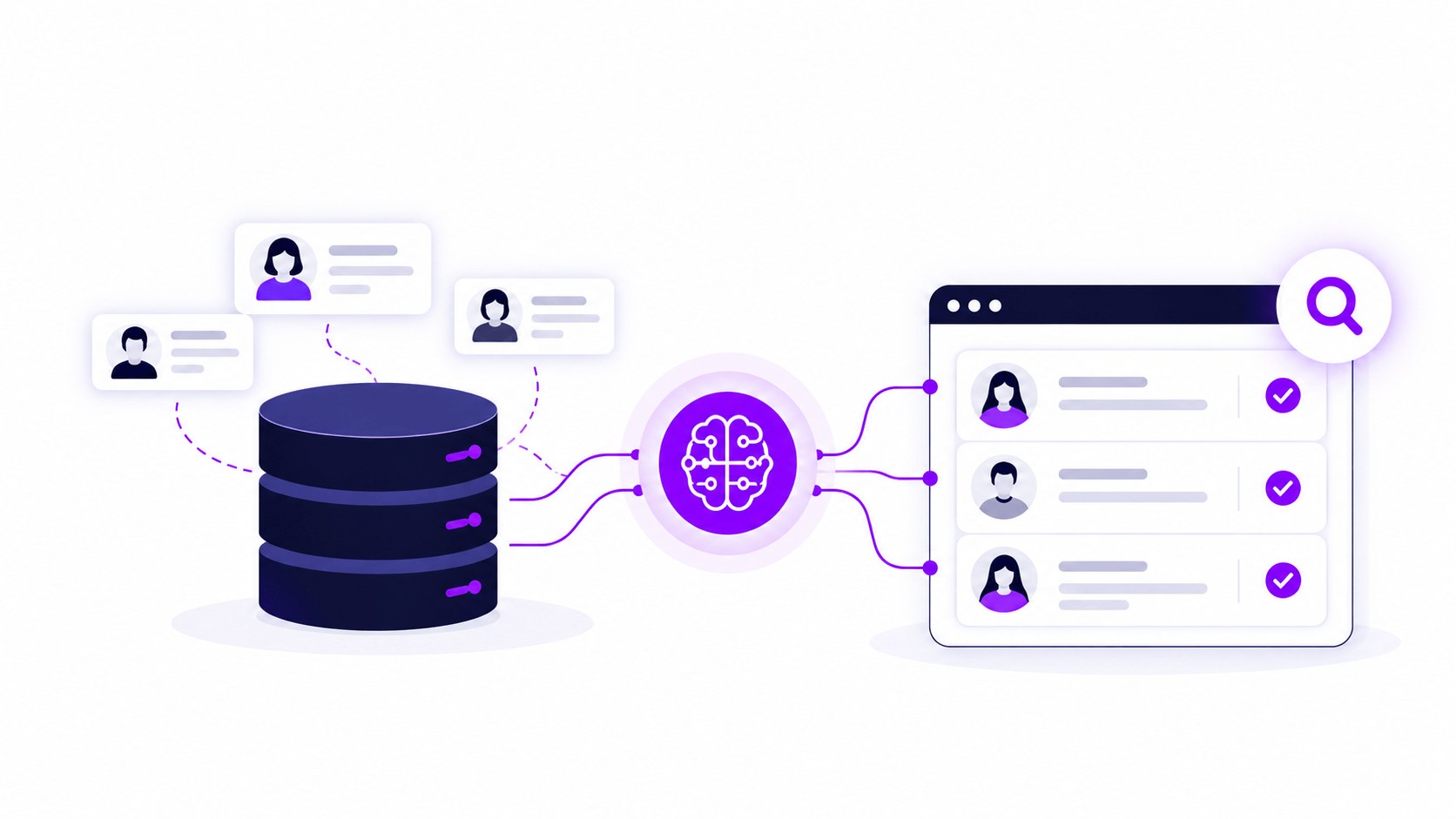
Candidate matching and ranking. The tool is not just looking for exact keyword matches. A good AI sourcing tool understands that someone with "distributed systems" and "event driven architecture" on their profile is probably a strong match for a role asking for "microservices experience," even if that exact phrase never appears. It looks at career trajectory and adjacent skills, not just a checklist. For a deeper look at how this compares to traditional sourcing, see our breakdown of AI sourcing vs manual sourcing.
ATS rediscovery. This one gets overlooked a lot. Most companies already have thousands of candidates sitting in their applicant tracking system from past roles. Some of them were strong finalists who lost out to someone slightly better. A good AI sourcing tool can search your own database the same way it searches the open web, so you are not always starting from zero. Resume parsing and AI sourcing covers how this works in practice.
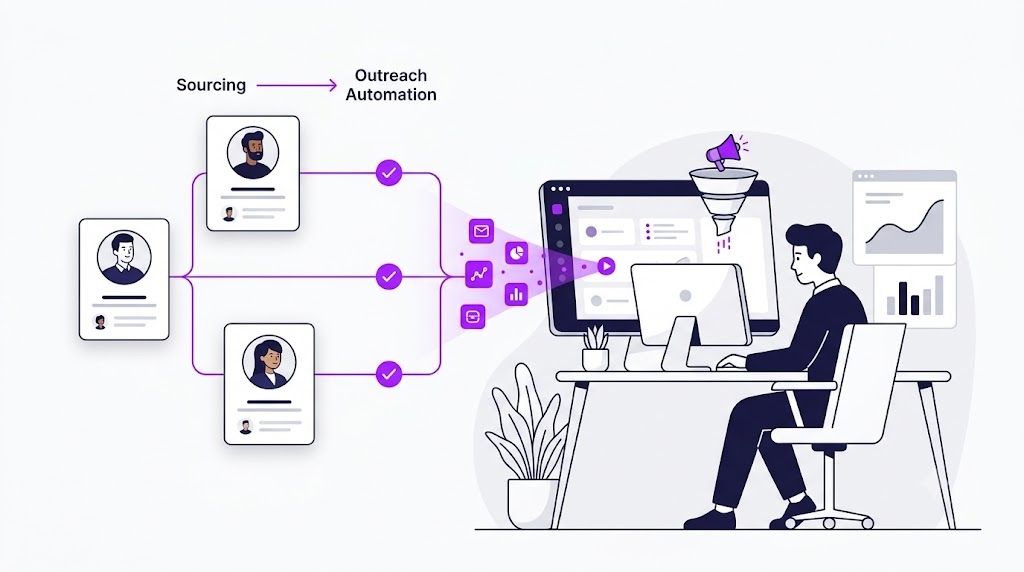
Automated outreach. This is the piece that separates a sourcing tool from a full sourcing and engagement platform. Some tools stop at the shortlist. Others can also draft the first message, run follow-ups, and keep the conversation moving without you having to open a separate app.
That last point is really the heart of this article, so we will come back to it.
How to Choose the Right AI Sourcing Tool
If you have ever sat through five demos in a week and walked away more confused than when you started, you already know the problem. Every vendor says they have "the largest database" or "the most accurate AI." None of that tells you what actually matters for your team.
Here is what we would actually look at.
Natural language search versus Boolean. Ask yourself how much time your team currently spends building and tweaking search strings. If the answer is "a lot," a tool that takes a plain-language brief and does the translation for you will save real hours every week. If your team already has strong Boolean skills and a workflow that works, this matters less.
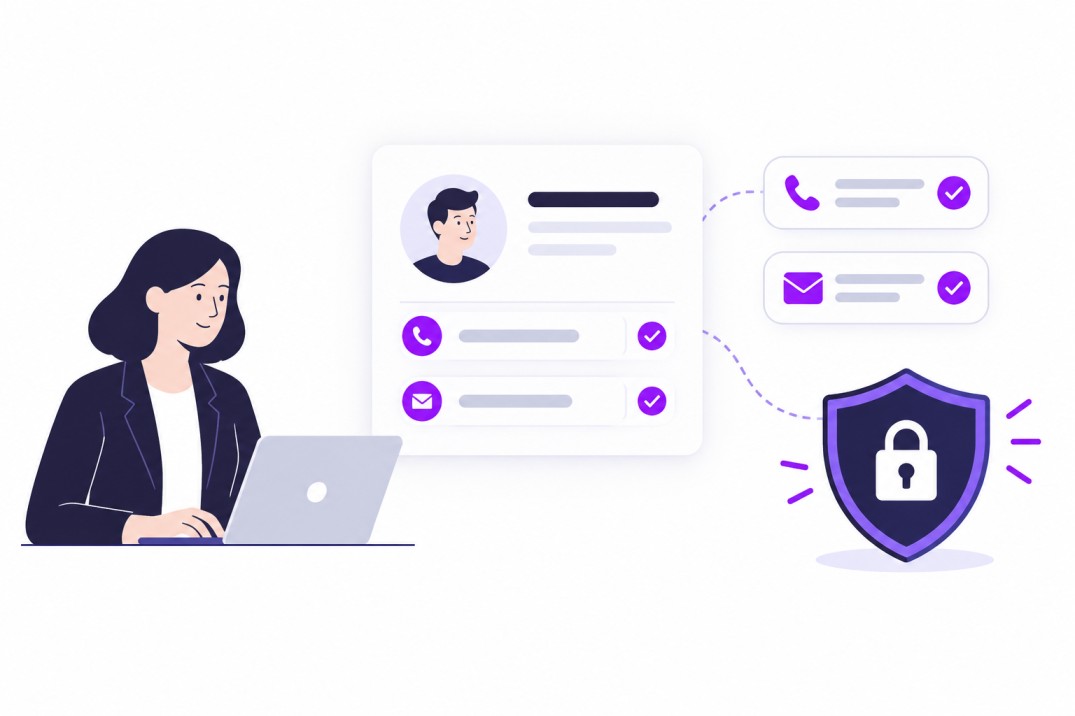
Verified contact data and coverage. A shortlist you cannot reach is not a shortlist. Some tools return a huge volume of profiles but a lot of stale or guessed emails, which means high bounce rates and a burned sending reputation. Ask any vendor directly what percentage of their contact data is actually verified, and how they handle candidates in industries like healthcare or manufacturing where public profiles are thinner than they are for tech roles.
Pricing model. This is where a lot of teams get surprised after signing. Some tools charge per search. Some charge per seat regardless of usage. Some only charge you for contact data that is actually verified, which means you are not paying for information you cannot use. Understand which model you are agreeing to before you commit to a year-long contract.
ATS and CRM integrations. If your sourcing tool cannot talk to the system where you actually track candidates, you end up doing double data entry, which is exactly the kind of manual work AI sourcing is supposed to remove in the first place. Confirm the tool connects cleanly with what you already use.
Whether outreach is built in or a separate purchase. This is the criterion most buyers skip, and it is the one that matters most for actually filling roles faster. A tool that hands you a great shortlist and then stops is only solving half the problem. You will still need to find contact details, write the first message, track replies, and follow up, usually in a completely different tool. We will get into why that gap costs you candidates in the next section.
For a broader evaluation framework, our guide to the best AI recruiting platform features walks through what to look for beyond just sourcing.
Can AI Tools Replace Manual Sourcing?
Short answer: no, and you should be skeptical of anyone who tells you otherwise.
Longer answer: AI is genuinely good at some parts of sourcing and still weak at others, and knowing the difference is what separates teams who get real value from AI tools and teams who end up disappointed six months into a contract.
According to SHRM's 2025 recruiting data, a large majority of HR professionals now use AI somewhere in their hiring process. But a separate Workable survey found that only a small fraction of that usage is actually applied to sourcing specifically, the exact phase where recruiters lose the most hours. That gap tells you something important: most teams are still doing the hardest, most repetitive part of the job by hand. Our candidate sourcing statistics for 2026 breaks down the numbers in more detail.
Where AI genuinely helps:
It is fast at scanning a huge number of profiles across multiple sources at once, something a human recruiter simply cannot do in the same amount of time. It is good at surfacing passive candidates, people who are not actively job hunting but have the right background, because it can look across more places than a recruiter checking one platform at a time. It is also decent at drafting a first version of an outreach message, one that a recruiter can then edit rather than write from scratch.
Where it still falls short:
AI cannot read the room in a conversation the way an experienced recruiter can. It does not know that a candidate hesitated on salary because they are weighing a competing offer, or that a "maybe" during a screening call actually means "convince me." It cannot build the kind of trust that gets a passive candidate to seriously consider leaving a job they are comfortable in. And AI-drafted outreach that goes out completely untouched by a human tends to read that way. Candidates notice.
The honest way to think about it: AI handles the volume, humans handle the judgment. Teams that get the best results are not the ones who let AI run the whole desk unsupervised. They are the ones who use the time AI gives back to actually talk to candidates, follow up personally on the roles that matter most, and spend less time on the repetitive search work that used to eat their whole morning. How to combine AI with talent sourcing goes deeper on where to draw that line.
The Real Advantage of Pairing AI Sourcing With Outreach Automation
Here is the pattern we see over and over with recruiting teams. They invest in a great sourcing tool. The shortlist is genuinely strong. And then that shortlist sits in a spreadsheet or a separate CRM while the recruiter figures out contact details, writes a message, and manually tracks who has replied and who has not.
Every one of those handoffs is a place where a candidate can fall through the cracks.
Think about what actually happens across a disconnected stack. A recruiter finds a candidate in a sourcing tool. They export the profile, or copy it by hand, into an outreach tool. They write a message, maybe personalize it a little, and send it. If the candidate replies, someone has to notice that reply and move them into the actual pipeline, often inside a third piece of software. If a hiring manager asks "where are we with this candidate," the honest answer is often "let me check three different tools and get back to you."
That is not a people problem. It is a tooling problem. Every switch between systems is a chance for context to get lost, and lost context is what turns a promising candidate into someone who never hears back. It also happens to be one of the biggest contributors to candidate ghosting.
When sourcing and outreach live in the same workflow, a few things change:
The first message goes out faster. Instead of a shortlist sitting for a day or two while someone builds an outreach sequence separately, the conversation can start the moment a strong match is found. For roles where speed to first contact is the difference between reaching someone before a competitor does and reaching them after, this matters more than almost anything else on this list. See how AI recruiting tools reduce time to fill for the mechanics behind this.
Nothing gets lost between systems. The same candidate record carries the search result, the conversation history, and the screening notes. Nobody has to rebuild a candidate's story from scratch every time they move to the next stage.
Follow-ups actually happen. A huge share of candidates who go quiet are not uninterested, they are just busy, and a well-timed follow-up brings a lot of them back into the conversation. That only works reliably when follow-ups are automated as part of the same system, not something a recruiter has to remember to do manually across a dozen open roles.
Recruiters spend less time on admin and more time on the calls that actually need a human. This is the real payoff. Every hour not spent copying candidate data between tools is an hour spent actually talking to people, which is the part of the job that closes hires.
Best AI Sourcing Tools by Use Case
Not every recruiting team needs the same thing from a sourcing tool. A 15-person startup and an enterprise talent acquisition function with 40 open roles are solving very different problems, even if both of them technically need "an AI sourcing tool." Here is what actually matters for a few common situations.
For Startups and Lean Recruiting Teams
If you are a startup or a lean TA team, you are probably doing sourcing, screening, and scheduling with one or two people, sometimes just one person wearing all three hats. What you need most is something you can start using immediately, without a long onboarding process eating into the weeks you do not have.
Look for tools with transparent, low starting prices rather than "contact sales for a quote," and ideally something you can try before committing, so you know it actually works for your roles before you pay for a year of it. Fast time to value matters more here than an enormous feature list you will never fully use. As one hiring leader put it after switching to a connected sourcing and engagement platform, the change did not just speed up outside hiring, it also helped the team spot skill sets internally that they might have otherwise missed entirely.
For Tech Recruiting
Technical roles are where generic keyword search falls apart the fastest. A candidate might have exactly the skills you need but describe them in a way a simple filter would never catch, "built event-driven services" instead of "microservices," for example.
For tech recruiting, precision matching matters more than raw database size. You want a tool that understands adjacent skills and career trajectory, not just exact title matches, so you are not missing strong engineers because their resume uses different words than your job description. Pair that with fast screening, since technical hiring managers tend to want quick, well-qualified shortlists rather than a long list they have to filter themselves. Teams that have moved off job boards entirely tend to lean on this heavily — more on that in how to source candidates without job boards.
For Healthcare Staffing Agencies
Healthcare staffing runs on speed and credentials, and neither one is optional. A shift-based role does not wait around. If a candidate does not hear from you within a few hours, they have likely already been placed somewhere else.
One staffing firm operations manager described their situation before switching to a connected sourcing and outreach workflow this way: candidates used to sit for 15 to 72 hours before anyone reached out. After automating that first touch, candidates were getting a call within about a minute, and that speed alone helped the firm reach roughly 10% more applicants than before. For healthcare staffing specifically, you also want a tool that can verify licenses and certifications automatically, since placing someone without an active credential is not just a bad hire, it is a compliance risk. We cover this in more depth in AI sourcing for healthcare staffing and time to hire and our broader look at healthcare talent acquisition.
For Enterprise Talent Acquisition Teams
Enterprise hiring has a different problem than a lean team does. It is not usually about finding candidates, it is about keeping qualification rules and candidate experience consistent across dozens of recruiters, multiple regions, and hundreds of open roles at once.
What matters most here is scale without losing control: consistent qualification rules that apply the same way no matter which recruiter is running a search, security and compliance built into the platform rather than bolted on later, and strong ATS rediscovery so you are actually using the candidate data you already have instead of starting every search from scratch. One direct sourcing operations leader described the shift this way: what used to take hours of manual sourcing and screening became a streamlined process where the team could keep candidates engaged instead of starting from zero every time a new role opened. See voice AI for enterprise talent acquisition for how the engagement side of this works at scale.
For Manufacturing and High-Volume Staffing
High-volume frontline hiring is a numbers game, and the biggest risk is not a lack of applicants, it is losing them between "applied" and "interview scheduled." When you are trying to fill hundreds of roles at once, even a small amount of manual back-and-forth per candidate adds up into a real bottleneck.
For manufacturing and high-volume staffing, look for a tool that can screen and route candidates automatically at scale, without a recruiter having to touch every single application. Scheduling matters more here than almost anywhere else, since coordinating interview times for hundreds of candidates by email is simply not sustainable — automated interview scheduling software is usually the fastest lever to pull. Reducing the drop-off between an application and a scheduled interview is the single biggest win for this kind of hiring.
Curately: Built for Sourcing and Outreach Together
We built Curately around a simple observation: most recruiting teams are not missing candidates, they are losing momentum. Someone applies, someone gets sourced, and then the process stalls because the next step (a message, a screening call, a scheduling link) depends on a recruiter manually picking it up in a different tool.
Curately connects the whole path from Find to Engage to Convert, so every part of the workflow shares the same candidate record.
Find covers AI-powered sourcing across 200 million or more enriched profiles, using natural language search instead of Boolean strings, plus ATS rediscovery to resurface candidates you already have. Contact data is verified before you ever see it, and if it is not verified, you do not pay for it.
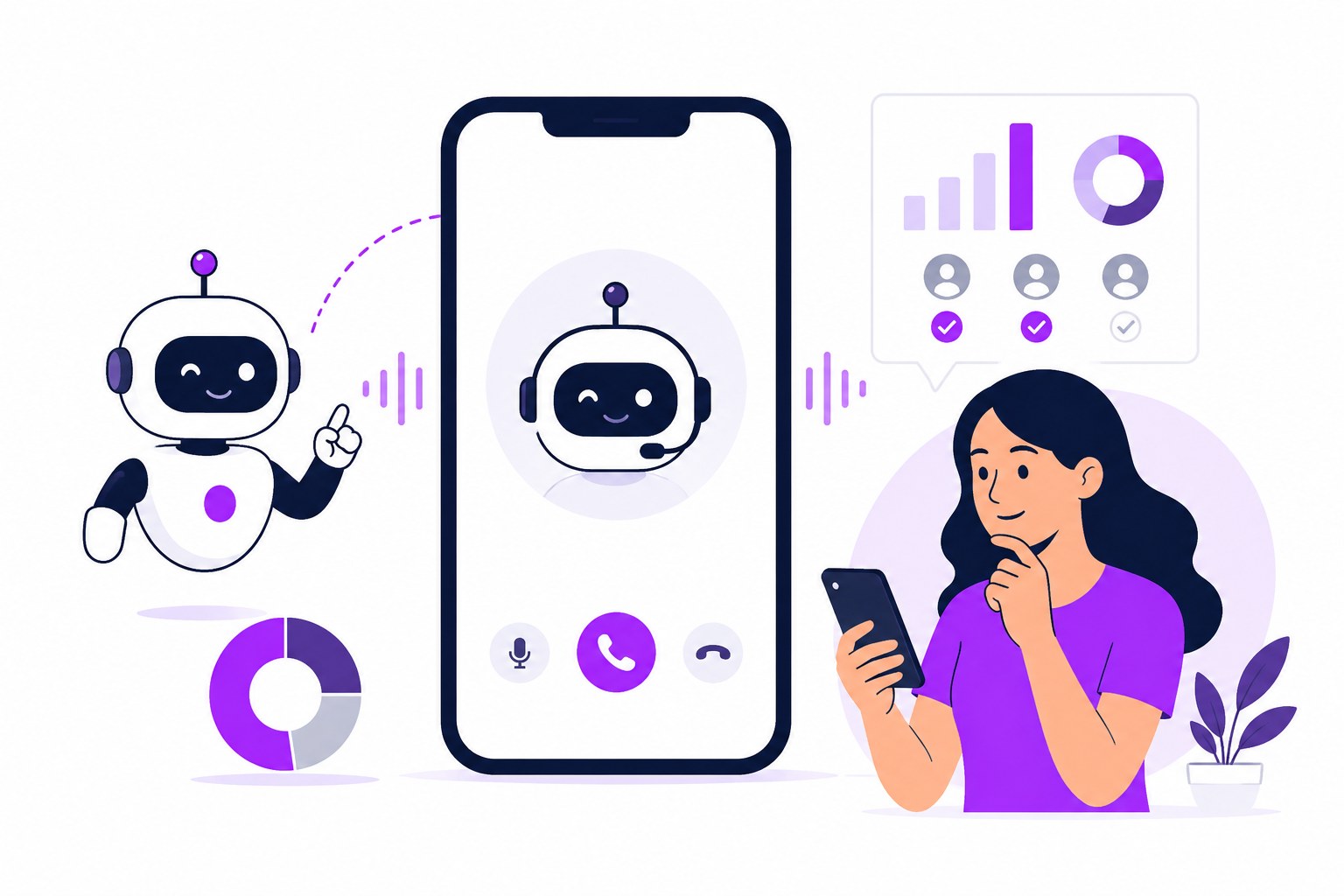
Engage is where the outreach automation lives. Voice AI and chat conversations can start the moment a strong match is found, running screening questions, answering candidate FAQs, and keeping the conversation moving without waiting on a recruiter to open a new tab.
Convert handles qualification, routing, and scheduling, so a qualified candidate lands with the right recruiter and gets booked for an interview without a chain of "are you available" emails.
Across customers using this connected approach, the reported results include first contact in under two minutes, a 3.2x higher response rate, 87% screening completion, and a 62% reduction in candidate drop-off between stages.
None of this replaces recruiter judgment. You still set the qualification criteria, control the messaging boundaries, and make the final call on every hire. What changes is how much manual work sits between a candidate being found and a candidate actually talking to someone on your team.
FAQs
Are there any free AI sourcing tools? Some sourcing tools offer a free trial or a limited free tier so you can test search quality before paying for anything. Given how much variation there is between vendors, it is worth testing on a role you have filled before, since you already know what a good result looks like for that specific search.
Can AI sourcing tools find passive candidates? Yes, this is one of the areas AI genuinely helps with. Because it can scan across many sources at once instead of one platform at a time, it tends to surface people who are not actively job hunting but match your criteria closely on skills and experience.
How does pricing for AI sourcing tools with outreach automation compare to buying separate tools? It depends heavily on the vendor, but running sourcing and outreach as two separate purchases usually means paying two subscription fees and losing time on the manual handoff between them. A combined platform can end up costing less overall once you account for the hours saved moving candidates between systems by hand.
Is an AI sourcing tool with outreach automation a good fit for a startup? Generally yes, especially if your team is small and cannot dedicate a full-time person to manual outreach. The main thing to check is whether the pricing scales down to your size and whether you can start using it quickly without a long setup process.
Can AI tools fully replace manual sourcing and recruiter outreach? No. AI is strong at scanning large numbers of profiles, ranking candidates, and drafting a first outreach message. It is still weak at reading a candidate's hesitation, building trust with someone who is not actively looking, and making judgment calls that come from experience. The best results come from using AI for volume and keeping a human on the conversations that actually matter.